

ARTICLES
Creating Information That Lasts: An Event Report on the "NoMaps Conference: The Role and Potential of Local Media"



This article is a post-event report on the Domingo presents session, "The Role and Potential of Local Media," held at the NoMaps Conference 2020!
In 2020, it was held for five days from October 14th (Wed) to 18th (Sun). NoMaps/
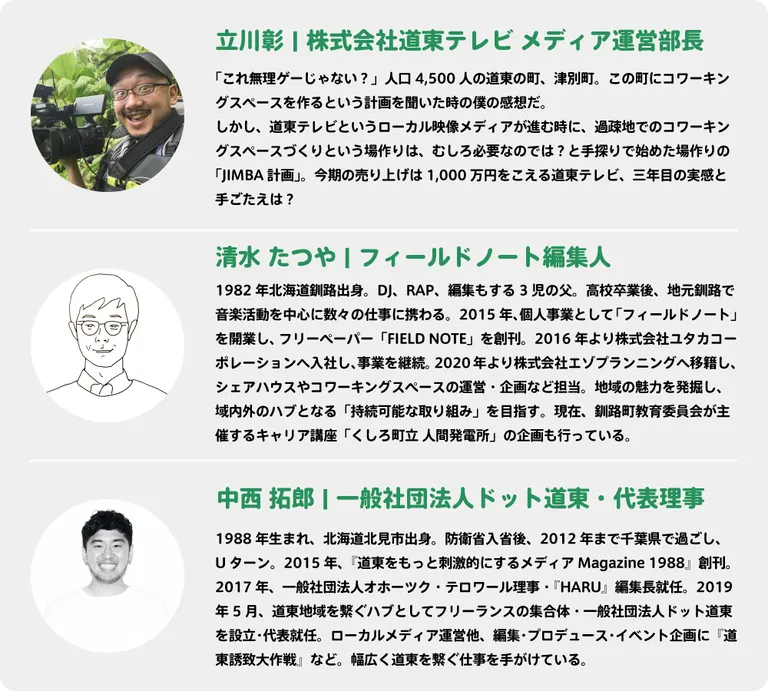
Speaking on the theme "The Role and Potential of Local Media" at the NoMaps Conference were Akira Tachikawa, who runs the internet TV station "Doto TV" based in Tsubetsu Town; Takuro Nakanishi of Dot Doto, who completed the unofficial guidebook for the Doto region, ".doto"; and Tatsuya Shimizu of "Field Note," which introduces shops and people in the Kushiro area.
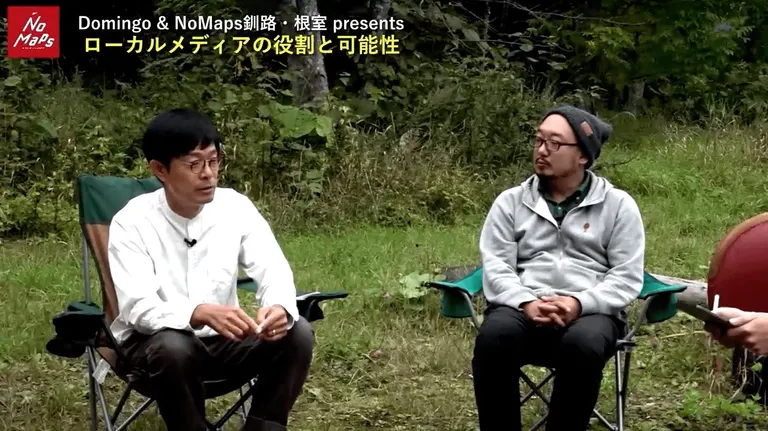
The session was broadcast from the vicinity of Lake Kussharo to deliver the charm of Doto through video.
Tachikawa says he initially had no intention of running a "space" in a region that isn't a bustling "city," but he has come to realize the excellent compatibility between "local media" and a "physical space." In addition to the media's original role of covering things in the community, the existence of "JIMBA" often gives birth to new story ideas.
Shimizu, who hosts talk events like "Ningen Hatsudensho" (The Human Power Plant) at his co-working space "HATOBA Nishikimachi," feels that having events and a physical location creates a chain of input and output. This makes the latent value of the region visible and builds a network within the community.
Nakanishi, who created ".doto" while building a community involving various people, explains that by raising funds through crowdfunding and producing it as a form of participatory entertainment, ".doto" was able to create a new form of guidebook that realistically conveys the life and charm of the region.
The three speakers discuss how, in this age of information overload, the "shelf life" of information seems to be getting shorter and shorter.
In such a situation, what constitutes "information with a long shelf life," and how can it be created? Nakanishi says he is conscious of going beyond just "communicating" and aims to connect information to subsequent actions.
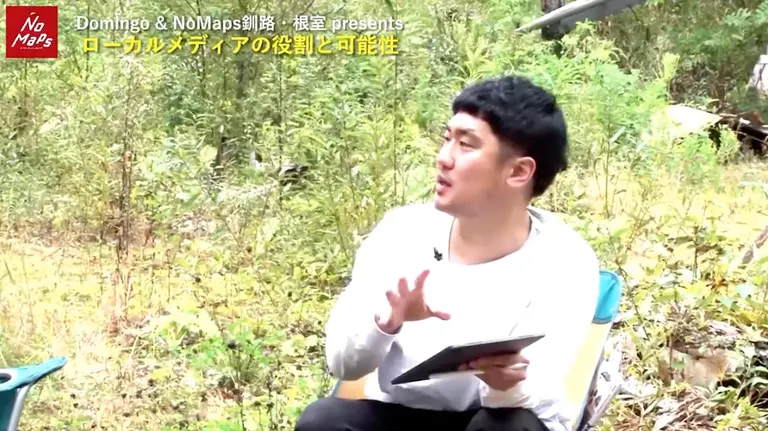 Furthermore, Shimizu, who has interviewed many people in the region, has continued to build "visible relationships" in local media, much like a vegetable farmer whose name is displayed on produce sold at a direct sales market, and he values these connections.
Shimizu believes that a future role of media is to "reshape the perception of the region." He wants to convey a positive image of the community by uncovering and sharing its negative perceptions and history, and by interviewing people who are taking action with conviction. He also adds that by following one's initial impulse and acting to solve the problems one finds, the opportunities to make an impact gradually expand.
Tachikawa suggests that when creating local media or a physical space, it's important to create an "experience of building something together." For example, in terms of funding, rather than having one large sponsor, he believes it's better to receive small usage fees from many local people as payment for using the space. By then disseminating the interesting things born from that space as media, he thinks high-quality information can be sustained.
A phrase that stood out during this conference was "supportive media." The joyful expressions of the three speakers as they talked about their desire to continue being a media that "runs alongside" and connects the dots of various places and events emerging in different locations seem to symbolize this conference.
Be sure to keep an eye on the future of "Doto TV," "Field Note," and ".doto."
What is NoMaps?
NoMaps aims to build the next society and future with creative ideas and technology. Since 2017, it has been held in Sapporo and Hokkaido, hosting business conferences to share ideas and values, exhibitions and demonstration experiments to experience the future, networking opportunities, and events to engage with cutting-edge music and films.In 2020, it was held for five days from October 14th (Wed) to 18th (Sun). NoMaps/
What is NoMaps Conference 2020?
NoMaps Conference invites a diverse range of speakers who are paving new paths with new technologies, services, and ideas, holding sessions on various themes. In 2020, over 40 sessions were conducted online, with a total of more than 10,000 participants.Overview
In an era where individuals can disseminate information, the number and types of "media" are increasing. The eastern part of Hokkaido, known as "Doto," is no exception, with several local media outlets dedicated to sharing community-based information. Among them, three individuals who operate distinctive local media while also managing a physical "space" discuss the role of a media rooted in the community.Speaking on the theme "The Role and Potential of Local Media" at the NoMaps Conference were Akira Tachikawa, who runs the internet TV station "Doto TV" based in Tsubetsu Town; Takuro Nakanishi of Dot Doto, who completed the unofficial guidebook for the Doto region, ".doto"; and Tatsuya Shimizu of "Field Note," which introduces shops and people in the Kushiro area.
The session was broadcast from the vicinity of Lake Kussharo to deliver the charm of Doto through video.
"Local Media" × "A Physical Space"
While running their local media, Doto TV's Tachikawa has also been operating the co-working space "JIMBA" in Tsubetsu Town since 2019. Field Note's Shimizu runs the co-working space "HATOBA Nishikimachi" in Kushiro City. Meanwhile, Dot Doto's Nakanishi operates "Dot Doto," a collective of freelancers that serves as a community hub connecting the Doto region.Tachikawa says he initially had no intention of running a "space" in a region that isn't a bustling "city," but he has come to realize the excellent compatibility between "local media" and a "physical space." In addition to the media's original role of covering things in the community, the existence of "JIMBA" often gives birth to new story ideas.
Shimizu, who hosts talk events like "Ningen Hatsudensho" (The Human Power Plant) at his co-working space "HATOBA Nishikimachi," feels that having events and a physical location creates a chain of input and output. This makes the latent value of the region visible and builds a network within the community.
Nakanishi, who created ".doto" while building a community involving various people, explains that by raising funds through crowdfunding and producing it as a form of participatory entertainment, ".doto" was able to create a new form of guidebook that realistically conveys the life and charm of the region.
Creating "Information with a Long Shelf Life"
Media, which began with kawaraban (tile block prints), later expanded to newspapers, radio, and television. With the full-scale spread of the internet, various platforms have emerged. The barrier to disseminating information has gradually lowered, and now individuals can easily share information.The three speakers discuss how, in this age of information overload, the "shelf life" of information seems to be getting shorter and shorter.
In such a situation, what constitutes "information with a long shelf life," and how can it be created? Nakanishi says he is conscious of going beyond just "communicating" and aims to connect information to subsequent actions.
Furthermore, Shimizu, who has interviewed many people in the region, has continued to build "visible relationships" in local media, much like a vegetable farmer whose name is displayed on produce sold at a direct sales market, and he values these connections.The Future of Local Media
Nakanishi shares that for the production of ".doto," he assigned different areas like "Kushiro" and "Obihiro" to various people and let them cover whatever they liked. When the unofficial guidebook was completed, it turned out to be a collection that, as if by design, introduced "Doto" through the "lifestyles and ways of life" of its people. From this experience, he suggests there is significance in breaking the stereotype of "what a guidebook should be" and disseminating information through personal stories.Shimizu believes that a future role of media is to "reshape the perception of the region." He wants to convey a positive image of the community by uncovering and sharing its negative perceptions and history, and by interviewing people who are taking action with conviction. He also adds that by following one's initial impulse and acting to solve the problems one finds, the opportunities to make an impact gradually expand.
Tachikawa suggests that when creating local media or a physical space, it's important to create an "experience of building something together." For example, in terms of funding, rather than having one large sponsor, he believes it's better to receive small usage fees from many local people as payment for using the space. By then disseminating the interesting things born from that space as media, he thinks high-quality information can be sustained.
Conclusion
Tachikawa, Shimizu, and Nakanishi are three individuals who launched their own "local media" in Doto and, feeling the need, also operate physical "spaces."A phrase that stood out during this conference was "supportive media." The joyful expressions of the three speakers as they talked about their desire to continue being a media that "runs alongside" and connects the dots of various places and events emerging in different locations seem to symbolize this conference.
Be sure to keep an eye on the future of "Doto TV," "Field Note," and ".doto."