

ARTICLES
“Frost Flowers” on the Lake: A Mystical Photo from Lake Onneto, Hokkaido, Goes Viral



A mysterious natural phenomenon that only appears on mornings with the right conditions, such as severe cold and no wind.
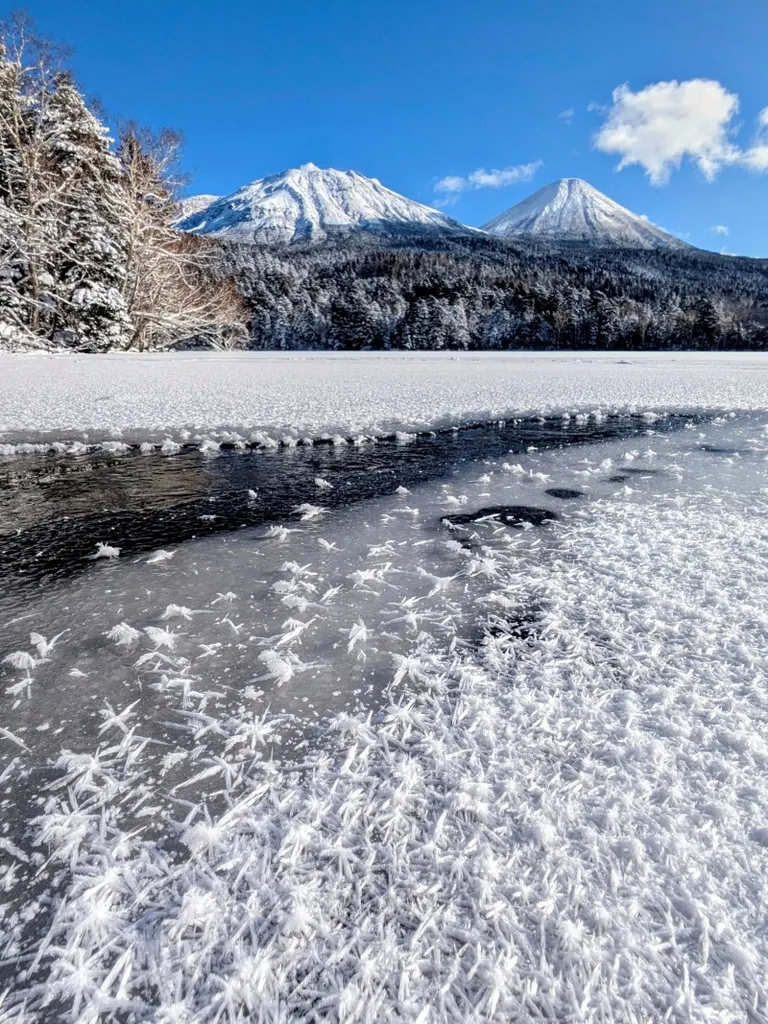
"Frost flowers," a natural phenomenon that only appears on mornings when limited conditions such as severe cold and no wind are met. At Lake Onneto in Akan Mashu National Park, Hokkaido, these mystical ice flowers blooming on the lake's surface were photographed, gathering attention as a unique winter spectacle.
The temperature at Lake Onneto dropped to -15°C this morning,
and frost flowers could be seen along the shore.
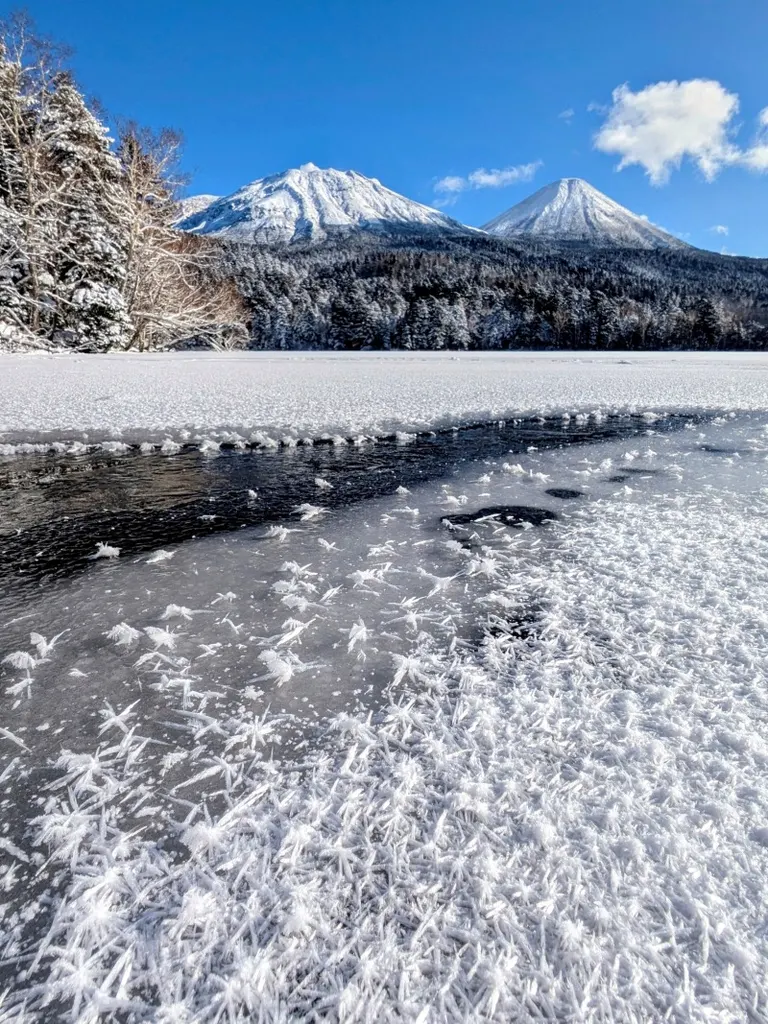
Photo courtesy of @junrensui's post
Pictured here is the "frost flower," a natural phenomenon unique to winter. This shot was taken on the shore of Lake Onneto in Akan Mashu National Park on December 10th, when the temperature suddenly dropped. The delicate ice crystals look just like white flowers in bloom. Its beauty has garnered comments on social media like "I want to go!" and "Winter scenery is finally here," making it a hot topic that signals the arrival of winter in Hokkaido.
We asked a local guide who knows the area inside out—what are the conditions for seeing "frost flowers"?
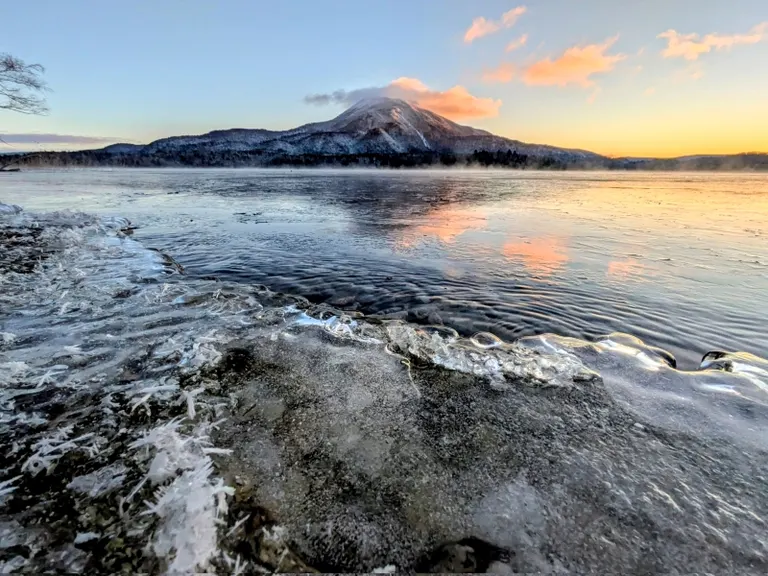
Frost flowers were also photographed at Lake Akan on December 13th.
The photographer of these frost flowers is Junichi Kawamura, a nature and mountain guide based in the Eastern Hokkaido area, active around Lake Akan and Lake Onneto. According to Mr. Kawamura, the early morning temperature at Lake Onneto dropped, and by chance, all the conditions for frost flowers to form were met that morning.
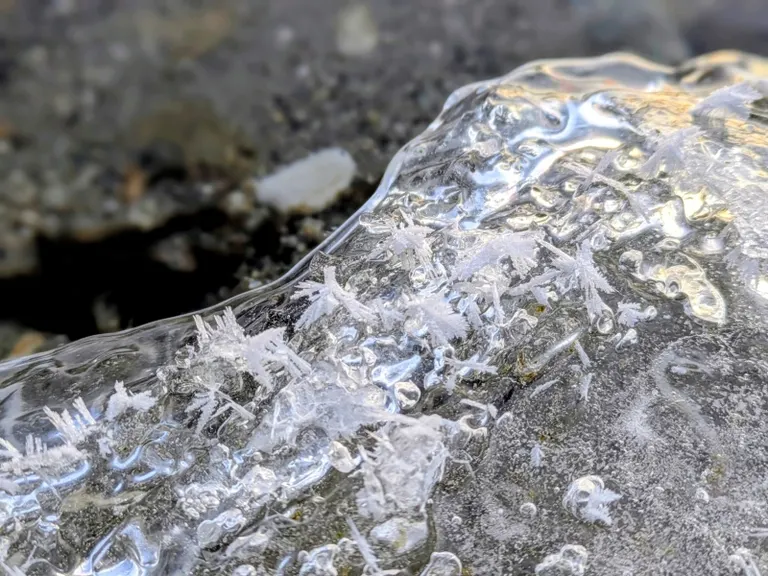
Frost flowers also photographed at Lake Akan on the same day, December 13th.
So, what other conditions are necessary for frost flowers to form? We asked Mr. Kawamura, who knows the local nature intimately.
■ Conditions for Frost Flower Formation
1. Extreme Cold: A sustained, strong cold spell with temperatures of minus 15°C or lower. This is an absolute requirement for water vapor to freeze instantly.
2. Almost No Wind: The delicate ice crystals are easily blown away by wind, so a nearly windless condition is necessary.
3. Thin Ice on the Lake: The lake's surface must be thinly frozen with no snow on top of the ice. This allows water vapor (moisture) to easily rise from the water's surface.
4. Time of Day: They primarily form during a short period in the early morning when temperatures drop sharply due to radiational cooling. They melt and disappear as soon as the sun rises and the temperature increases.
You can see them in the early morning when all these conditions are met.
These "ice flowers" appear for only a fleeting moment under a limited set of conditions. It's a mystery of Hokkaido's winter that can only be encountered in the midst of severe cold.
X (formerly Twitter): @junrensui
- 1
- 2