

ARTICLES
"Grow Up Safe": A Photographic Record of a Whooper Swan Family Watched Over with a Prayerful Heart—from Nesting to Hatching, and Beyond



Discovering the Whooper Swans Building a Nest and Incubating Eggs
The story begins with the discovery of whooper swans building a nest. From here, we'll share the account with comments from the photographer, Emi Kikuchi.
In May, I noticed a pair of swans building a nest. By early May, I could confirm they were incubating eggs.
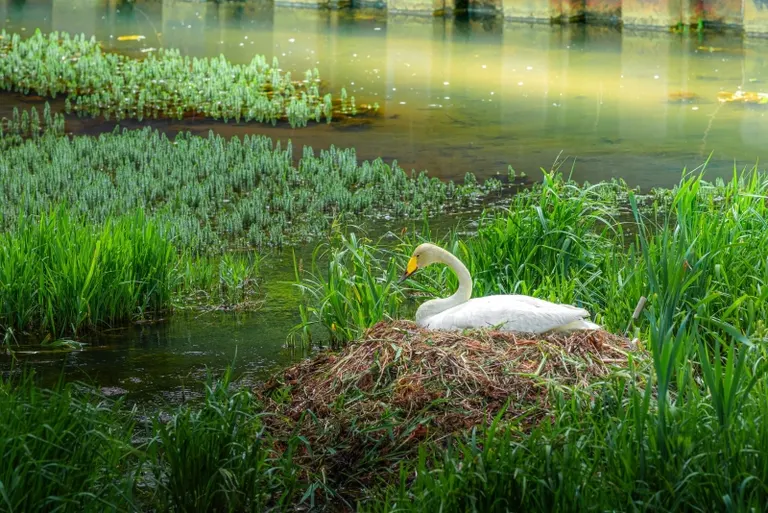
Emi Kikuchi noticed them building a nest. This was the beginning of her documentation of their entire journey.
Whooper swans incubate their eggs for about a month, so I expected the cygnets to hatch around early June. This picture shows them incubating in late May.🥚
Seeing them diligently keeping the eggs warm every day was truly moving. At this moment, the swan looked a bit tired. 'Just a little longer, you can do it!' I cheered her on from a distance before leaving.
And Then, the Cygnets Finally Hatched!
About 10 days later, three of the five or so eggs hatched, and three cygnets were born.
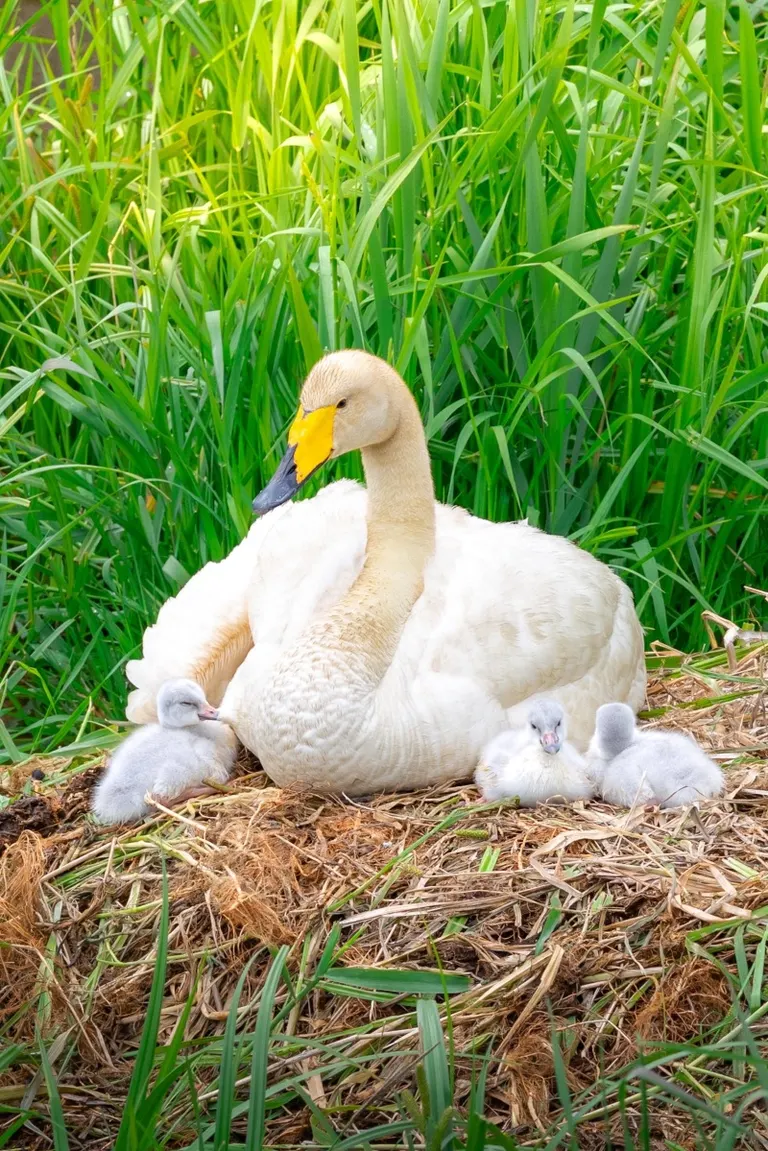
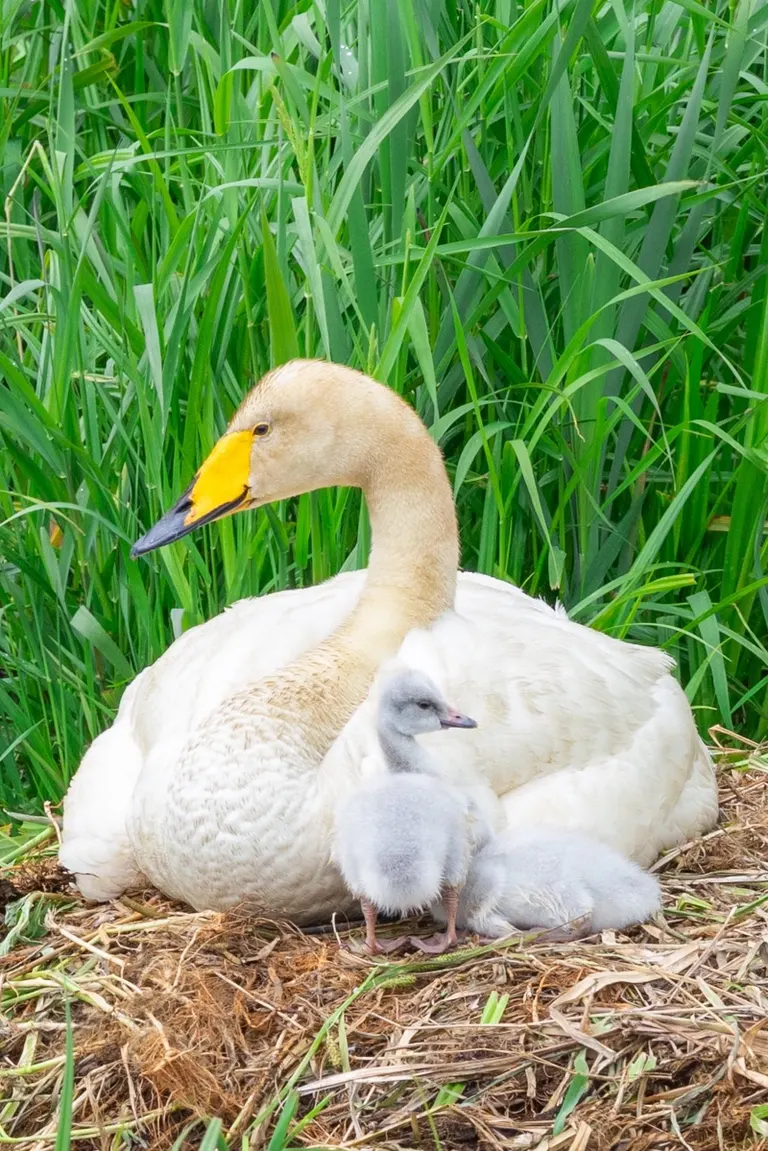
The cygnets at three days old.
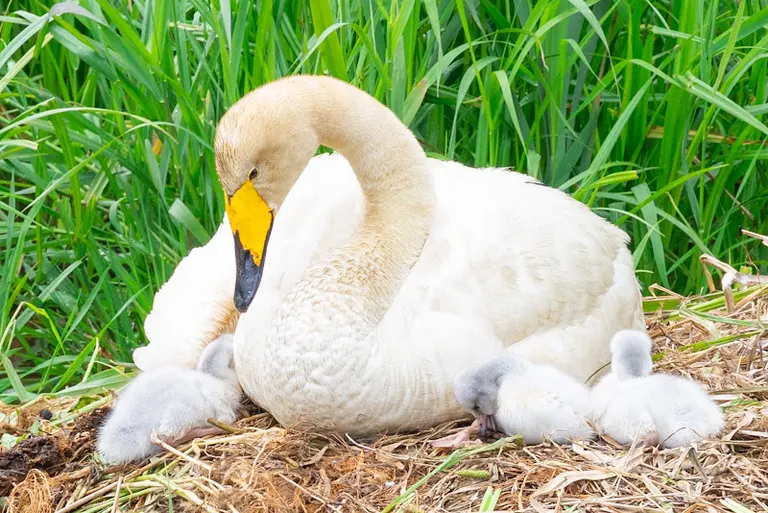
At just three days old, they practiced swimming and returned to the nest with their parents.
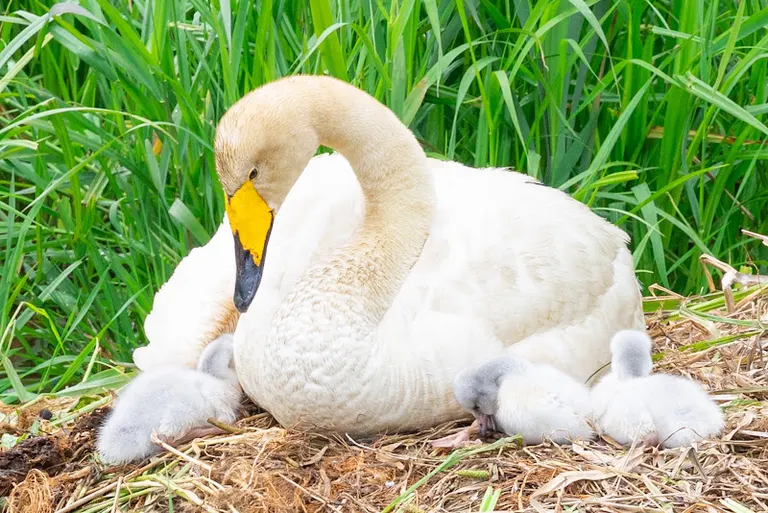
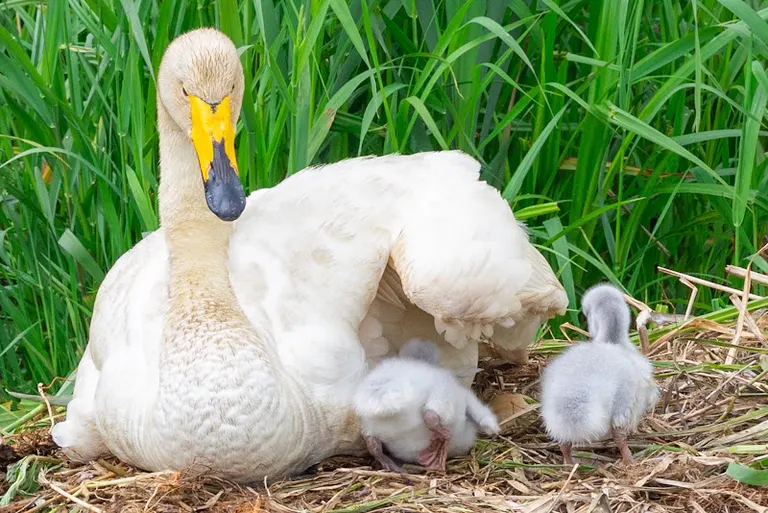
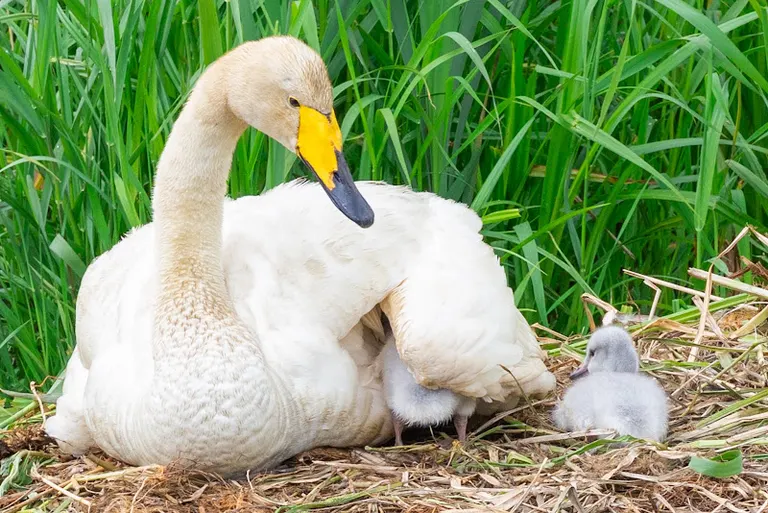
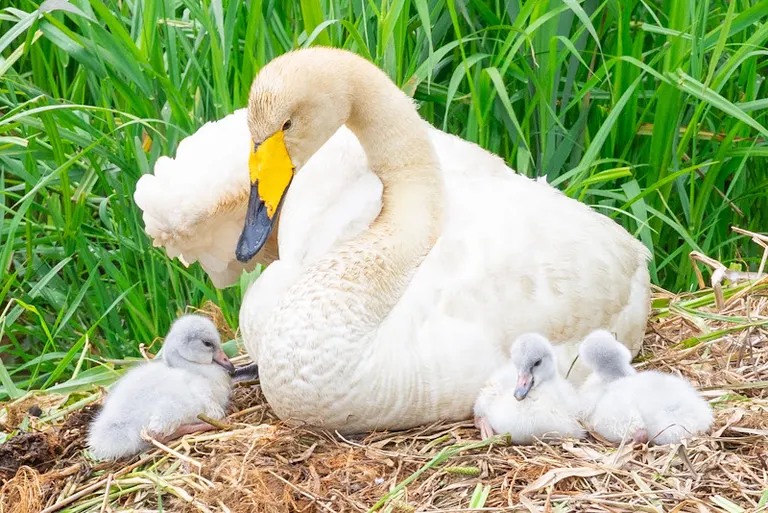
After they all preened themselves, the mother guided the cygnets under her wing.
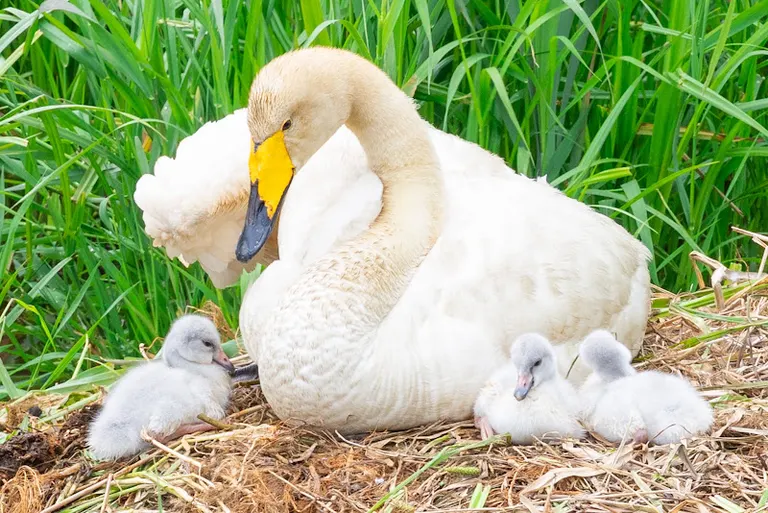
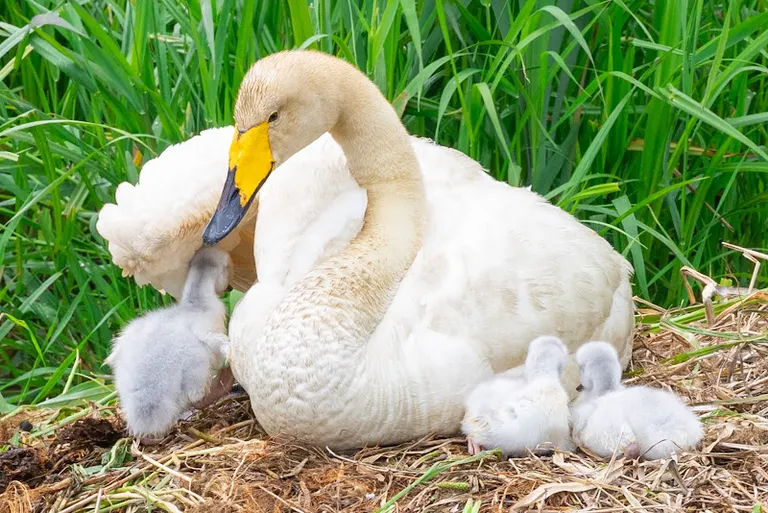
The two on the right didn't seem to have had enough playtime and continued to frolic for a while.
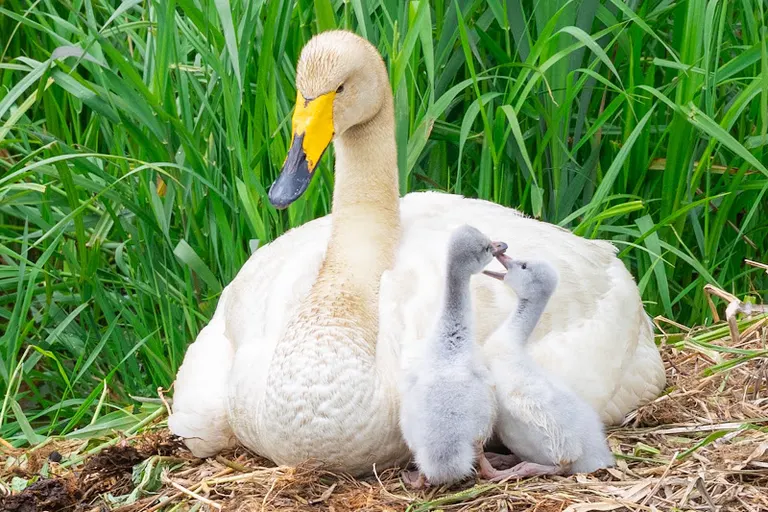
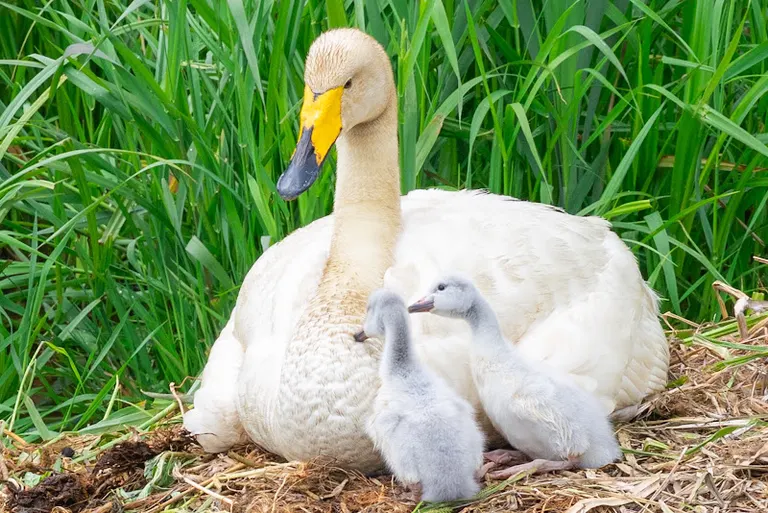
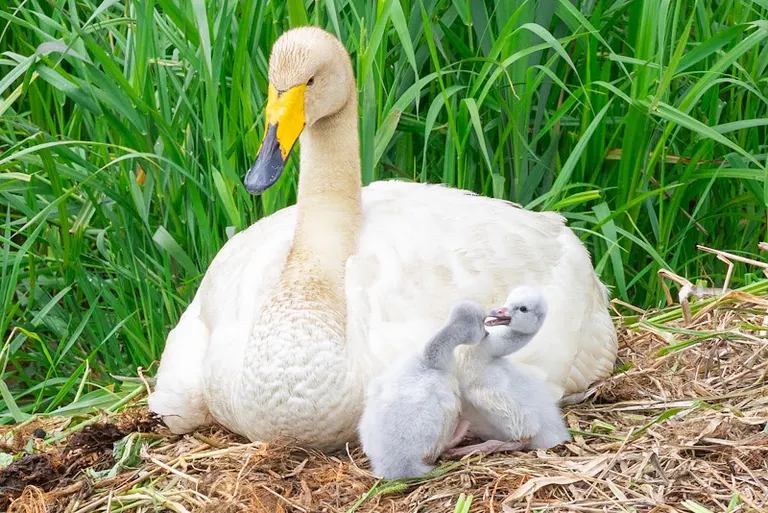
And then, finally, it was nap time.
From Parent to Child—Life's "Lessons"
Here they are, being taught how to swim and find food by their parents.
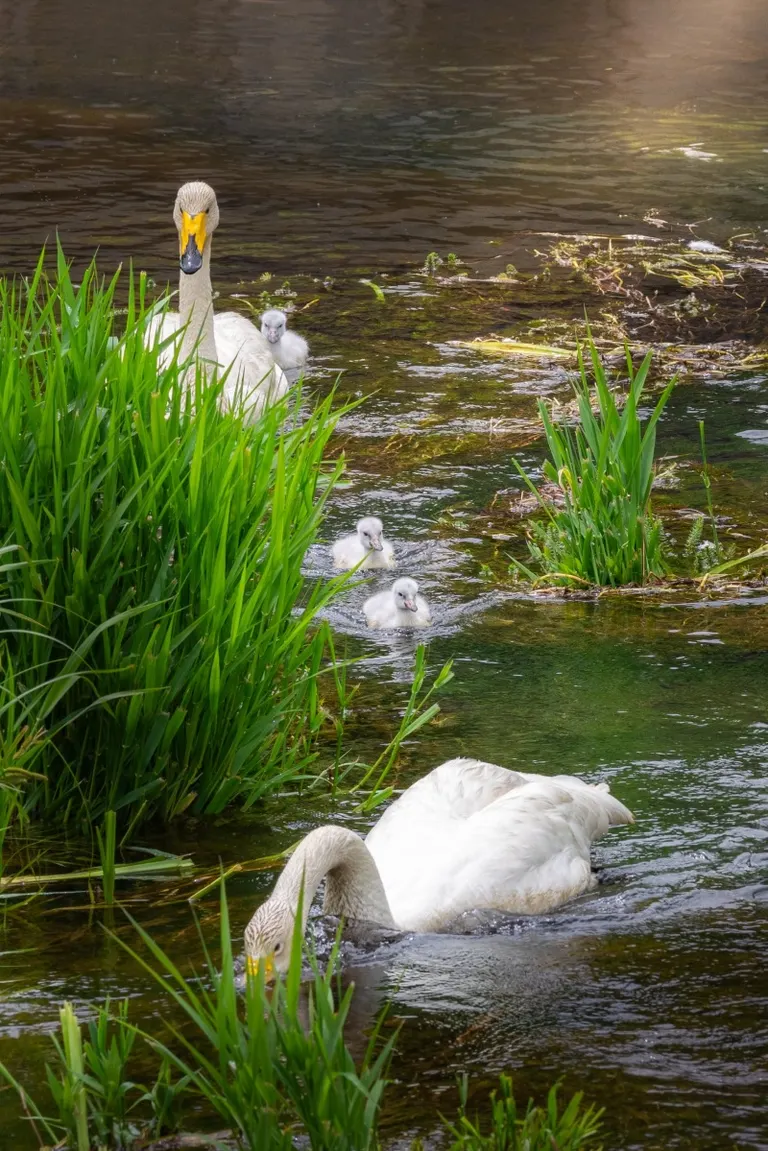
For the cygnets, who had just come out into the world, it must have been a whole new universe. Their tiny figures looked so big and strong to me.
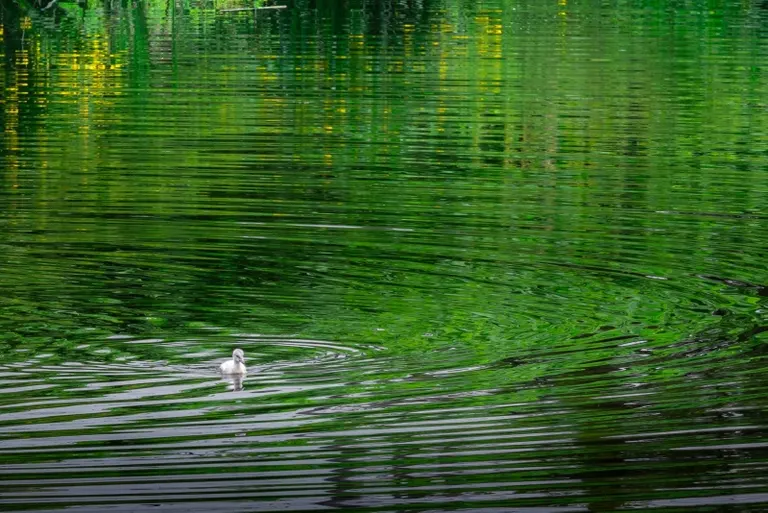
This was on another day, resting after practicing swimming in a different spot than usual.
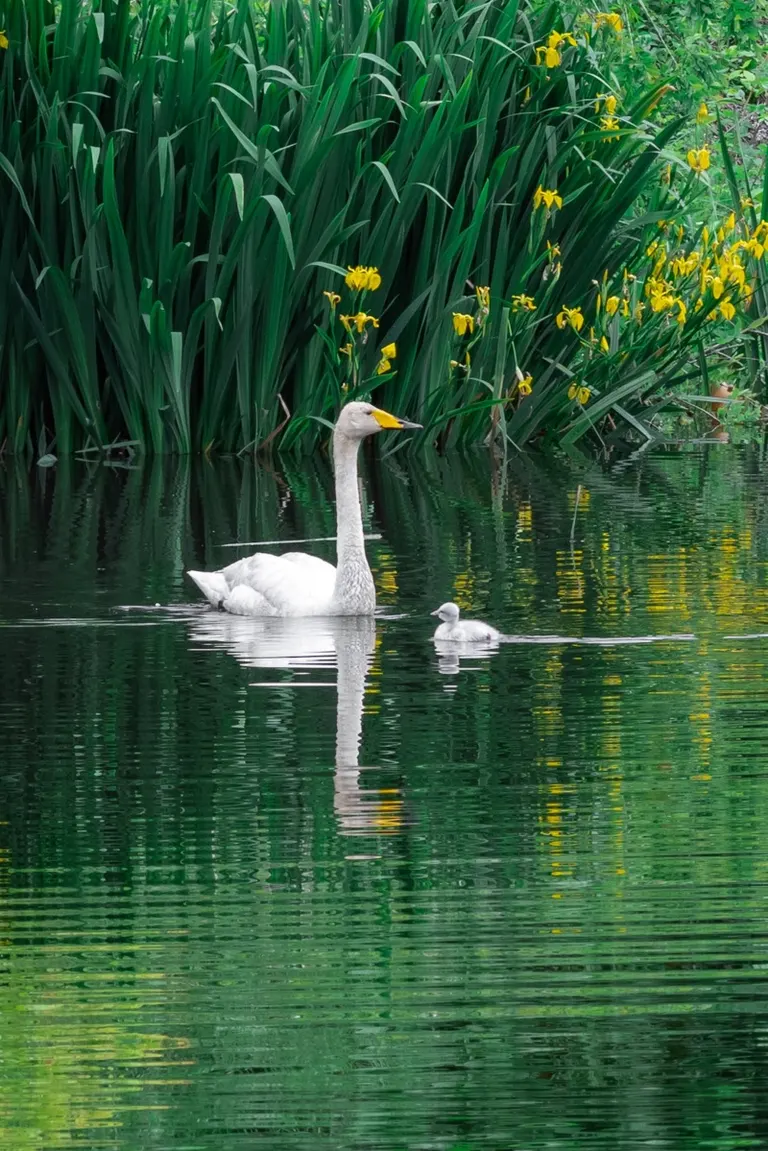
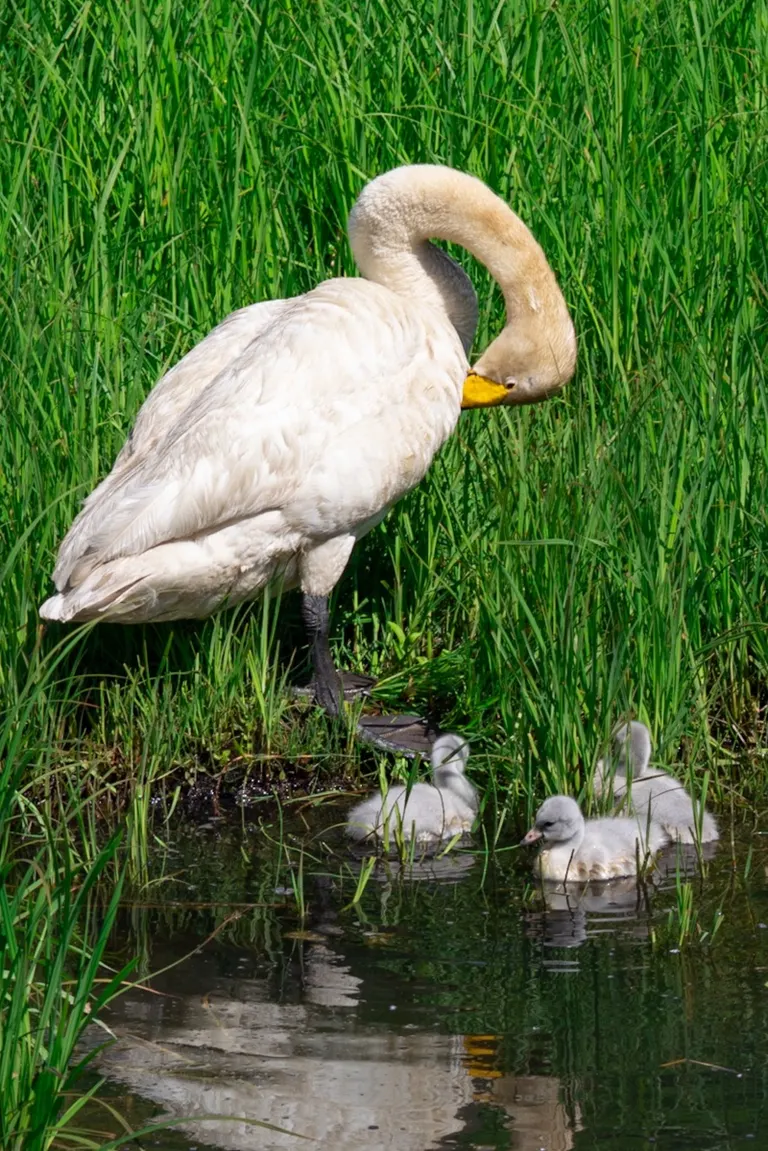
The mother looks tired, but the children are full of energy.
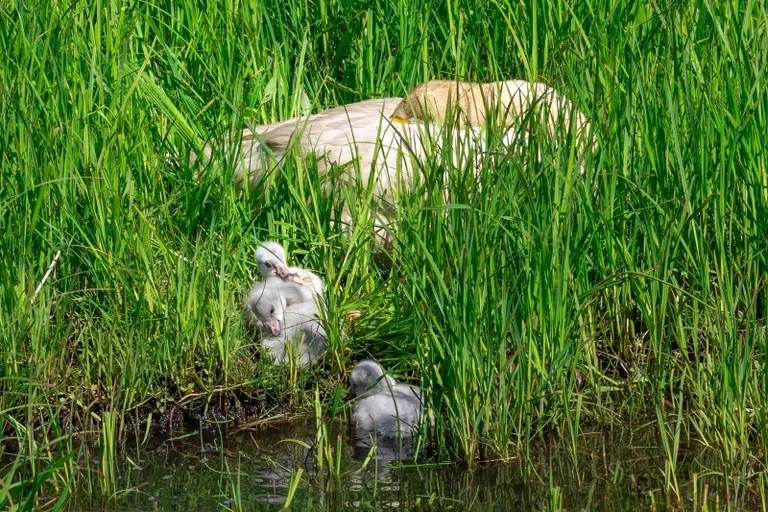
You can really feel how they are always looking out for their children.
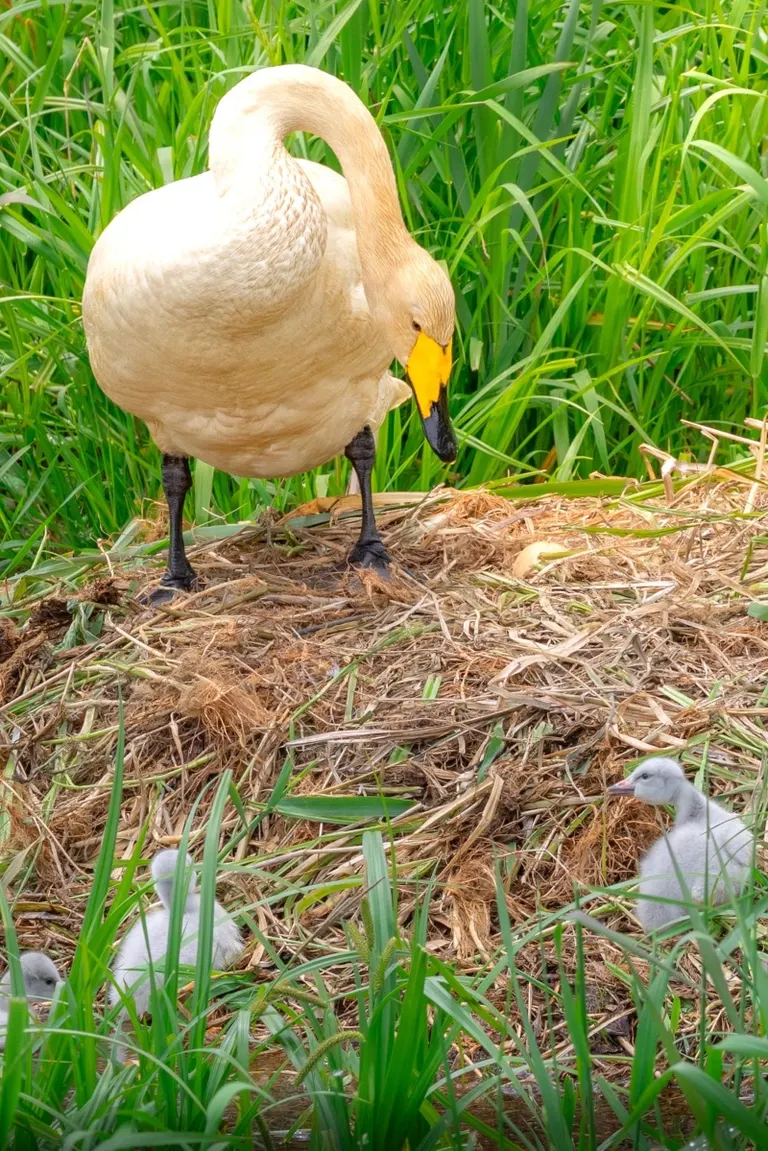
These cygnets were born a few days after a severe windstorm. Even in conditions where humans couldn't possibly go outside, they must have been desperately protecting their eggs. Out of the five eggs, two never hatched.
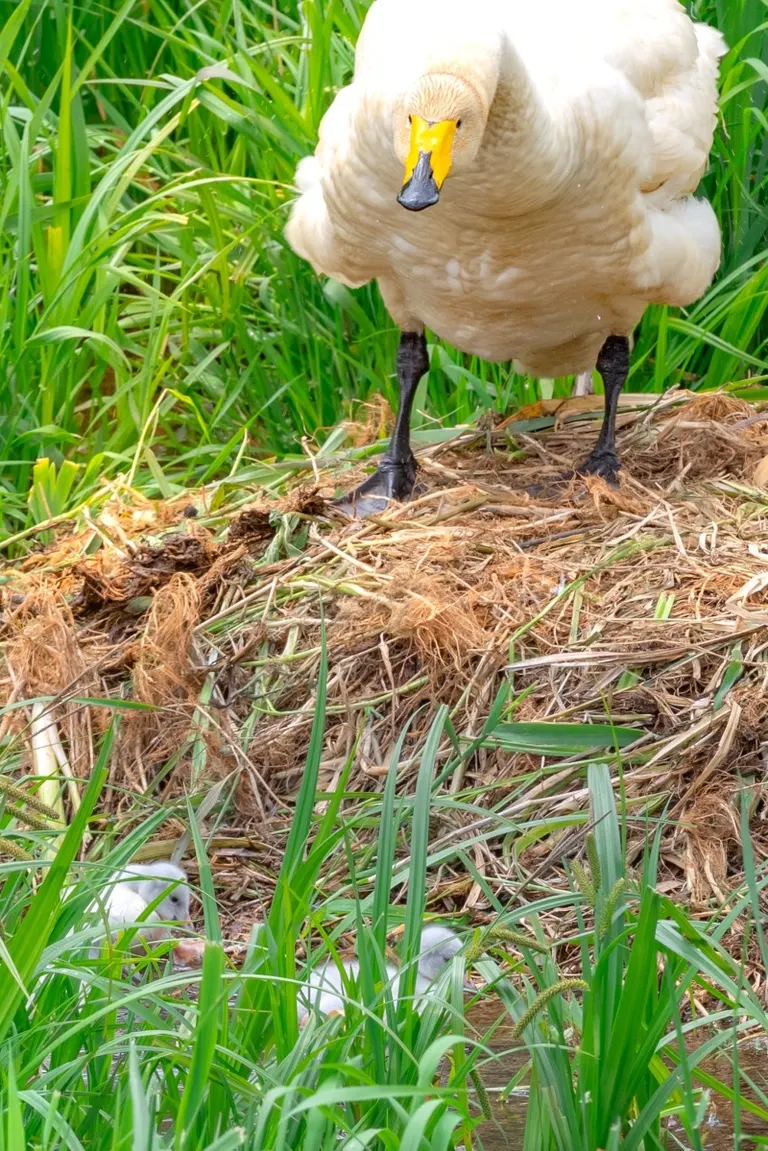
Epilogue: "The Harshness of Nature and the Preciousness of Life"
While Emi Kikuchi's observations come to a close here, the story of the whooper swans continued.
I've heard that a few days ago (at the time of the interview), one cygnet disappeared, and as of today, another one is gone, leaving only one with its parents. There are many crows nearby, and it's said they may have fallen victim to them, just like last year. This is probably a common occurrence in the natural world, but for me and the local residents who have been watching since the incubation period, it's incredibly sad...
The natural world is very harsh, and it's not easy for the cygnets to survive. Still, I am always moved by the precious lives born each year and the parents who protect them.
It's not uncommon for the smallest human actions to rob wild animals of their homes and even their lives. As a photographer, I'm always searching for what I can convey, what I can do as a human born on this wonderful planet.
It's not just about being adorable; it's about the harshness of nature and the weight of life. The powerful radiance of life seems to teach us something important.
※As a matter of etiquette, if you encounter wild animals, do not approach them carelessly and never feed them. Also, please watch over them quietly, avoiding actions that could stress the animals, such as loud noises, sounds, or bright lights (like camera flashes).
■X (formerly Twitter): @emin_kiss