


ARTICLES
From 'Bura Tamori' to 'Bura Satoru': The Past and Future of Street-Walking Historian Satoru Wada



You might have seen him on TV. Satoru Wada, also known as "Bura Satoru," is a street-walking historian who shares the fascinating history of Sapporo and Hokkaido through various media. We sat down with Mr. Wada to ask why he became interested in history and what his plans are for the future.
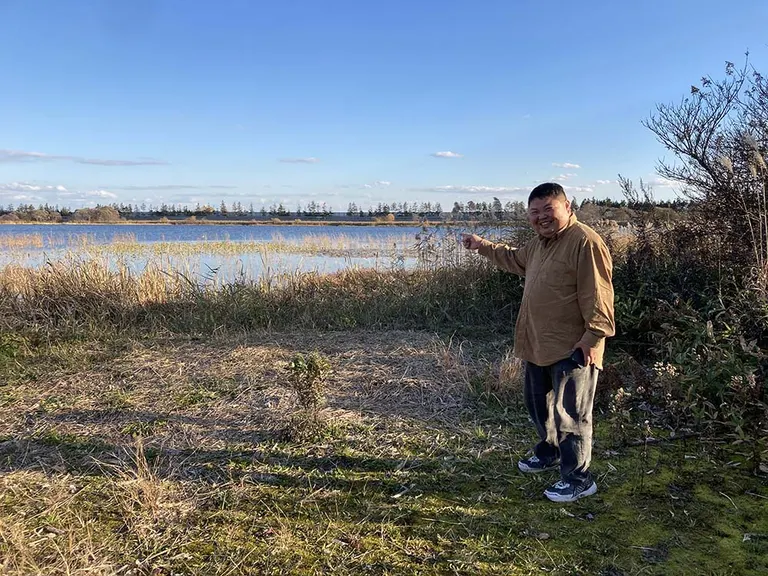
How an Old Stretch of the Ome Kaido Road Gave Birth to a Historian
Although he's now known as a street-walking historian, Mr. Wada's journey began in Tokyo. In 2008, while working in the capital, a major boom in visiting post towns was sparked by a 400th-anniversary event for the establishment of the Fifty-three Stations of the Tokaido. Inspired, Mr. Wada decided to walk the Ome Kaido road. He started from the Isetan department store in Shinjuku, chipping away at the route bit by bit on his days off.
"When I looked at old maps in the library, I realized that what seemed like an ordinary road was actually the old route," he says.
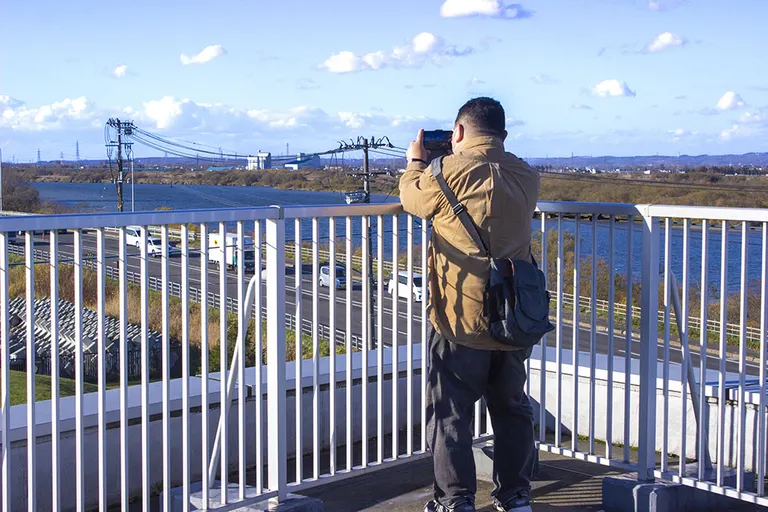
As he walked the old road guided by the maps, he noticed that it was a remarkably well-planned route, despite its age. Points of interest appeared at just the right intervals, and former post towns were conveniently located right where a traveler would start to feel tired.
Digging Deeper into a Childhood Question
When Mr. Wada returned to Sapporo in 2010 for work, he initially felt disheartened. "I thought I'd come back to a boring city with no history like Tokyo's," he recalls. But then he remembered a question that had puzzled him since he was five: the mystery of the streetcar avenue. In a city center dominated by straight roads, he had always wondered why the area near the Higashi Honganji tram stop had a gentle curve.
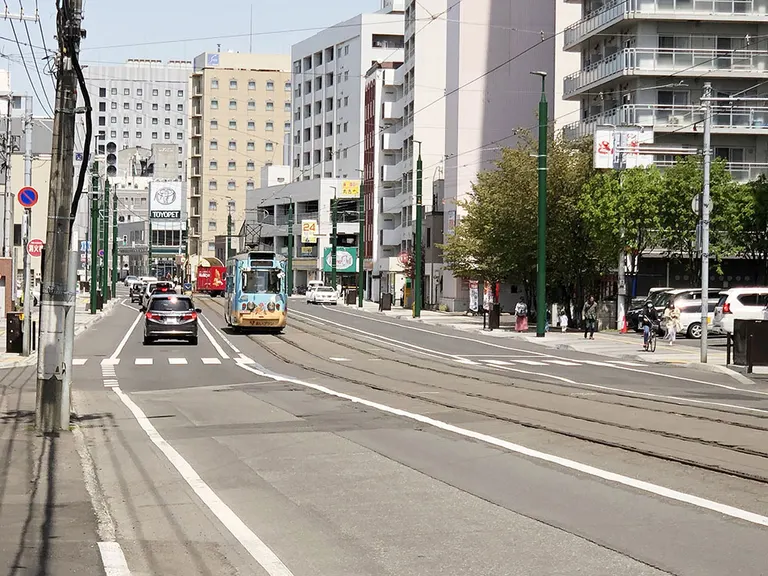
The actual curve
While researching the reason, he found historical documents indicating that Michitoshi Iwamura, the Development Commissioner at the time, and Kiyotaka Kuroda, the Vice-director of the Development Commission, did not get along. Although there are no official records explaining why the road is curved, Mr. Wada is convinced that the discord between the two men led to different approaches to city planning, resulting in a distortion that even affected how the roads were laid out.
"In mainland Japan, many facts like these would have been forgotten or obscured over time. But in Hokkaido, you can still find these episodes that reveal a raw, unfiltered human side to history that couldn't be completely hidden."
Shortly after returning to Sapporo, Mr. Wada began sharing his findings online under the name "Bura Satoru," a nod to the popular NHK TV show "Bura Tamori." He also joined Aruta Publishing Co., Ltd., which publishes the town magazine "O.tone," and launched his column "Walking with Old Maps," which has become a long-running popular feature.