

ARTICLES
For the Happiness of Makers and Eaters: Weaving Tokachi's Food Culture with 100% Local Wheat Bread



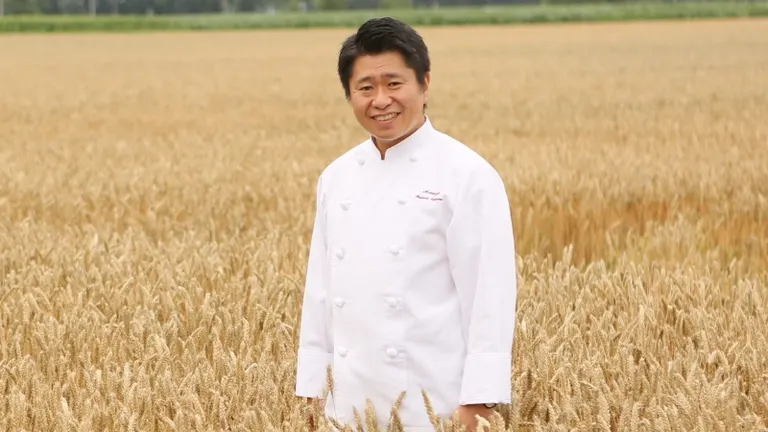
Founded in 1950, Masuya Shoten, born in Tokachi, has long been loved by the local community under the name 'Masuya Pan.' Masuya Pan was also the first in Japan to use 'Haruyutaka,' a bread wheat variety from Tokachi, Hokkaido. Today, they have achieved 100% use of Tokachi-grown wheat.
The company is led by its fourth-generation president, Masanori Sugiyama. Although he initially had no intention of taking over the family business, a series of fateful encounters led him down the path of a baker.
He wants people to feel happy by eating delicious bread. But more than that, he wants them to discover the charm of Tokachi through bread. With this grand ambition, Mr. Sugiyama continues to take on various challenges.
A Part-Time Job at a Bakery During His Student Years Was Pure Coincidence
"When I was a student, I wanted to be an aerospace engineer. So, after graduating from high school, I went to a university in Kagoshima to study the aerospace industry."
Initially, Mr. Sugiyama was trying to fulfill his dream in a field quite distant from the world of bread. The contrast is surprising, but what made him turn his attention to baking?
"After moving out of the student dormitory into an apartment to live alone, I started cooking for myself. That's when I gradually became interested in the taste of food. And when I was looking for a part-time job, a bakery happened to be hiring. At the time, I wasn't looking to train as a baker; it was truly just a coincidence that I started working part-time at a bakery."
This episode feels very fateful. Due to this turn of events, by the time he graduated from university, 'baker' had firmly become one of his future career options. However, he didn't immediately return to his hometown to take over the family business; instead, he first went to study in the United States.
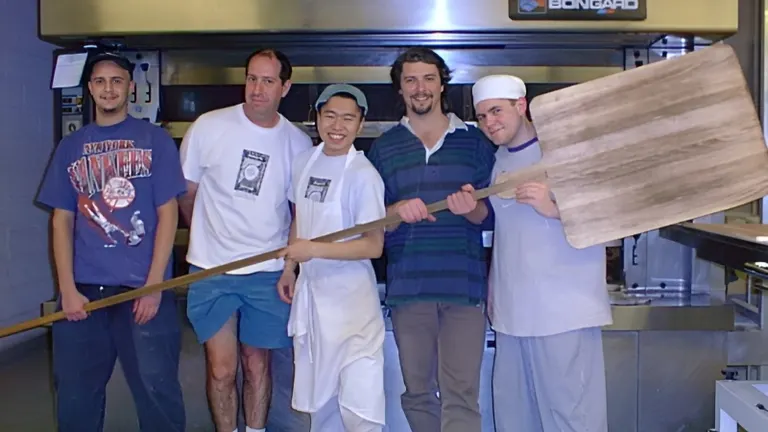
Mr. Sugiyama during his studies in the U.S. (third from left)
"At that time, the raw material for most of the wheat flour used in Japanese bread was from North America. I wanted to see the North American wheat and bread industry for myself first."
While learning English, Mr. Sugiyama attended a baking science research institute. It was a school for working adults, where people from the bakery industry not only in America but from all over the world came to train. In Kansas, one of America's leading wheat-producing states, he studied everything from the basics of baking science to practical skills in making bread and sweets, as well as management of the bread industry. Afterward, he gained experience at a bakery in New York.
"That was in 1999. The United States is a multi-ethnic country, and unlike Japanese bakeries, the variety of bread available is not uniform. Bagels, which originated from Jewish food culture, and flatbreads like those used for Middle Eastern kebabs were still rare in Japan at the time. New York had all sorts of bread from around the world."
Pondering Food Safety and Food Loss, He Starts a Greengrocer Business
After returning to Japan, his mother suggested, "Why not gain experience at a large company first?" Heeding her advice, he joined a major flour milling company that his family's business had dealings with. He worked for two years as a new product development leader for convenience stores.
"Convenience store bread requires a lot of attention to preservation to prevent spoilage, so we inevitably used a fair amount of additives. I was so busy back then that I developed stomach problems, which sparked my interest in natural food. This was around 2000, just when the concept of slow food from Italy was being introduced to Japan."
Amid news reports about food poisoning, fraudulent labeling of origin, and residual pesticides, Mr. Sugiyama began to think about what safe and secure food should be. He then resigned from the flour milling company. However, feeling it wasn't yet time to return to his hometown, he surprisingly started his own greengrocer business.
"I would source vegetables in the Kanto region and sell them to bakeries to be used in sandwiches and savory breads. In return, I would receive their unsold bread for the day and distribute it to homeless people. Anything that couldn't be eaten was sent to a pig farm for feed, and what was even more spoiled, I took back to my vegetable suppliers for producers to use as compost, creating a food cycle. Behind this was a strong desire not to waste the precious ingredients grown by producers."
While the system was completely waste-free, the lack of profit was a problem. After operating for six months, Mr. Sugiyama finally had to give up the greengrocer business. He was 25 or 26 at the time. "I could only do it because I was young," he says, but it must have been a valuable life-enriching experience.
Inheriting the Founder's Vision and Achieving 100% Use of Tokachi Wheat
After closing his greengrocer business, Mr. Sugiyama finally began to work on selling Masuya Shoten's bread. Initially, he started not in his hometown but as the head of the Tokyo sales office, selling at department stores and kiosks in the city. At the time, bread made with 100% Hokkaido wheat was rare, so it was well-received by those with a keen interest.
"After selling bread in Tokyo for about a year, I got married. I felt I had done everything I could outside my hometown, so I decided to return to Tokachi. Before that, I traveled around Europe for 70 days, visiting 10 countries to observe the bread culture in each region."
In each region, bread was deeply rooted in daily life as a part of the food culture. After experiencing the essential nature of food firsthand, he returned to Tokachi and joined the family business, Masuya Shoten. He began to think more deeply about the theme his father, the previous president, had established: 'the utilization of Tokachi wheat.' This was in 2004.
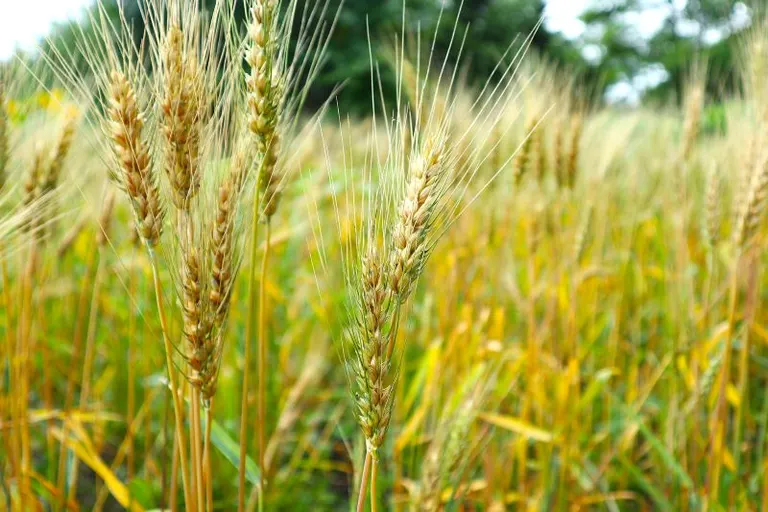
"It had been about 15 years since we set the very meaningful theme of utilizing Tokachi wheat. With progress in wheat breeding and other areas, it was a time when bakeries were finally starting to be able to use Tokachi wheat. On the other hand, there was still a gap between agriculture and consumers, and the concept of 'local production for local consumption' had not yet taken root. So, I decided to start by spreading this concept in the community through our own bread."
One of his initiatives was food education. Mr. Sugiyama began activities to let local people know the value of wheat grown in the rich land of Tokachi. While bread-making workshops were already being held at elementary schools, he sought an easier method and, in 2005, built a mobile stone oven. By having children knead Tokachi flour to make and eat pizza, he provides them with the valuable experience of 'deliciously eating wheat and cheese made in the place they live.'"
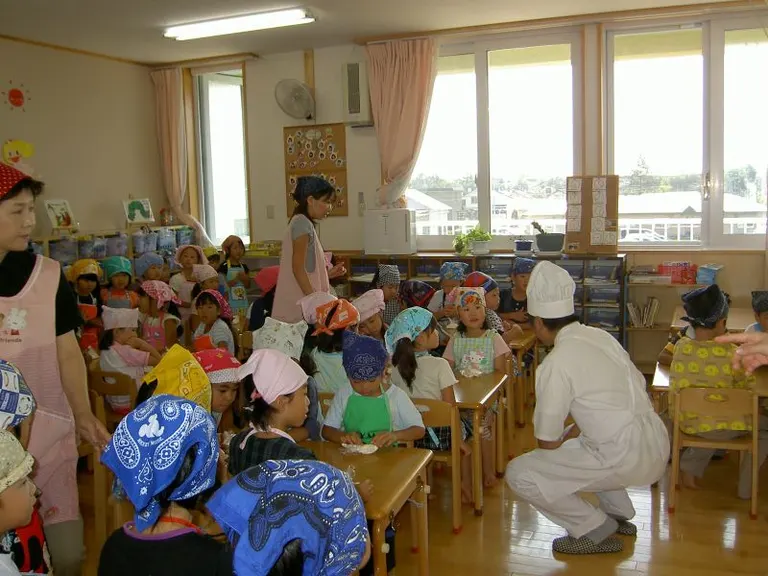
A bread-making class taught by Mr. Sugiyama at a nursery school
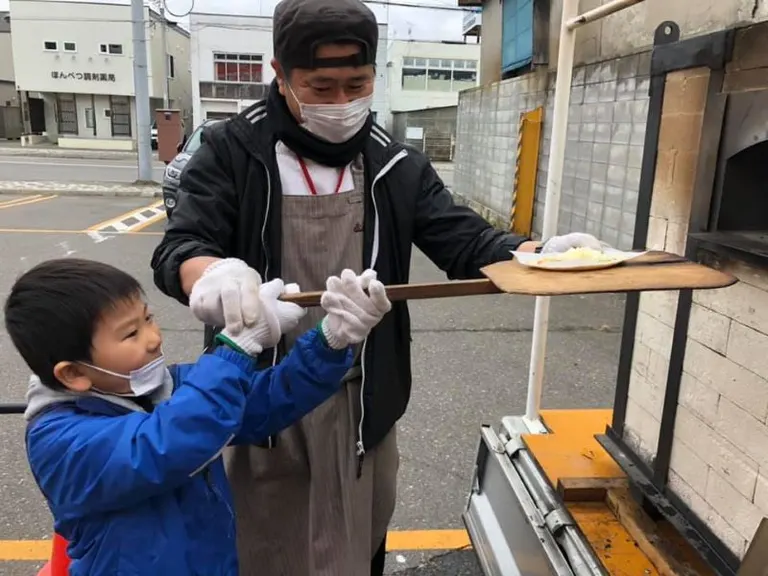
The oven is fueled by wood chips from Tokachi. The pizza is baked using ingredients from Tokachi from start to finish.
In 2007, he took over the presidency from his mother, the third-generation president. He steadily advanced the '100% use of Tokachi wheat' initiative, which had been a focus since his father's time, and by 2012, all stores managed by Masuya Shoten had achieved this goal. This was a revolutionary and major event. Even after that, his efforts to realize his grand ambition continued.
- 1
- 2