

![Your Hard Work Pays Off: A Career in Fishing in Rishiri and Suttsu, Hokkaido [Job Salon of the North (3)]|Domingo](https://p1-634a4370.imageflux.jp/w=768,f=webp:auto,q=78/https%3A%2F%2Fdomingo.ne.jp%2Fwp%2Fwp-content%2Fuploads%2F2021%2F01%2F16c870bf107d50901dc089c7dc5270ff.jpg)
ARTICLES
Your Hard Work Pays Off: A Career in Fishing in Rishiri and Suttsu, Hokkaido [Job Salon of the North (3)]



The theme of the third session was "Fisheries," featuring guests Kiyotaka Nakatsuji, a kombu kelp fisherman in Rishiri Town, and Takanori and Misa Mori, a couple who catch Atka mackerel and salmon in Suttsu Town.
We asked them about what inspired them to work in fisheries, the rewards of the job, and how they manage their lifestyle.
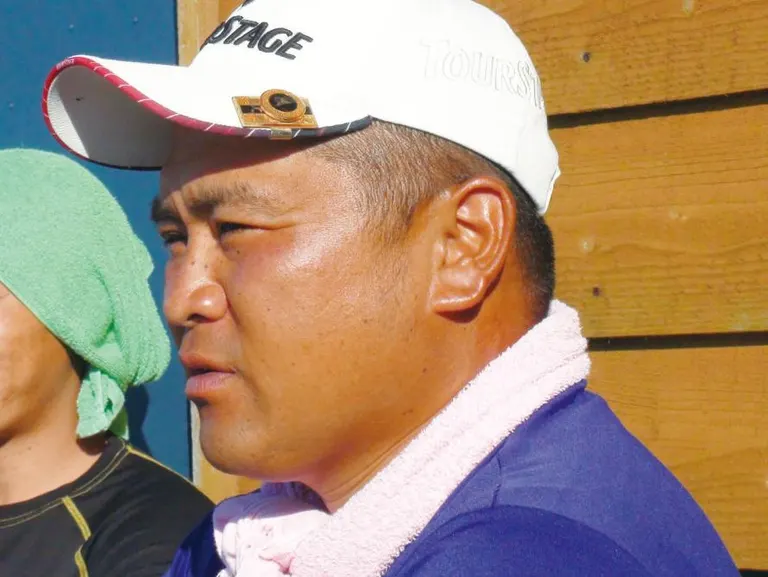 Nakatsuji Fisheries / Rishiri Town
Kiyotaka Nakatsuji
Nakatsuji Fisheries / Rishiri Town
Kiyotaka Nakatsuji
About the Fishing Industry in Rishiri Town
Rishiri is a town of fishing and tourism, and its specialty is Rishiri kombu. The sight of kombu drying in the sun is a classic summer scene in Rishiri. Besides kombu, the town is famous for sea urchins, with Ezo Bafun Uni and Kita Murasaki Uni being harvested in the summer. They have a mellow and rich flavor because they feed on Rishiri kombu. We also catch octopus, sea cucumber, Atka mackerel, and abalone.
Why I Decided to Work in Fishing in Rishiri Town
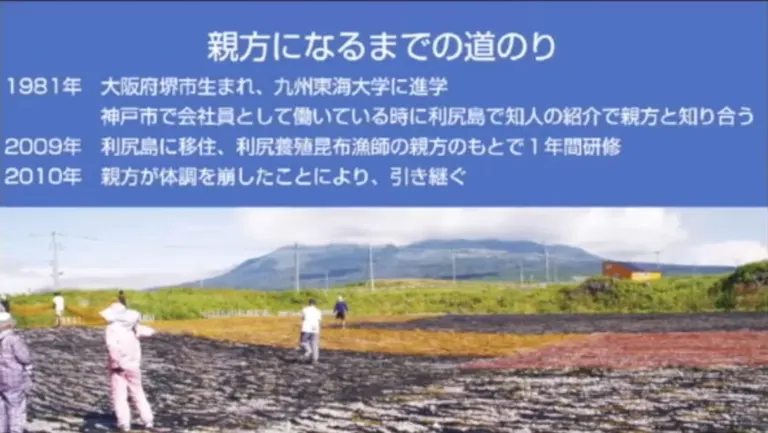
I was born in 1981 in Sakai City, Osaka, grew up in Hyogo Prefecture, and spent my university years in Kyushu.
Later, while working as a company employee in Kobe City, I visited Rishiri Island for work at the age of 27. This was my first connection to the island.
Through a mutual acquaintance, I met my master (oyakata) and decided to make a career in fishing on Rishiri Island.
My master wanted to pass on his kombu cultivation facilities, business, and techniques, and he was looking for someone to train and inherit them. Our goals aligned perfectly, and I began my training in 2009.
I was told it would take over five years to learn everything from scratch, but in the fall of 2010, I had to take over the kombu cultivation business suddenly due to my master's poor health. Even after that, he was always there to give me advice and support me.
Work at Nakatsuji Fisheries
At Nakatsuji Fisheries, our work revolves around Rishiri kombu year-round. When someone new wants to become a fisherman with us, the process involves them acquiring their own fishing rights. During the fishing season from June to September, they harvest sea urchins and wild kombu, and they also participate in the cultivated kombu work throughout the year.
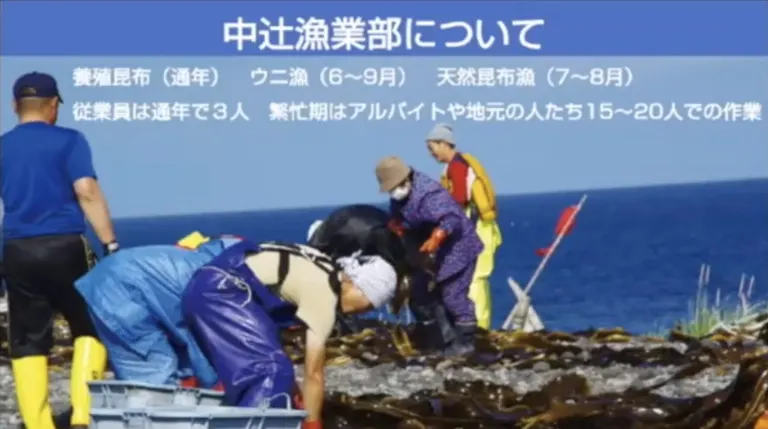
About the People Working at Nakatsuji Fisheries
Besides myself, I have three employees. Also, during the kombu harvesting season, we need more hands, so we work with about 15 to 20 people, including locals and part-timers from off the island.
To tell you a bit about my three employees, they all moved here from outside the island.
One is a friend from my time in Kobe, a former professional boxer. When he retired and was thinking about what to do next, I invited him to become a kombu fisherman. We've been working together for about seven years now.
Another is from Sapporo, whom I met at a job fair. We've been working together for about five years. The third person isn't a fisherman but helps with general tasks.
Additionally, we currently have a young trainee, introduced by the Rishiri town office, who is here for a two-week trial experience.
We have a place for trainees and seasonal part-timers to stay, so they live there during their time with us.
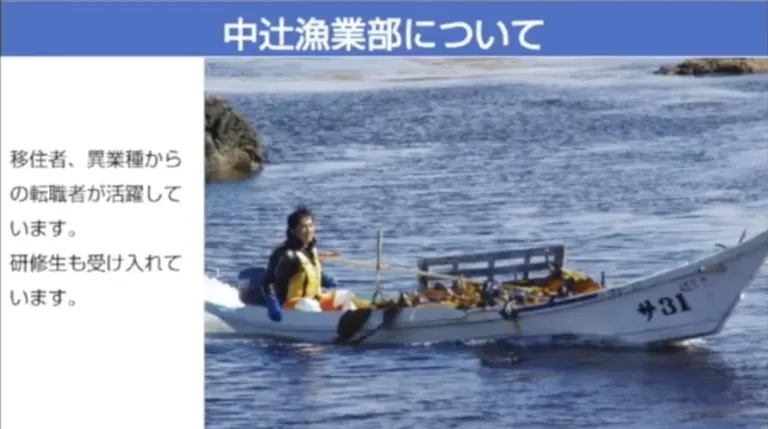
What is Rishiri Kombu Fishing?
Rishiri kombu can be broadly divided into two types: "wild" and "cultivated."
For wild kombu fishing, we harvest naturally growing kombu during the summer.
For cultivated kombu, the process is similar to rice farming, with a "planting" phase and a "harvesting" phase. To briefly explain the annual cycle, in winter, we attach baby kombu to ropes and put them out to sea. The following summer, we pull up the ropes with the grown kombu. In the fall, we begin the processing work, and then winter comes again.
Rishiri kombu produces a clear and flavorful dashi (broth), so it seems to be mainly shipped to high-end restaurants in Kyoto.
The Rewards and Appeal of Being a Fisherman
In terms of salary, unlike a salaried worker with a fixed monthly income, it can be good or bad depending on your own effort. That's part of the appeal.
For example, even for new fishermen, catching more sea urchins or harvesting more wild kombu directly translates to their own income. Seeing your hard work directly reflected in your earnings is very rewarding.
Also, for cultivated kombu, we land the entire year's catch during the busy summer season, so it gets very hectic. It might be tough for someone who can't push themselves during that period.
If you don't work hard then, life gets tough in the winter. Both your efforts and your lack of effort come back to you.
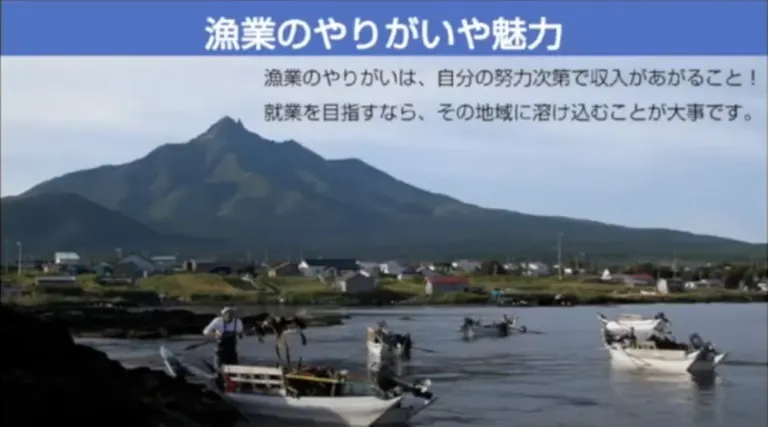
Moving from Another Region to Become a Fisherman
Fishing is a job that's only possible because of the local community's resources. So, if you're going to make your living fishing in a certain area, it's important to live in a way that you blend into the community to some extent.
It's not just about "yourself," but also about thinking of the "community" and making an effort to fit in.
When I say blend in, I think it's about doing the basics right. Greeting people when you see them, mowing the lawn around your house, and taking care of your appearance so you don't seem sloppy—I think these things are important!
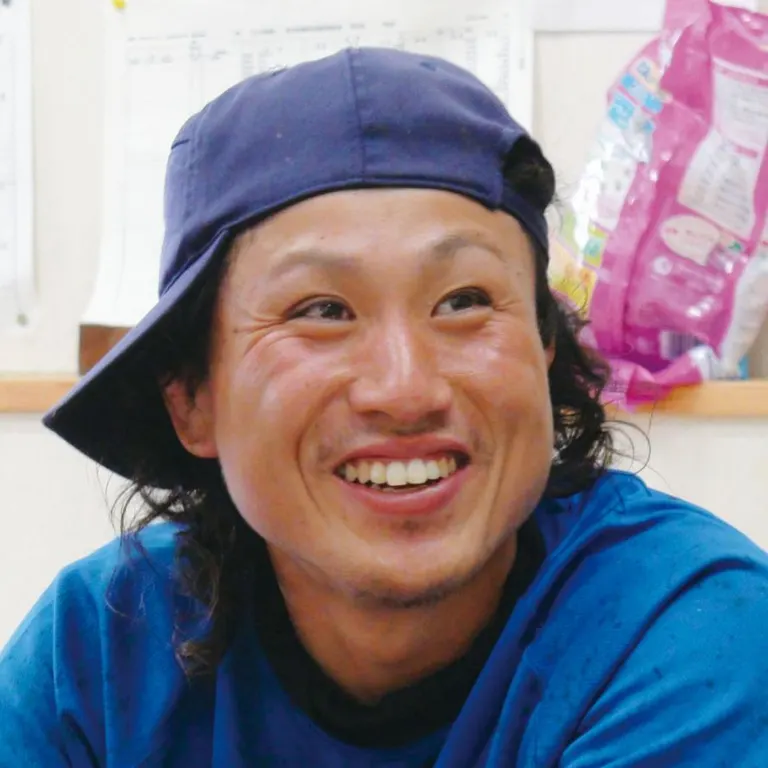 Maruhon Konishi Fisheries Ltd. / Suttsu Town
Takanori Mori
Maruhon Konishi Fisheries Ltd. / Suttsu Town
Takanori Mori
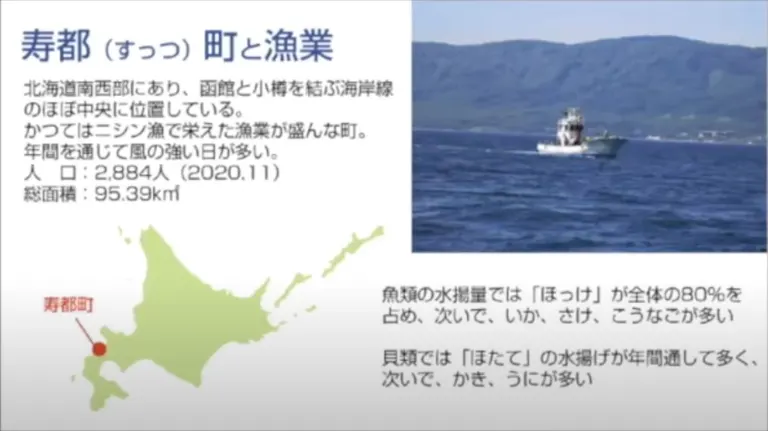
About the Fishing Industry in Suttsu Town
Suttsu Town is located in southwestern Hokkaido. It has a history of prospering from herring fishing, and you can still see Herring Mansions. Recently, herring have started to return.
In terms of catch, about 80% is Atka mackerel, followed by squid, salmon, and sand lance.
For shellfish, we farm scallops year-round, and our oysters are branded as "Sutsugaki" as we work to expand their market. In the summer, we catch sea urchins.
Why I Decided to Work in Fishing in Suttsu Town
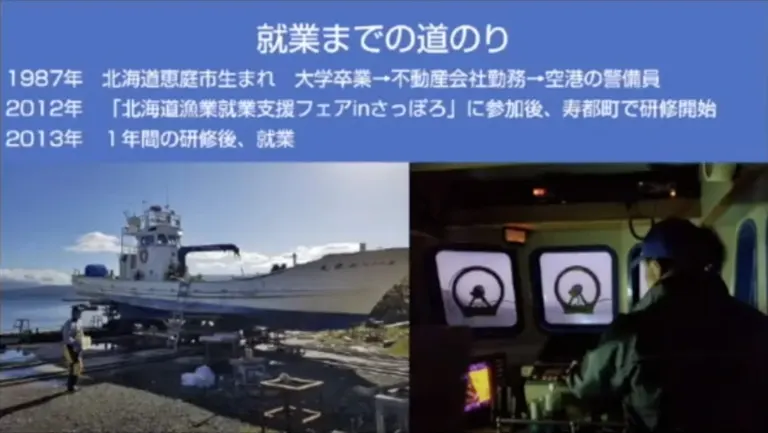
I was born and raised in Eniwa, a city in Hokkaido with no access to the sea, in a family with no connection to the fishing industry.
I had worked in real estate and airport security, but my love for fish and a desire for a more fulfilling job led me to the Hokkaido Fisheries Employment Support Fair. That's where I met my current boss, and the rest is history.
I chose Suttsu Town because it was relatively close to Eniwa, where I lived, making it a realistic option, and because I was drawn to my boss's personality. A major factor was that he gave me concrete details about housing and salary, which made it easy to picture my life there.
I was already married at the time, so I was very nervous about telling my wife I was becoming a fisherman and moving to Suttsu, but I was grateful that she accepted it relatively easily.
What I Wanted to Do Was Catch Fishing
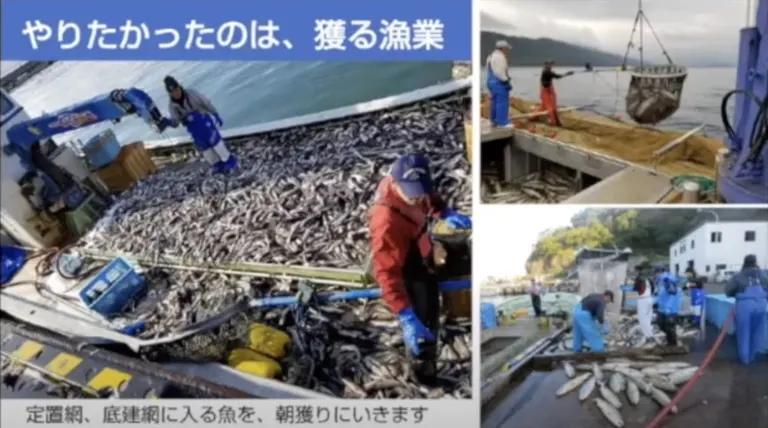
At Maruhon Konishi Fisheries Ltd., we do some aquaculture, but our main work is fishing with "fixed nets (teichi-ami)" and "bottom-set nets (sokotate-ami)."
The large photo on the left is from Atka mackerel fishing. The season for Atka mackerel is from November to March, and we catch them with bottom-set nets. The photo shows about 20 to 30 tons! That's about how much we catch each time we go out.
The photo on the right is of salmon, which we catch from September to November. We use fixed nets for salmon and for the buri (Japanese amberjack) we catch in the summer.
Last year's Atka mackerel catch was about 1,000 tons.
I like aquaculture too, but I find catch fishing truly rewarding. The thrill of the catch is immeasurable!
About the People Working at Maruhon Konishi Fisheries
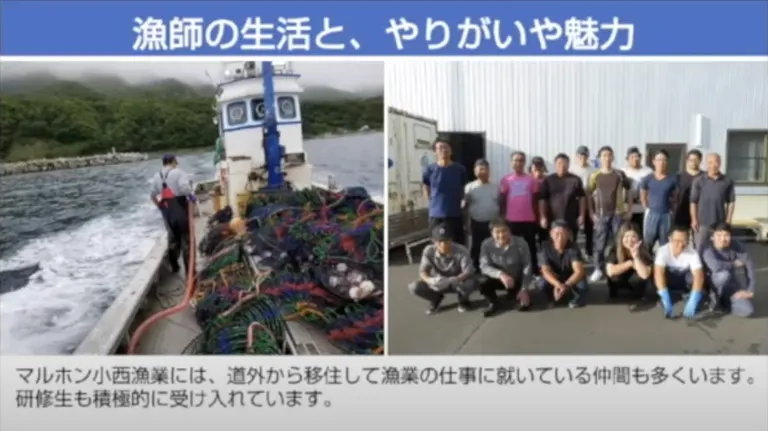
Including the boss, 16 men go out to fish, while 3 women handle sorting and office work.
Of the men, half (8) are from outside the town, and of those, 3 are from outside Hokkaido.
About 4 people, like us, came here through the Hokkaido Fisheries Employment Support Fair.
 Maruhon Konishi Fisheries Ltd. / Suttsu Town
Misa Mori
Maruhon Konishi Fisheries Ltd. / Suttsu Town
Misa Mori
I don't go out on the boats; I do fish sorting and office work.
I never imagined I would be involved in the fishing industry, but it's fulfilling and fun.
Honestly, at first, I had barely touched a fish and didn't even know what an Atka mackerel looked like. As I continued, I learned so much, everyone was very kind, and I got used to the work and life here, and it became enjoyable. Most of all, I've come to really love fish. The freshness is completely different from the fish I ate back in Eniwa, so it truly changed my perception of fish.
Moving from Another Region to Become a Fisherman
Basically, if you have the motivation, I think the townspeople will accept you!
As Mr. Nakatsuji also said, it can be tough if you're not accepted by the local community. This isn't just true for Suttsu; it's the same in any region.
If you make a point to greet people, show up at local events, and interact with the townspeople honestly, I think they'll understand!
As for housing, the town has housing for promoting settlement. Suttsu has many people who have moved from outside the town, so the systems and facilities are quite well-developed.
Q&A Corner
 Could you tell us your schedule on a busy day as a fisherman?
Nakatsuji Fisheries / Rishiri Town
Kiyotaka Nakatsuji
The busiest time is during the kombu harvesting season!
I work on this schedule for about one month out of the year.
2:00–2:30 AM... Wake up
3:00 AM... Depart from port
3:00–4:00 PM... End of workday
Maruhon Konishi Fisheries Ltd. / Suttsu Town
Takanori Mori
The busiest time for us is the summer.
4:00–4:30 AM... Wake up
5:00 AM... Depart from port
7:30 AM... Return to port
7:30–10:00 AM... Sorting and shipping to various locations
10:00 AM–12:00 PM... Net maintenance, setting up Atka mackerel nets, net repairs, etc., depending on the weather
12:00–1:00 PM... Lunch break
1:00–5:00 PM... Same as the morning
5:00 PM... End of workday
What do you think are the best parts of changing your career?
Nakatsuji Fisheries / Rishiri Town
Kiyotaka Nakatsuji
Since Rishiri kombu work is seasonal, it's extremely busy at times, but I can take time off when it's not. Specifically, I have a lot of downtime from January to mid-March, in May, October, and early November.
When I was a company employee, I had to go to the office at a set time every day. My work style has changed dramatically, and I have more free time now.
I use my days off to interact with the community and spend time with my children and family.
Maruhon Konishi Fisheries Ltd. / Suttsu Town
Takanori Mori
I feel very fulfilled because I'm doing something I truly want to do, and the harder I work, the more my income increases, which motivates me.
Sundays are my day off, and my wife and I go out of town for shopping and other things.
Conclusion
This time, we spoke with two groups: Mr. Nakatsuji, who took over a cultivated kombu fishing business in Rishiri Town, and the Moris, who are dedicated to catch fishing in Suttsu Town. Both groups were wonderful people who felt a strong sense of reward and enjoyment in their work as fishermen, while also actively engaging with their local communities. If you're thinking, "I'd like to work in agriculture, forestry, or fisheries in Hokkaido" or "I'd like to hear more," why not take a step toward making your dream a reality by joining an online event or consulting with a local municipality? The next "Job Salon of the North" will be the "Forestry Edition." It will be held on January 17th (Sun) from 2:00 PM. Please sign up from the link below!
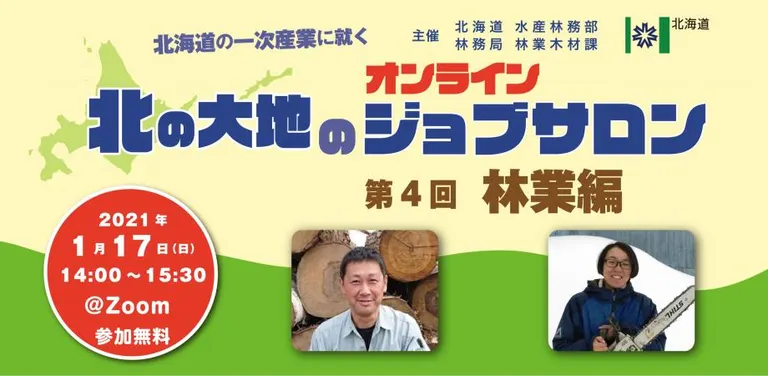
Job Salon of the North 4th Session: Forestry Edition
Click this image to register.