

ARTICLES
Building Communities with Television: An Introduction (Adventures in Local Media, Part 1)



Why is a small local program by NHK Hokkaido said to be “shaking up old media”?
When a TV station lets go of the reins of program production,
a new era begins, where a delightful group of friends “builds a community using television.”
Hello, I'm Ryo Osumi, a director at NHK. I'm currently involved in producing a program series called "Local Friends Stay" and "Local Friends News." In these programs, we call people with deep local connections “Local Friends” and have them share information about their communities. They are mainly broadcast as segments on Thursdays and Fridays during the 6 p.m. news program "Hot News Hokkaido."
A key feature of the program is that it covers "niche stories that you wouldn't notice unless you lived there," topics that traditional TV programs haven't touched. Through the Local Friends series, we've aired stories like these:
・The gyoza dumplings made by Ms. Sato, a housewife in Nakashibetsu Town, were so delicious and popular that she decided to open a shop. However, she was bad at making flyers, so her son started helping out, which eventually led to him becoming a designer.
・On the third floor of a long-established café in Hakodate, there's a collection of old books gathered by the owner. When he posted photos of the covers of these niche books on social media, he received inquiries from an American art museum and an Islamic researcher. But the owner doesn't speak English, so he's getting by with the help of Google Translate.
・In Kimobetsu Town, there's a small, easily overlooked building (a garage) that is actually a restaurant serving stateless cuisine. The chef is whimsical, and there's no menu. A neighboring farmer, amused by this, started growing habanero peppers for the restaurant's dishes.
You could never find stories like these just by looking for them. This is information you can only get by living in a place for a long time and keeping your ear to the ground. Our Local Friends are the ones who teach us about this heartwarming and deeply resonant local life that other media haven't yet reported on.・On the third floor of a long-established café in Hakodate, there's a collection of old books gathered by the owner. When he posted photos of the covers of these niche books on social media, he received inquiries from an American art museum and an Islamic researcher. But the owner doesn't speak English, so he's getting by with the help of Google Translate.
・In Kimobetsu Town, there's a small, easily overlooked building (a garage) that is actually a restaurant serving stateless cuisine. The chef is whimsical, and there's no menu. A neighboring farmer, amused by this, started growing habanero peppers for the restaurant's dishes.
We pride ourselves on our deep co-creative relationships
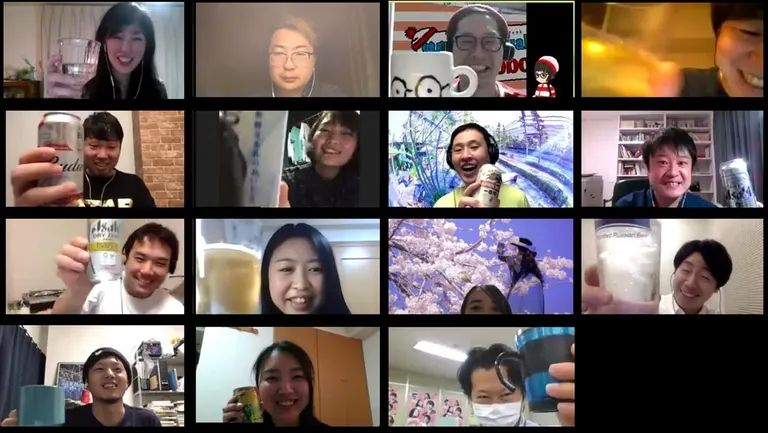
The content of the program is unique, but the way it's made is even more unusual.
(1) The program wasn't originally planned by NHK; it was an external pitch.
(2) We publicly recruit Local Friends. The acceptance rate is almost 100%.
(3) A diverse range of people participate, including Buddhist monks, hunters, housewives, and employees of large corporations.
(4) The Local Friends decide which local people and initiatives to feature on the show.
(5) The operational policy of the program is decided through discussions between the Local Friends and NHK.
(6) We have a signature segment where a director lives with a Local Friend for a month ("Local Friends Stay").
(7) The relationship between the Local Friends and NHK Hokkaido is ongoing ("Local Friends News").
Can you get a sense of the unprecedentedly deep relationship between the TV station and the local people? In this series, I hope to share the "hints for co-creation" that the Local Friends and NHK Hokkaido have discovered.
By the way, and this might seem sudden, but there's something I've been thinking about in my daily work.
These days, the words of television don't reach people.
Even famous national programs sometimes get no reaction at all.
Until two years ago, I was producing news programs and documentaries at the NHK Broadcasting Center in Shibuya. Once, for a news program, I made a call-out for viewers to send in personal information and messages about a topic we were covering.
I expected to be busy, but when I came to work the next morning, we had received only "4 messages." I was struck by the fact that even with a national broadcast reaching millions of households, just because you transmit something doesn't mean it's received. I feel that, in general, information from mass media, where the face of the sender is not clearly visible, tends to be distrusted and ignored.
In contrast, "Local Friends" receives dozens of messages every time.
Sometimes we get over 100. On April 1, 2021, an episode where a Local Friend from Wakkanai introduced the town's snowboarders received 110 messages.
It’s not trying too hard. It's lovely. (Yuki)
I was born and raised in Hokkaido, but the northern part of the island is an unknown area to me, so I find this very interesting. (Momo Mama)
I thought it was a town with nothing, but there are passionate people working to liven up their hometown, and there's delicious food... It makes me want to visit! (akko)
I'm grateful to learn about local information. Since we can't go out now because of COVID, I think this is great information sharing. (Fu-chan)
This is a wonderful project! I also know many wonderful places, so I'd love to share them! (Horonobei)
***
*Messages sent to the program are posted on the NHK website.
https://www.nhk.or.jp/hokkaido/localfriends/
For me, who was getting used to television's messages being ignored, these words are truly heartwarming.I was born and raised in Hokkaido, but the northern part of the island is an unknown area to me, so I find this very interesting. (Momo Mama)
I thought it was a town with nothing, but there are passionate people working to liven up their hometown, and there's delicious food... It makes me want to visit! (akko)
I'm grateful to learn about local information. Since we can't go out now because of COVID, I think this is great information sharing. (Fu-chan)
This is a wonderful project! I also know many wonderful places, so I'd love to share them! (Horonobei)
***
*Messages sent to the program are posted on the NHK website.
https://www.nhk.or.jp/hokkaido/localfriends/
This is just a few-minute segment in an evening news program on a local Hokkaido broadcast.
So why does it get such a response? I believe it's because the program is created not for the convenience of the media, but with the real feelings and words of the people living in the community.
Perhaps it wasn't that the words of television weren't reaching people, but that the words of the TV station weren't. That's what I feel now.
A small adventure that began in Hokkaido
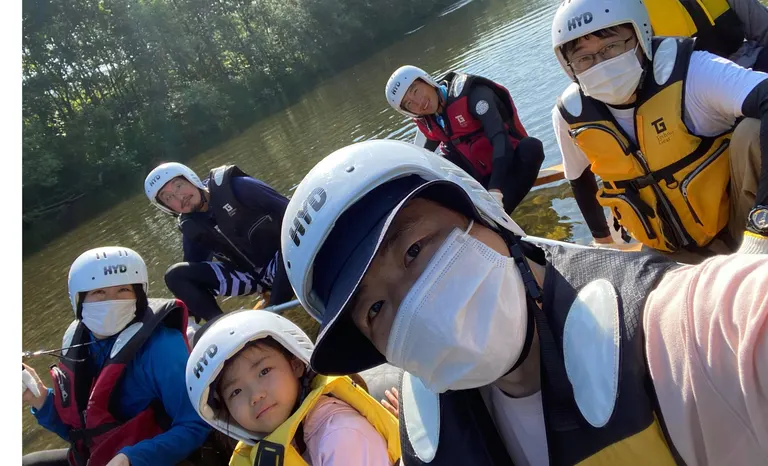
I got a bit carried away talking about the program's content and how it's made...
But what's truly interesting about Local Friends isn't the broadcast itself.
It's the inspiring success of the unique Local Friends as they "use the program to build their communities."
For example, there was a town with low name recognition, a place its own residents would say, "people just pass through here." But one Local Friend, with the conviction that "it's actually an interesting town," produced a month-long "Local Friends Stay" segment.
Now, four months after the broadcast, a group formed through the program is promoting new local businesses. Magazines and commercial broadcasters have started featuring it as an "interesting town to watch." The tide has clearly turned.
Hey, it turns out there's still a lot television can do!
That's my honest feeling. In an environment where we're called "old media" at best, and sometimes even "obsolete," we've begun to see a new role for television.
Recently, we've been getting frequent inquiries from NHK headquarters and other regions asking to learn the Local Friends' methods. We've also been featured multiple times by Hokkaido's newspapers and radio stations. Perhaps the new ground broken by the Local Friends will change the relationship between communities and the media.
I hope that the behind-the-scenes story of how this unconventional program came to be, and the struggles we've faced, will be a useful reference for people in local communities and the media. We are always looking for new Local Friends, so if you're interested, please take a look at the NHK Hokkaido Local Friends Stay homepage.
And so, the adventure begins on a certain winter night.
At an izakaya in Sapporo, a mysterious man handed me a "proposal for Local Friends."
Who on earth was he? To be continued in the next installment.
The series "Adventures in Local Media" is scheduled for a total of 6 installments.
Author Profile
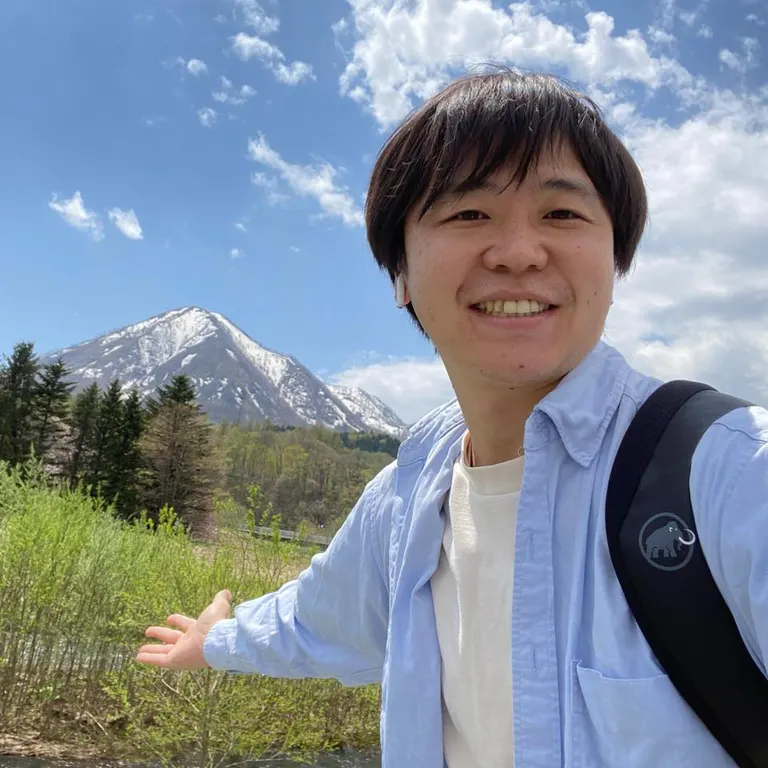 Director, NHK Sapporo Station
Ryo Osumi
Director, NHK Sapporo Station
Ryo Osumi
Born in 1984 in Mishima City, Shizuoka Prefecture. Joined NHK as a director in 2008. He specializes in launching new projects and has developed programs such as "No-Narrator" and "Professional Children's University." Since 2019, he has been in Hokkaido, planning "Local Friends," "Shiraberuka," and "Moya Cafe" (Obihiro Station). For Local Friends, he has been involved in productions in Eastern Hokkaido, Hakodate, Date, Nakashibetsu, Shiretoko, Kiyosato, Soya, Kimobetsu, and Teshikaga. Despite his youthful appearance, he is a father of two. He has been skiing for two years.