

ARTICLES
A Fan's Must-See! 7 'Golden Kamuy' Pilgrimage Spots in Otaru



Set in Meiji-era Hokkaido, Satoru Noda's popular manga 'Golden Kamuy' depicts a scramble for a hidden cache of gold said to have been left by the Ainu people. The series has sold an astonishing 29 million copies (as of August 2024), and the live-action movie released in January 2024 was a massive hit, grossing 3 billion yen. The drama series, which began airing on WOWOW in October of the same year, is also creating a buzz. A great way to immerse yourself even deeper into the world of 'Golden Kamuy' is by making a pilgrimage to the real-life locations in Otaru, where the story is set. This article will introduce you to the key pilgrimage spots within Otaru City!
- See an illustration by Satoru Noda himself! Learn about Meiji-era Otaru at the Otaru City General Museum Canal Museum
- One of the most unique characters! Relive Henmi-chan's iconic scenes in the Shukutsu Area
- The Old Aoyama Villa: A mansion that speaks of the herring fishing boom
- More famous locations: Otaru Romankan, Taisho Glass Palace, and the Otaru City General Museum Main Building
- End your tour with a sweet treat at Niikuraya Hanazono Main Store
See an illustration by Satoru Noda himself! Learn about Meiji-era Otaru at the Otaru City General Museum Canal Museum
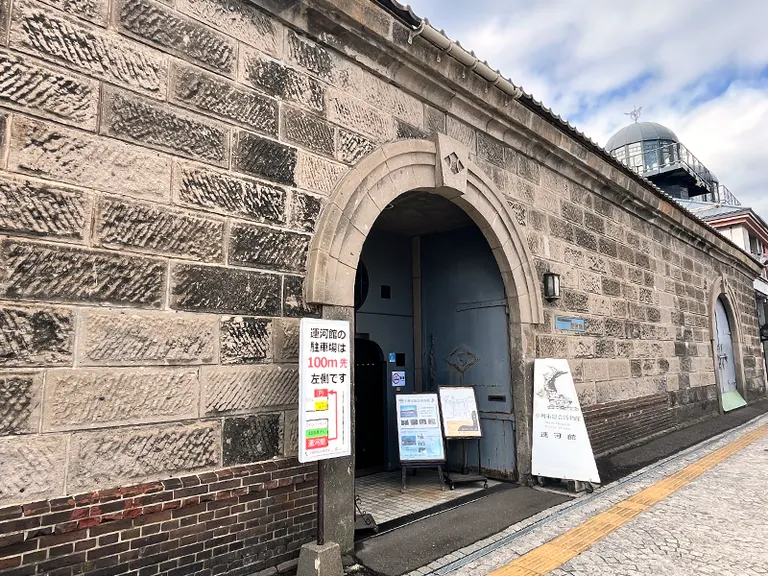
The first place you should visit is the Otaru City General Museum Canal Museum, located along the Otaru Canal. It's filled with materials and exhibits about the history and nature of Otaru, which prospered from finance and herring fishing during the Meiji era. "While late Meiji-era Otaru is often associated with its financial district, it was also a chaotic, anarchic, and energetic town where rough-and-tumble men gathered to seek their fortunes," says museum director Naoaki Ishikawa. By seeing historical photos of the old townscape and the tools used at the time, you can gain a deeper understanding of the world of 'Golden Kamuy'.
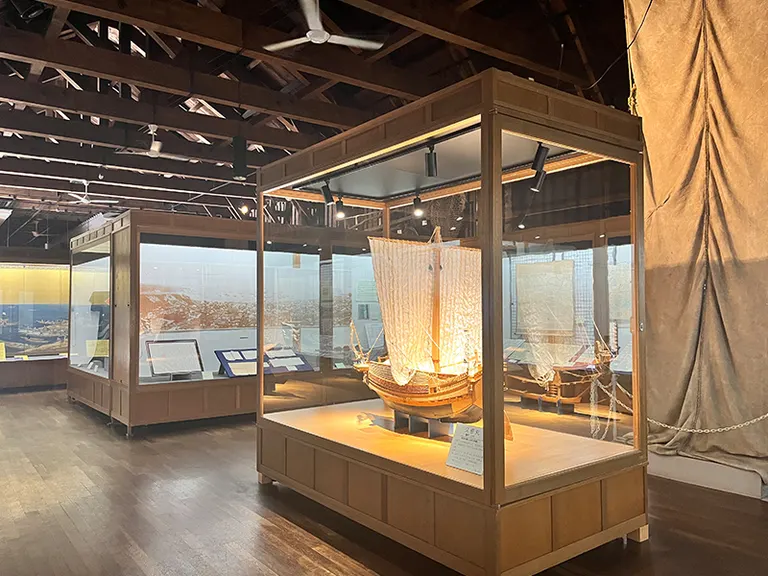
Approximately 20,000 items on display showcase Otaru's history from the Ainu period to modern times.
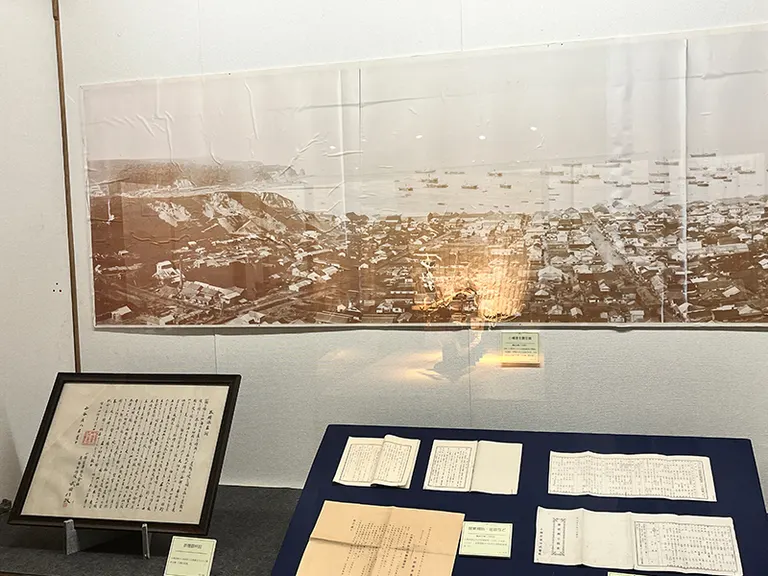
Photos of old Otaru's streets served as reference material for the production of Golden Kamuy.
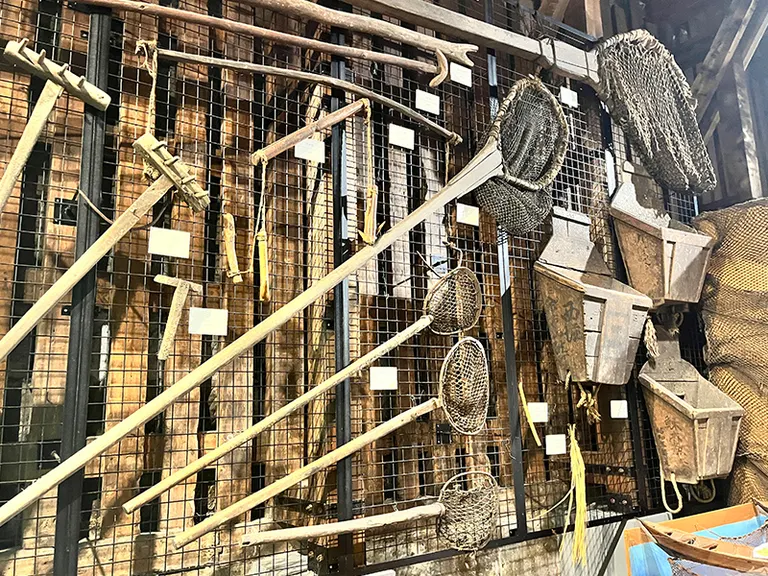
Many herring fishing tools, like those seen in episode 2 of the drama, are also on display.
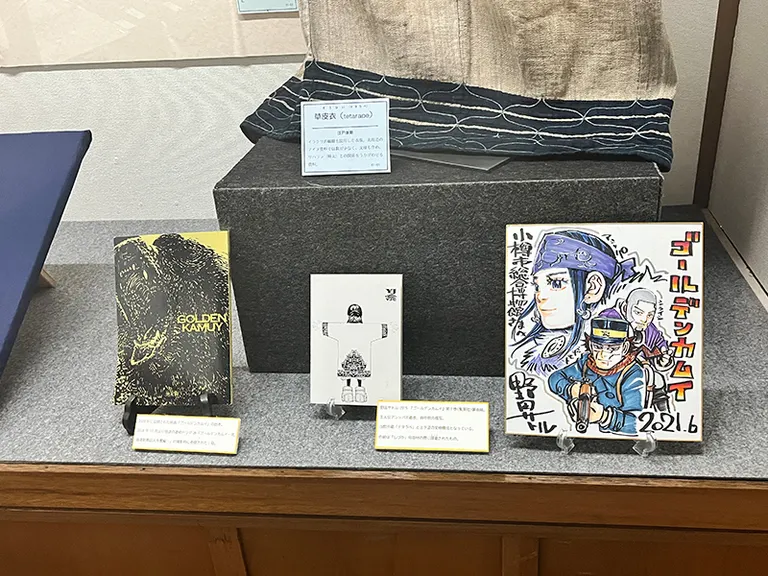
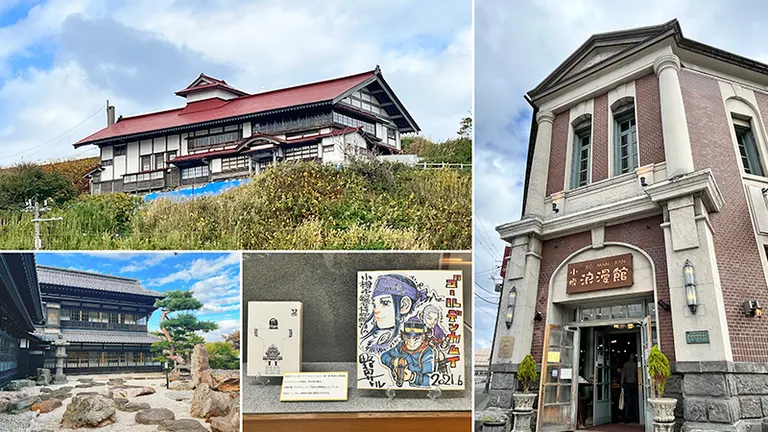
During the production of the manga, movie, and drama, author Satoru Noda and the anime and live-action staff visited the museum to conduct thorough research on authentic Meiji-era materials. Director Ishikawa was surprised by their dedication, saying, "I was amazed at how extensively they researched." A hand-drawn illustration board (shikishi) donated by Satoru Noda is displayed for limited periods to prevent fading. The current exhibition is scheduled to run until January 22, 2025 (Hyakunosuke Ogata's birthday).
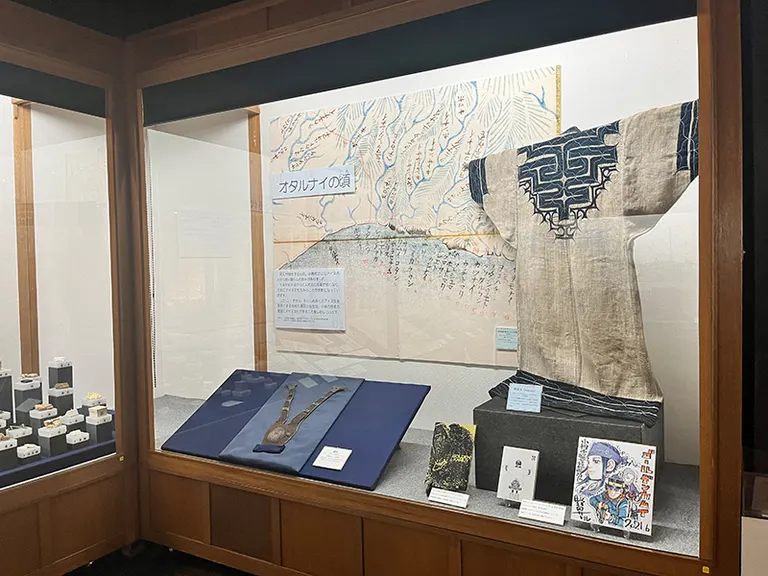
In addition to the illustration, the movie script and an Ainu costume (tetaraper) are also on display.
 Otaru City General Museum Canal Museum
■ Location: 2-1-20 Ironai, Otaru City
■ Admission Fee
General: 300 yen, High school students & Otaru residents aged 70+: 150 yen, Junior high school students and younger: Free
■ Opening Hours: 9:30 AM - 5:00 PM
■ Closed: Year-end and New Year holidays
Click here for details and map information for the Otaru City General Museum Canal Museum
One of the most unique characters! Relive Henmi-chan's iconic scenes in the Shukutsu Area
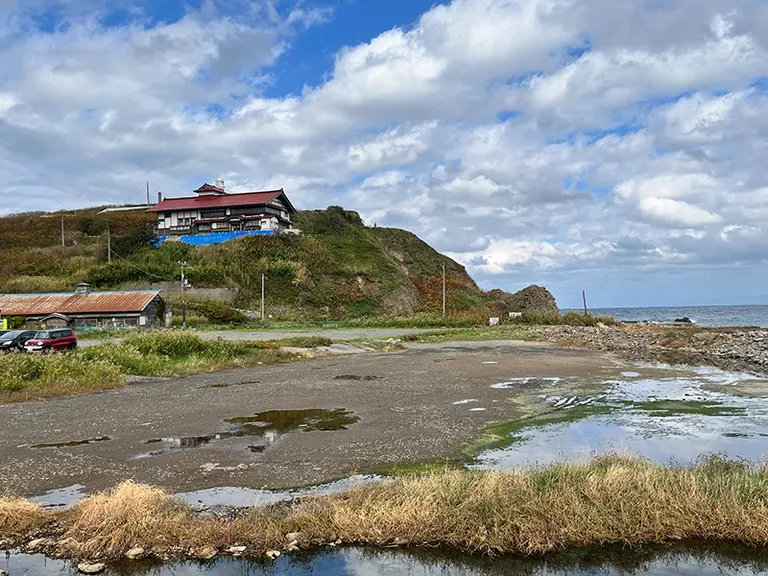
The Shukutsu area, a 20-minute bus ride from downtown Otaru, is dotted with filming locations from episode 2 of the drama. The scene at the herring fishery where the tattooed prisoner Kazuo Henmi worked was filmed on the beach in front of Aotsuka Shokudo, a popular seafood restaurant. Filming also took place at the Otaru Nishin Goten (Herring Mansion) on a small hill, but it is currently closed to the public.
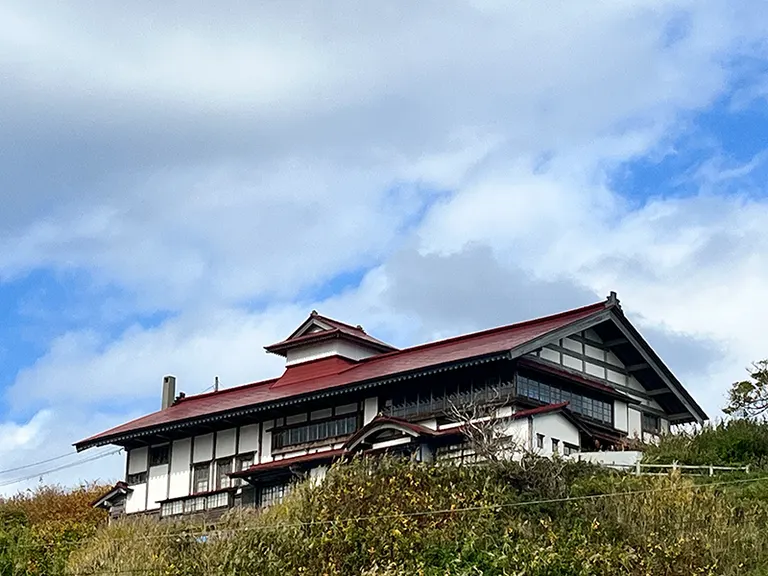
The Nishin Goten is a historical building designated as a Tangible Cultural Property of Hokkaido.
The Former Shiratori Guard House (Kyu Shiratori-ke Banya), located right next to the Nishin Goten, also appeared in the drama. You can view its exterior, and the rugged beach in front was also used for filming, so you can stroll around and recall scenes from the show. The Otaru Aquarium is also nearby, making it a great spot to visit as part of your sightseeing tour.
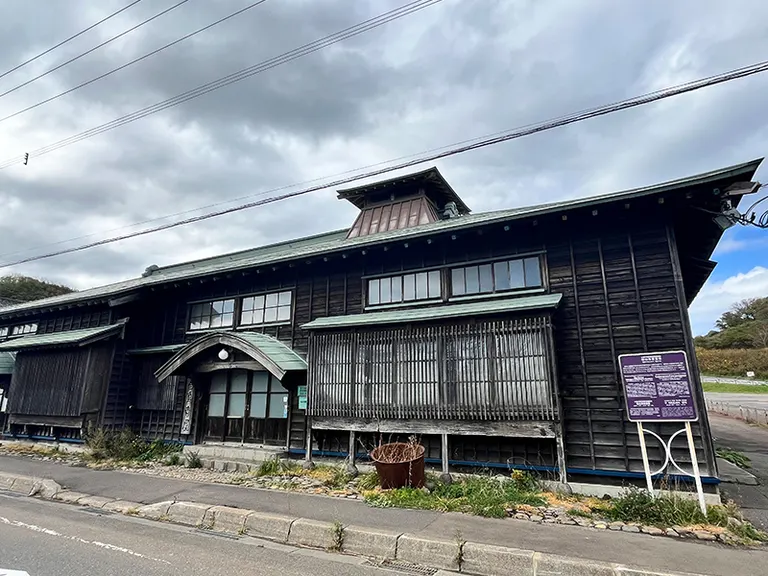
The Former Shiratori Guard House is a historical building designated by Otaru City, built in the 1870s.
The Old Aoyama Villa: A mansion that speaks of the herring fishing boom
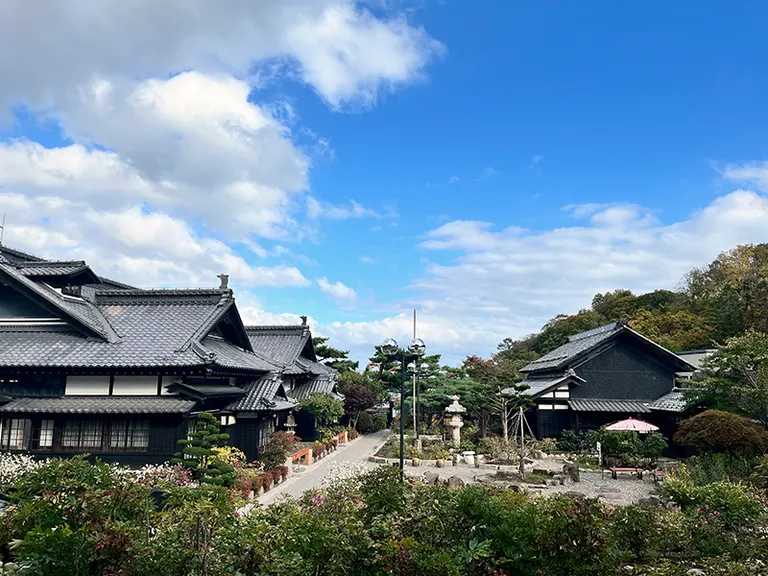
A 10-minute walk up the hill from Shukutsu beach brings you to the Nishin Goten Otaru Kihinkan (Herring Mansion). On its grounds is the Old Aoyama Villa, which is open to the public for a fee. In the original manga, this was the model for the lavish mansion of the herring fishing boss who employed Henmi. It features the room where Lieutenant Tsurumi played the piano, the karesansui (dry landscape garden) depicted on the back cover of manga volume 4, and the luxurious toilet that amazed Asirpa.
*The "ri" in Asirpa is a small character.
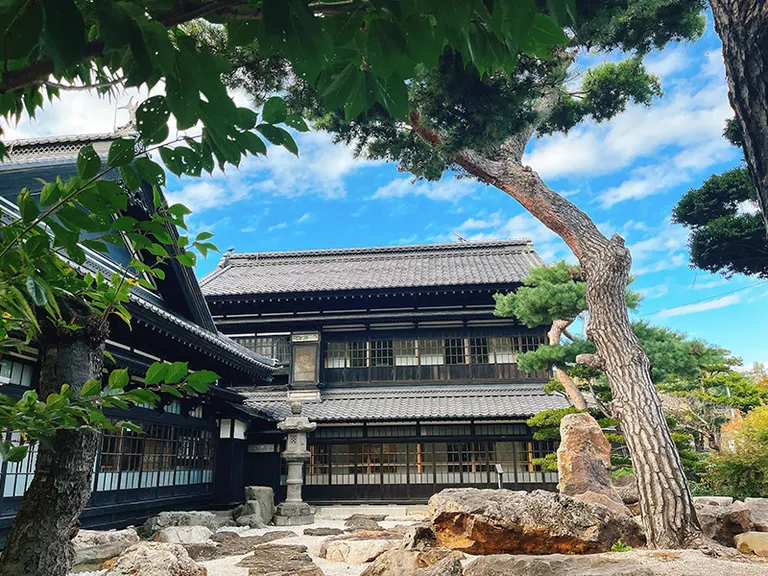
A magnificent karesansui garden and a wooden mansion built with extravagant detail.
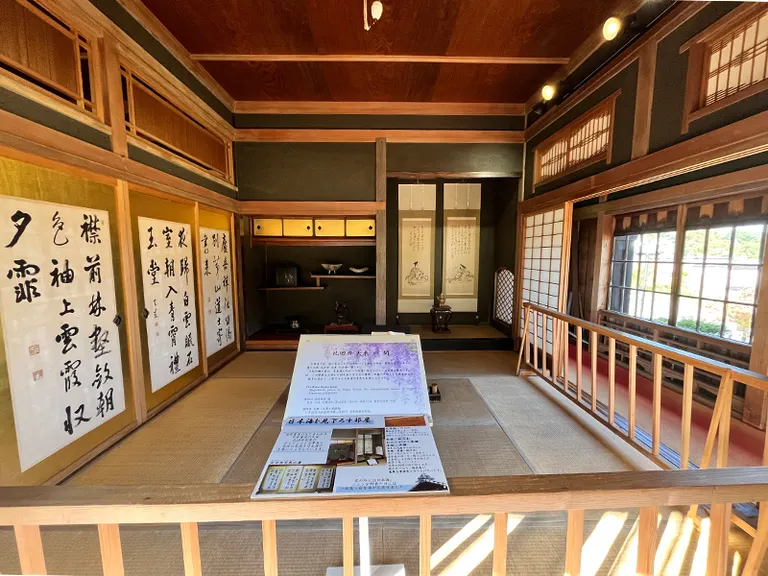
The "Hidai Tenrai no Ma" room on the second floor of the annex served as a model in the original manga.
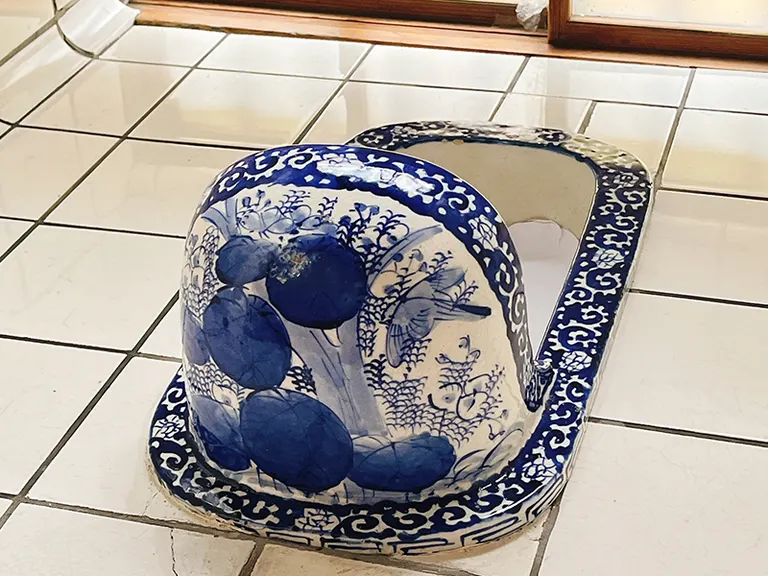
The Arita-ware toilet whose beauty astonished Asirpa. *The "ri" in Asirpa is a small character.
The Old Aoyama Villa was built as a second home for the Aoyama family, who amassed a great fortune from herring fishing during the Meiji and Taisho eras, and it is designated as a National Registered Tangible Cultural Property. Considered one of Hokkaido's finest artistic mansions, the interior is lavishly decorated with high-end woods like zelkova, cypress, sandalwood, and rosewood, as well as works by famous painters and calligraphers. The building and its furnishings are truly impressive, making it a recommended spot for those interested in architecture and art. Please note that photography is prohibited during general tours.
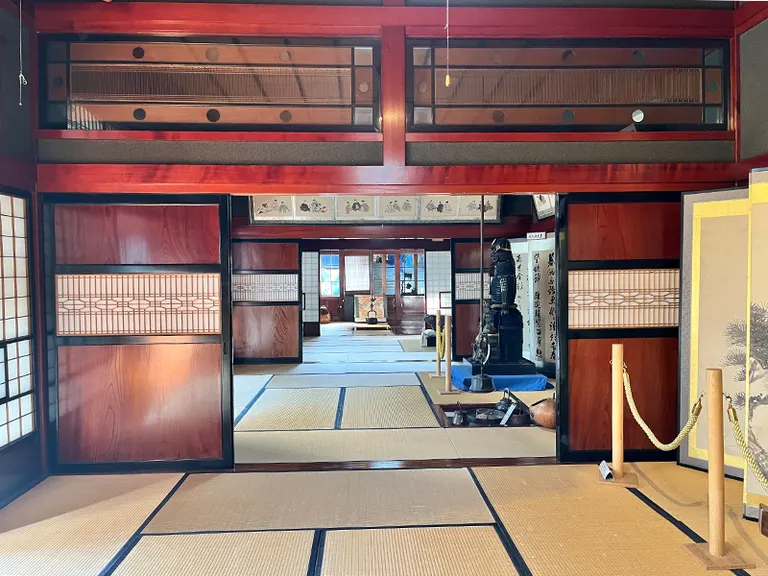
The interior decorations, such as the transoms, beams, and pillars, showcase the magnificent skills of master temple carpenters.
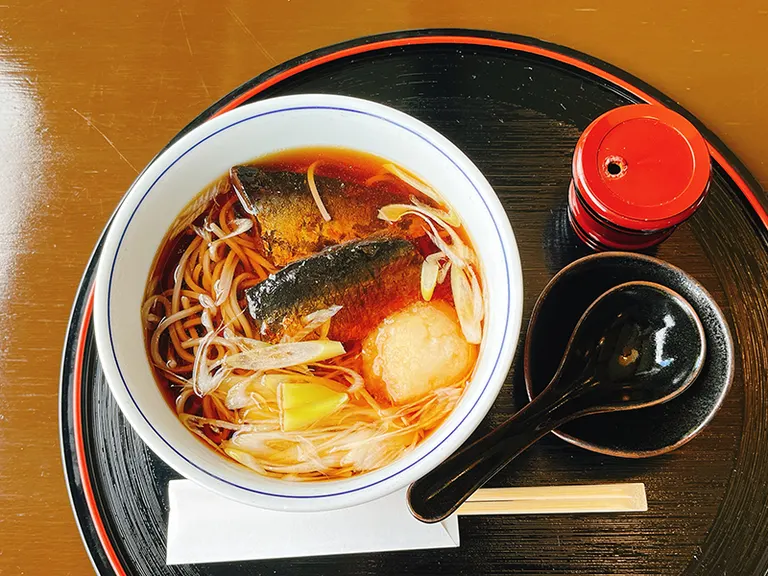
At the adjacent restaurant, you can enjoy herring soba while overlooking the courtyard.
Otaru Kihinkan (Old Aoyama Villa)
■ Location: 3-63 Shukutsu, Otaru City
■ Admission Fee
Adults (Junior high school students and older): 1,300 yen, Elementary school students: 650 yen, Preschoolers: Free
■ Opening Hours: Nov-Mar / 9:00 AM - 4:00 PM, Apr-Oct / 9:00 AM - 5:00 PM
■ Closed: January 1-7
Click here for details and map information for Otaru Kihinkan (Old Aoyama Villa)
More famous locations: Otaru Romankan, Taisho Glass Palace, and the Otaru City General Museum Main Building
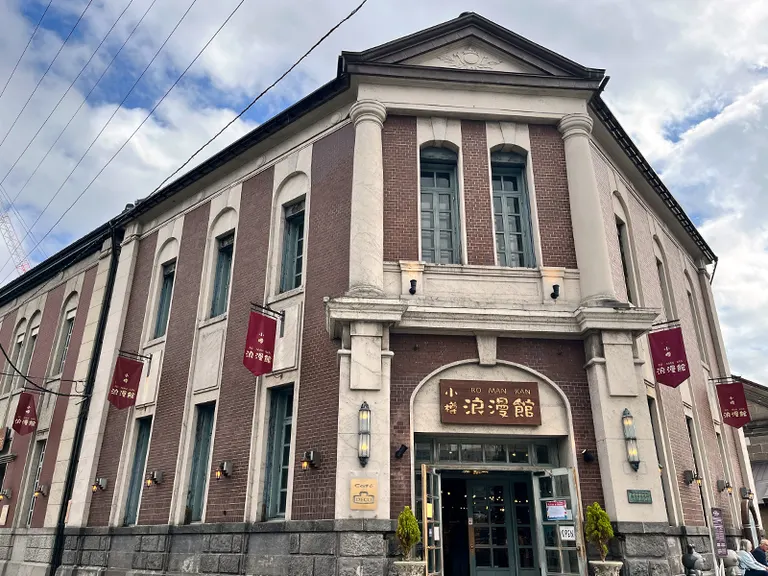
Located along the bustling Sakaimachi Main Street is the Otaru Romankan. Many fans will instantly recognize its exterior. That's right, this is the model for the bank that Toshizo Hijikata attacked to retrieve his beloved sword, Izumi-no-kami Kanesada, in the manga and movie. Inside, it's now a shop selling accessories and glass crafts. Another spot, the Taisho Glass Palace Main Store, features the "udatsu" fireproof wall that appeared in the manga. Housed in a building originally constructed in 1906 as the Natori Takasaburo Shoten, it now displays and sells handmade glassware.
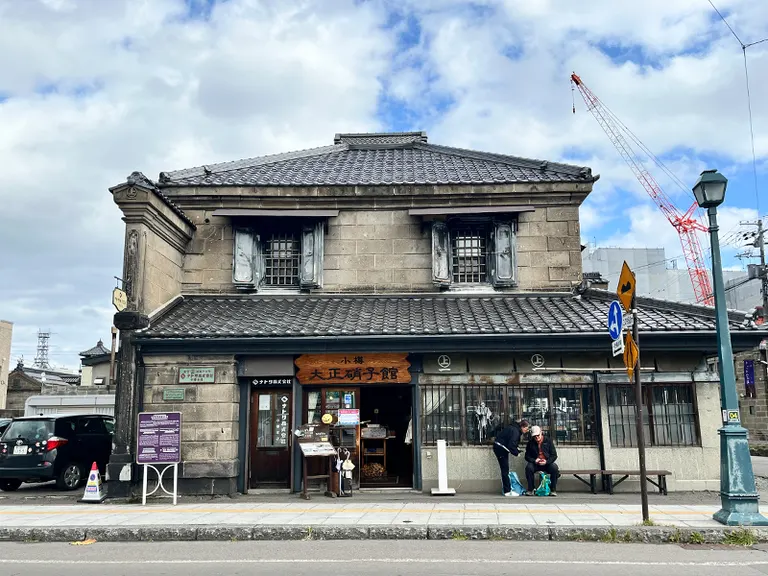
The towering wall on the left side of the building is an "udatsu," a type of fireproof wall.
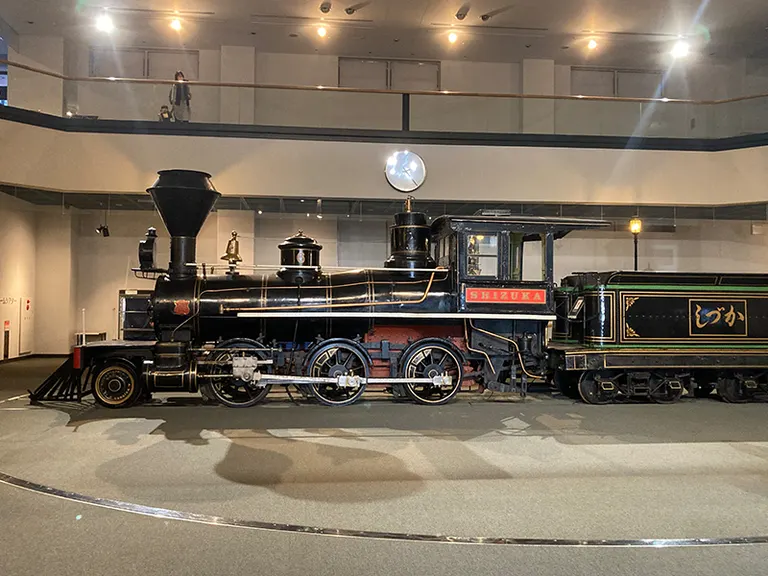
Furthermore, if you have time, a must-visit is the Otaru City General Museum Main Building. It's about a 20-minute walk from the Canal Museum mentioned earlier. Here, you'll find the steam locomotive "Shizuka-go," a must-see for manga fans. It's the model for the steam locomotive where the climactic life-or-death battle unfolds, bringing back memories of the final fight between Hijikata, the 7th Division, and Sugimoto's group.
Otaru Romankan
■ Location: 1-25 Sakaimachi, Otaru City
■ Business Hours: 9:30 AM - 5:30 PM
■ Closed: Open year-round
Click here for details and map information for Otaru Romankan
Taisho Glass Palace Main Store
■ Location: 1-1-8 Ironai, Otaru City
■ Business Hours: 9:00 AM - 7:00 PM
■ Closed: Open year-round
Click here for details and map information for Taisho Glass Palace Main Store
Otaru City General Museum Main Building
■ Location: 1-3-6 Temiya, Otaru City
■ Admission Fee
General: 400 yen (Winter: 300 yen), High school students & Otaru residents aged 70+: 200 yen (Winter: 150 yen), Junior high school students and younger: Free
■ Opening Hours: 9:30 AM - 5:00 PM
■ Closed: Tuesdays (or the next weekday if Tuesday is a holiday), Year-end and New Year holidays
Click here for details and map information for the Otaru City General Museum Main Building
End your tour with a sweet treat at Niikuraya Hanazono Main Store
And for the grand finale of your pilgrimage, be sure to visit Niikuraya Hanazono Main Store in the Hanazono district. In the story, Hanazono dango (sweet dumplings) appear as a key prop in the scene where Lieutenant Tsurumi interrogates Sugimoto. The shop has a cafe space, so you can wrap up your Golden Kamuy journey while enjoying their famous Hanazono dango.
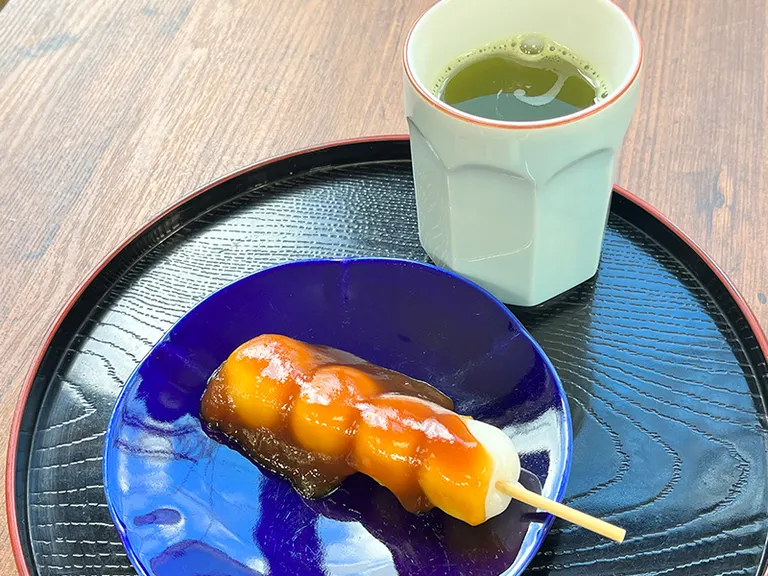
The small, soft dango skewers are 400 yen each and come with tea.
Niikuraya Hanazono Main Store
■ Location: 1-3-1 Hanazono, Otaru City
■ Business Hours: 9:30 AM - 6:00 PM
■ Closed: Thursdays
Click here for details and map information for Niikuraya Hanazono Main Store
Check these out too!

Writer Profile
Editor & Writer Yuka Takashima

After working at an advertising agency and a magazine publisher, became a freelance editor and writer. Works on travel magazines, housing and architecture magazines, music-related articles, and various advertisement articles. A Sapporo-based Hokkaido native who loves to eat delicious food.