


ARTICLES
Top 4 Must-Try ROYCE' Chocolates: From the Classic Nama Chocolate to Potatochip Chocolate and Pistache Chocolat



- A Hokkaido-Born Chocolate Maker with an Alluring Variety
- From Its Own Cacao Farm to an Interactive Museum: The Endless Pursuit of Chocolate's Potential
- 'Nama Chocolate': A Rich, Melt-in-Your-Mouth Experience with a Wide Range of Flavors
- 'Potatochip Chocolate': A Smash Hit with a Novel Combination
- For the True Taste of Chocolate: 'Pure Chocolate'
- A Must-Buy for Pistachio Lovers: 'Pistache Chocolat'
A Hokkaido-Born Chocolate Maker with an Alluring Variety
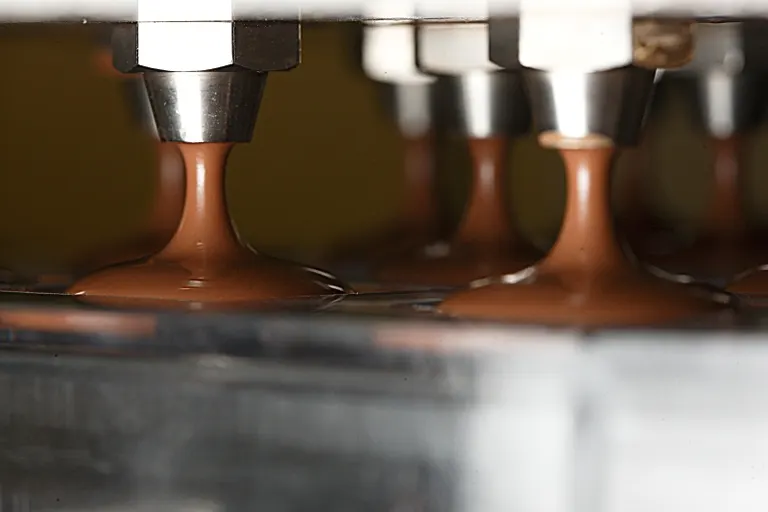
ROYCE' was founded in 1983 with the desire to "create chocolate in Hokkaido that rivals the authentic chocolates of Europe." The flavors that can be created with chocolate are limitless, depending on the origin and type of cacao and how it's blended. It pairs well with various ingredients and can be processed in many ways—poured into molds, used as a coating, or mixed into dough. ROYCE' is dedicated to exploring these infinite possibilities through daily development and manufacturing.
ROYCE' values "Quality," "Originality," and "Price." They search the world for ideal ingredients like cacao, liquors, and nuts. They constantly aim to create chocolates that surprise and delight customers with unique textures, flavors, and combinations, all while insisting that these treats remain affordable for everyday enjoyment.
From Its Own Cacao Farm to an Interactive Museum: The Endless Pursuit of Chocolate's Potential
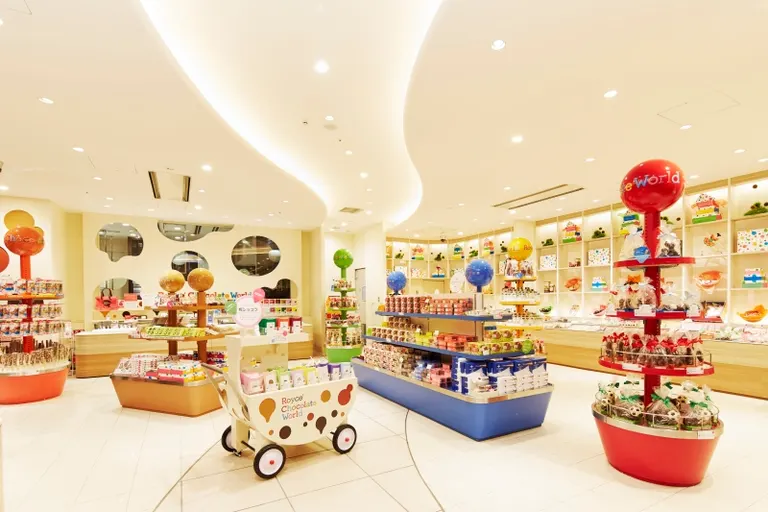
ROYCE' Chocolate World, opened at New Chitose Airport in 2011
In 1995, ROYCE' began year-round sales of its signature Nama Chocolate, and in 2002, it launched the now-classic Potatochip Chocolate. In 2011, they opened "ROYCE' Chocolate World" at New Chitose Airport, featuring Japan's first in-airport chocolate factory.

ROYCE's iconic 'Nama Chocolate'
The dream of ROYCE' as a chocolate maker—to handle every step of the process from cacao bean cultivation to the final chocolate bar—was realized in 2014 with the establishment of their own cacao farm, the "ROYCE' Cacao Farm in Colombia."
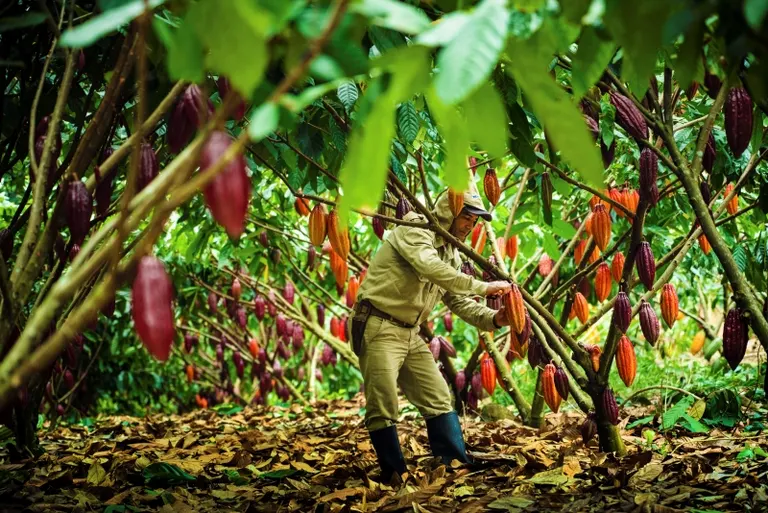
A PR representative explains, "Just like coffee beans or wine grapes, cacao beans develop surprisingly different characteristics depending on their origin. The cacao beans from our farm in Colombia have a unique flavor that can only be created there. By managing the process from cultivation, we can pursue perfection at every stage—what varieties to plant, how to process the cacao beans, and how to turn them into chocolate after they arrive in Japan—and deliver a taste we are truly satisfied with. The final flavor can change depending on how the same cacao beans are processed and finished. We want everyone to discover the deliciousness and fun of chocolate, with all its possibilities and charm, and to love chocolate even more."
Chocolates made from their own farm-grown cacao are sold exclusively at the ROYCE' Town Factory Shop in Tobetsu, Hokkaido, as part of the "ROYCE' Farm to Bar" series. At the adjacent interactive facility, "ROYCE' Cacao & Chocolate Town," visitors can learn about the Farm to Bar process through exhibits and factory tours.
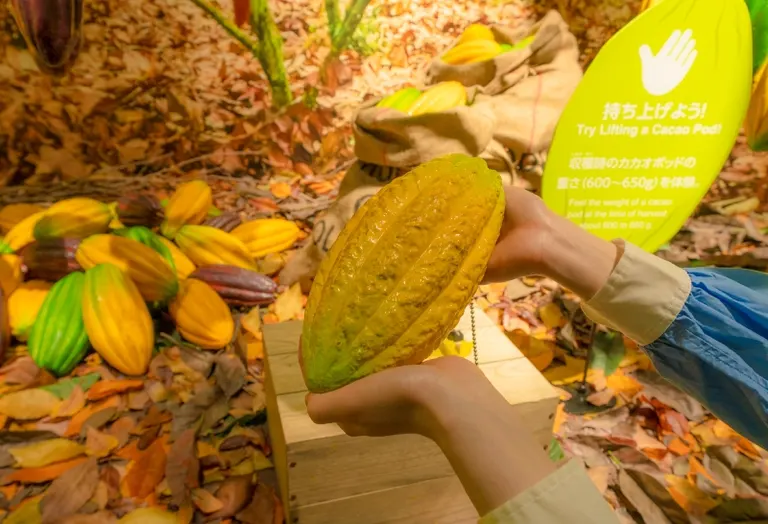
The interactive facility "ROYCE' Cacao & Chocolate Town" was opened with the hope that people will "come to love chocolate even more."
*Farm to Bar refers to the practice of a company handling the entire process from the farm to the final chocolate bar.
*Not all chocolates sold by ROYCE' use cacao from their own farm. Only products sold as part of the "ROYCE' Farm to Bar" series use cacao from their farm.
'Nama Chocolate': A Rich, Melt-in-Your-Mouth Experience with a Wide Range of Flavors
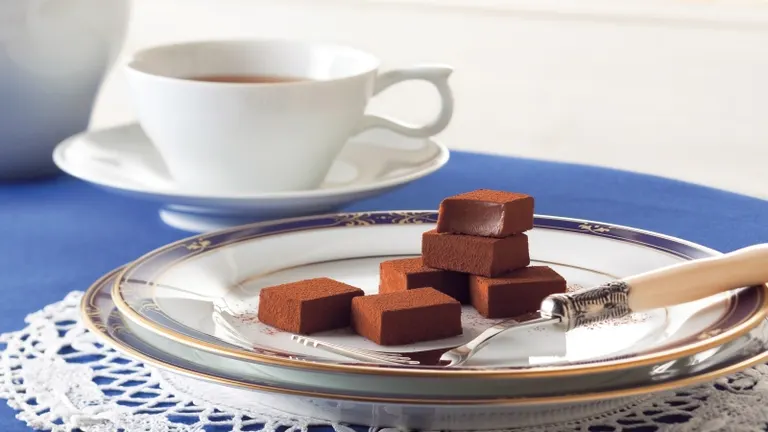
'Nama Chocolate [Au Lait]' 1,215 yen
While ROYCE' has been exploring the infinite possibilities of chocolate since its founding, its most iconic product is "Nama Chocolate." It was born from a simple idea: what if you could eat just the soft ganache filling from inside a truffle, the epitome of luxury chocolate?
Initially sold only during winter at their directly managed stores, year-round sales began at New Chitose Airport in 1995. Although it was a sweet that needed refrigeration, which challenged the conventions of souvenirs at the time, word of mouth from flight attendants about the "delicious chocolate at New Chitose Airport" gradually spread, leading to a massive boom.
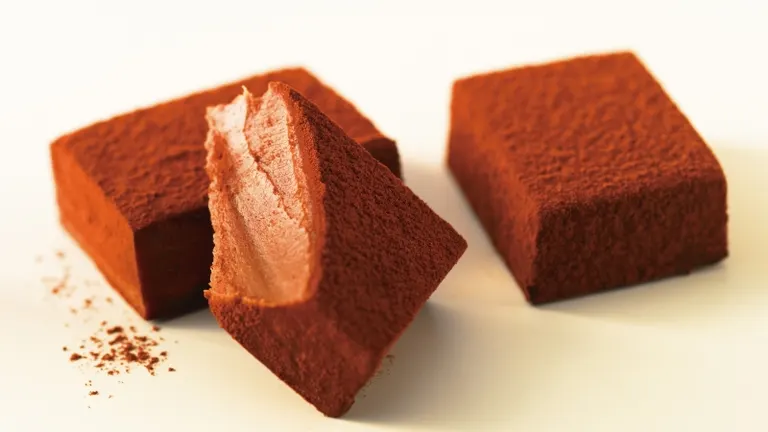
The defining features of ROYCE's Nama Chocolate are its incredible softness and silky, melt-in-your-mouth texture. This deliciousness is made possible by Hokkaido's fresh cream. While the official definition of Nama Chocolate requires a moisture content of 10% or more and fresh cream of 10% or more of the total weight(*), ROYCE's Nama Chocolate has a moisture content of about 17%. By using a generous amount of fresh cream, they achieve an exceptionally smooth texture.
*Regulations set by the Fair Trade Council.
Another major appeal is the diverse lineup. It includes the classic Au Lait, which is easy for anyone to enjoy, alcohol-free versions perfect for sharing with children, and varieties with a kick of liquor for adults. There are also seasonal limited editions featuring fruits, nuts, and even tiramisu or cherry blossom motifs. Trying a few different kinds to find your favorite is part of the fun.
'Potatochip Chocolate': A Smash Hit with a Novel Combination

'Potatochip Chocolate [Original]' 1,188 yen
You can't talk about ROYCE' without mentioning "Potatochip Chocolate." The product's development began when the company's president, Mr. Yamazaki, was inspired by a chocolate he saw in the United States and thought, "Combining chocolate with potatoes, a specialty of Hokkaido, would make a great souvenir."
Although the potato chips are now coated with chocolate on only one side, they were initially coated on both. Through continuous improvements, they settled on coating just one side to preserve the crisp texture and savory flavor of the potato. They also use ridged potato chips to ensure the perfect balance of chocolate coverage.
When it was first released, some within the company were skeptical about whether the unexpected combination of sweet and salty would be accepted. However, word of mouth spread about its "addictive deliciousness," and it has now become one of ROYCE's flagship products, often drawing long lines at Hokkaido product fairs.
For the True Taste of Chocolate: 'Pure Chocolate'
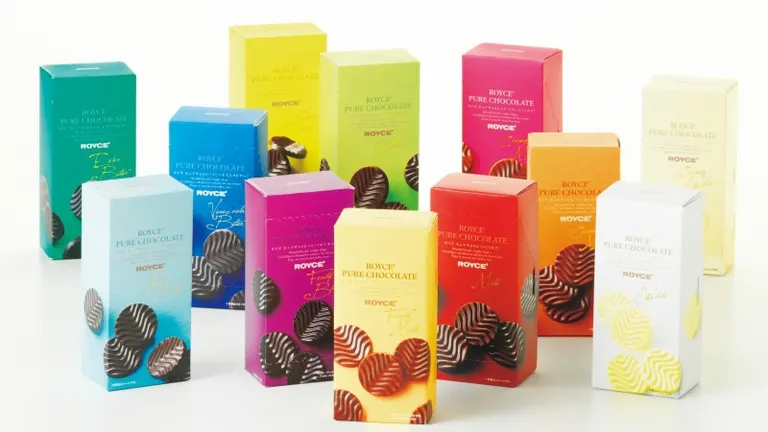
'Pure Chocolate' 729 yen each
For those who want to savor the authentic taste of chocolate, "Pure Chocolate" is the perfect choice. This product is crafted with carefully selected, simple ingredients—cacao mass, sugar, milk (powdered milk), and cocoa butter—to achieve the ultimate melt-in-your-mouth experience.
The key to this texture is cocoa butter, the fat from cacao beans. It has the unique property of melting rapidly at a temperature close to human body heat. To maximize this effect, ROYCE' uses no other fats and gives the chocolate a wavy surface to increase the contact area in the mouth, allowing body heat to transfer more quickly.
There are 12 varieties available, from white chocolate with a rich milky flavor and smooth milk chocolate to high-cacao chocolate with a pleasant bitterness. The colorful packaging makes it an ideal small gift.
A Must-Buy for Pistachio Lovers: 'Pistache Chocolat'
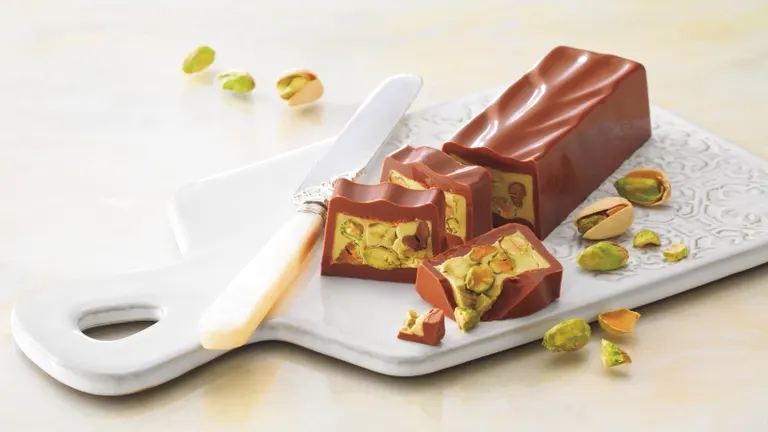
'Pistache Chocolat' 1,944 yen
If you're looking for a sophisticated souvenir, "Pistache Chocolat" is an excellent choice. This luxurious treat features a fragrant and rich pistachio cream mixed with two types of pistachios—deep-roasted and salted—all encased in milk chocolate.
You can slice it to your desired thickness, making it perfect for sharing. The cross-section, revealing plenty of pistachio pieces within the cream, is incredibly tempting. The outer milk chocolate is a smooth variety with a hint of strawberry acidity to create a well-balanced and easy-to-eat flavor.
This is an irresistible sweet for pistachio lovers, designed to bring out the maximum aroma and flavor of the nuts.
*Information is current as of the article's publication date.
*Please check the official website for the latest information, as details may change.
Writer's Profile
Sapporo-based writer Yumeko Takashima
Born in Saga Prefecture. Graduated from Doshisha University's Faculty of Letters, Department of Western Cultural History. After working for a major travel agency, she gained experience as an editor and writer at a publishing and editing production company in Kyoto before going independent in 2022. In 2024, she moved to Hokkaido out of her love for the region. She edits and writes articles for books, magazines, and web media, focusing on content related to travel, food, and culture.