

![How About Some "Namara" Delicious Veggies? Namara Tokachiya's Challenge for Sustainable Farming [Memuro Town #3]|Domingo](https://p1-634a4370.imageflux.jp/w=768,f=webp:auto,q=78/https%3A%2F%2Fdomingo.ne.jp%2Fwp%2Fwp-content%2Fuploads%2F2021%2F08%2Ffb78c8afc4c45458bd6629de3a2fb26e.jpg)
ARTICLES
How About Some "Namara" Delicious Veggies? Namara Tokachiya's Challenge for Sustainable Farming [Memuro Town #3]



This is the second installment of Domingo's month-long collaboration with a town in Hokkaido, and this time we're focusing on Memuro Town!
Over four weeks, we're bringing you information on how to enjoy the town and its special local products.
■Click here for previous articles
Memuro Town: A Place to Enjoy Food and the Outdoors Amidst Scenery Created by Farms, the Hidaka Mountains, and Blue Skies
"2052," an Essential Oil from Sakhalin Fir Trees Born from the Land of Memuro Town [Memuro Town #2]
Memuro Town is a major producer of what are known as "Tokachi's four major field crops": wheat, sugar beets, potatoes, and beans.
With approximately 41% of the town's total area being cultivated land, Memuro's food self-sufficiency rate is said to be 1200%.
The average cultivated area per farm household is a massive 35.1 hectares! That means a single farmer manages a field about 7.5 times the size of the Tokyo Dome... an astonishing figure.
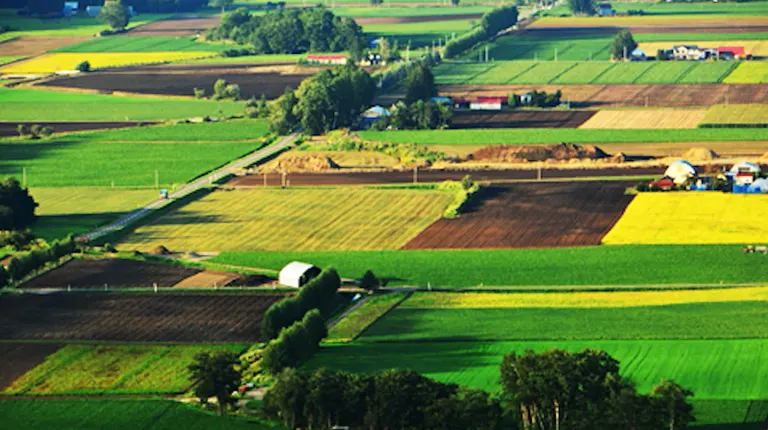
Image courtesy of Namara Tokachiya
This week, our third installment, we're focusing on people in Memuro, Japan's food pantry, who are working to "shorten the distance between producers and consumers." We'll be delivering this in two parts!
In this first part, we introduce Namara Tokachiya, a group of producers with a passionate desire to "deliver vegetables directly to customers."
Delivering "Namara" Delicious Vegetables Grown in the Fertile Tokachi Plain to Everyone Across Japan
Namara Tokachiya is a farming collective formed by 13 farmers in the vast Tokachi Plain, which has now grown to 18 farmers.
The name combines "namara," a Hokkaido dialect word for "very," with "Tokachi" from the Tokachi Plain and "ya" (meaning field), to form "Namara Tokachiya." It embodies the desire to "deliver very delicious vegetables grown in the fertile Tokachi Plain to everyone across Japan."
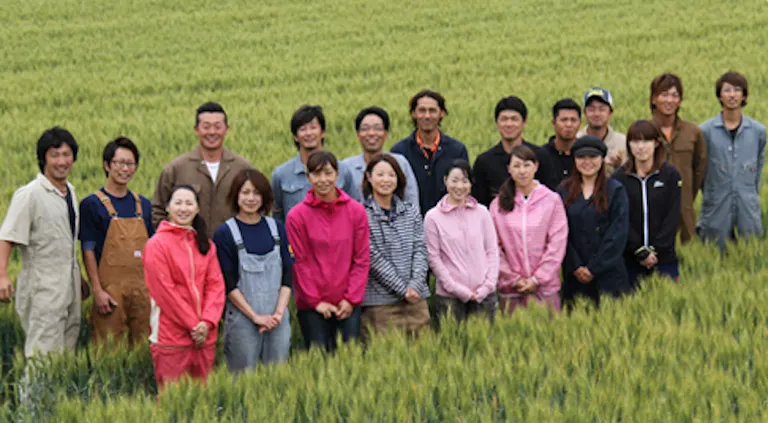
Image courtesy of Namara Tokachiya
In addition to "Tokachi's four major field crops" like wheat, sugar beets, potatoes, and beans, they are also challenging themselves to grow a variety of other vegetables such as lily bulbs, bell peppers, tomatoes, Japanese mountain yams, and garlic.
With "safe, secure, and delicious" as their baseline standard, their mission is to connect agriculture to the future—that is, to pass on farming as a livelihood to the next generation. They are working to create a good environment where good fields, good vegetables, and everyone involved can become part of the experiment.
18 Producers with a Burning Passion
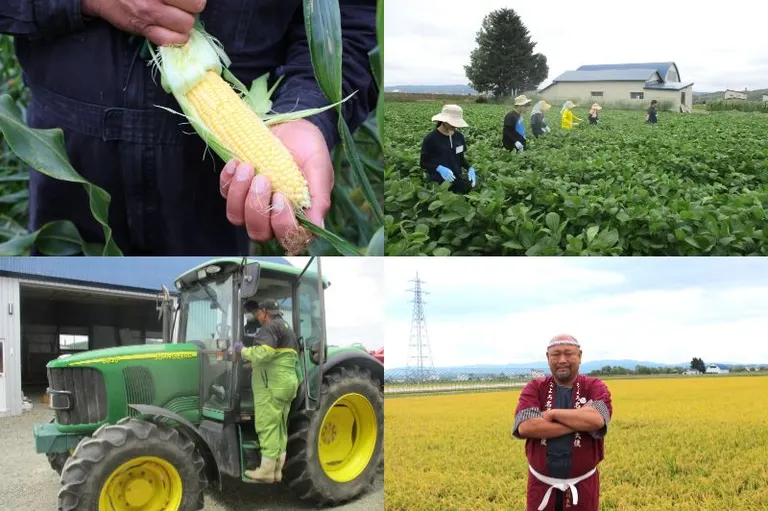
Namara Tokachiya is comprised of 18 farmers with a passionate desire to connect agriculture to the future in Tokachi and deliver delicious vegetables.
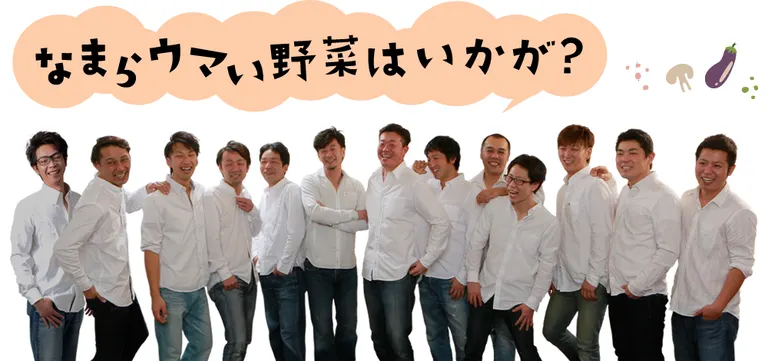

Image courtesy of Namara Tokachiya
Their prized vegetables include thick and large bell peppers, flavorful and rich edamame, sweet and juicy sweet corn, gently sweet and fluffy lily bulbs, medium-sized tomatoes with a perfect balance of sweetness and acidity, mountain wasabi with a mellow spiciness and elegant aroma, burdock root with little bitterness that can be eaten raw, and snow-aged potatoes with depth and sweetness. They produce specialty vegetables whose unforgettable taste will have you coming back for more.
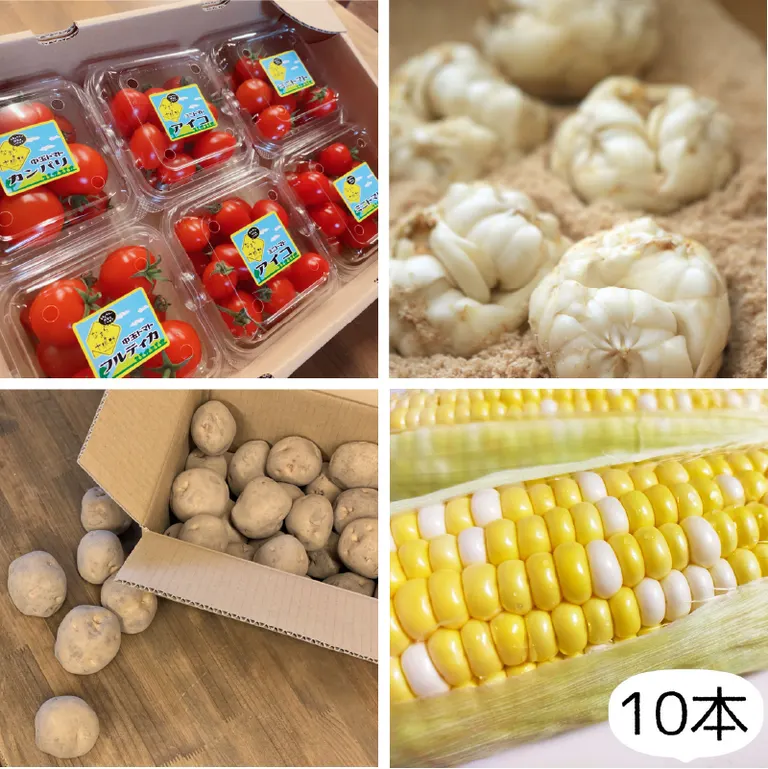
Image courtesy of Namara Tokachiya
We spoke with Mr. Takamichi, a member of Namara Tokachiya.
Mr. Takamichi
The Motivation Behind Establishing Namara Tokachiya
"Originally, I was thinking about how the future of agriculture is quite uncertain, and what we could do to protect the farmland and farming that has been passed down for generations. Since I want to make a living from agriculture for the rest of my life, I wanted people who eat our food to choose Namara Tokachiya and connect with us directly."
He says that with the Trans-Pacific Partnership (TPP) allowing foreign products to be sold cheaply and making Japanese products relatively more expensive, Tokachi's agriculture would be significantly impacted and could not continue. Amidst this situation, he thought about how to pass the baton of agriculture, which has been connected for so long, to the next generation.
"If there are people who choose and buy our vegetables because they want 'Namara Tokachiya's vegetables,' then we and future generations can continue farming as a livelihood. To achieve such sustainable agriculture, we organized Namara Tokachiya as a corporation and are focusing on increasing sales channels to deliver delicious vegetables to our customers."
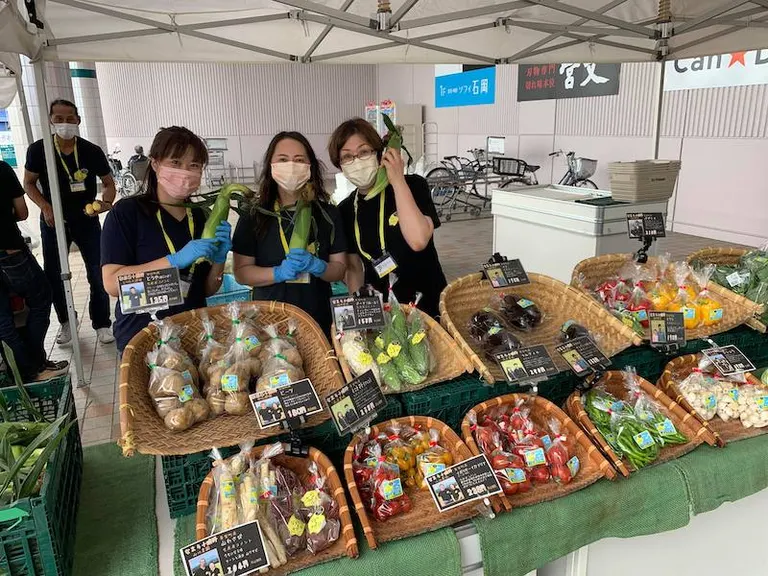
For example, they hold the "Namara Tokachiya Marche" where producers sell their vegetables directly at 7-Eleven stores in Memuro Town,

and they also sell through the Namara Tokachiya online shop.
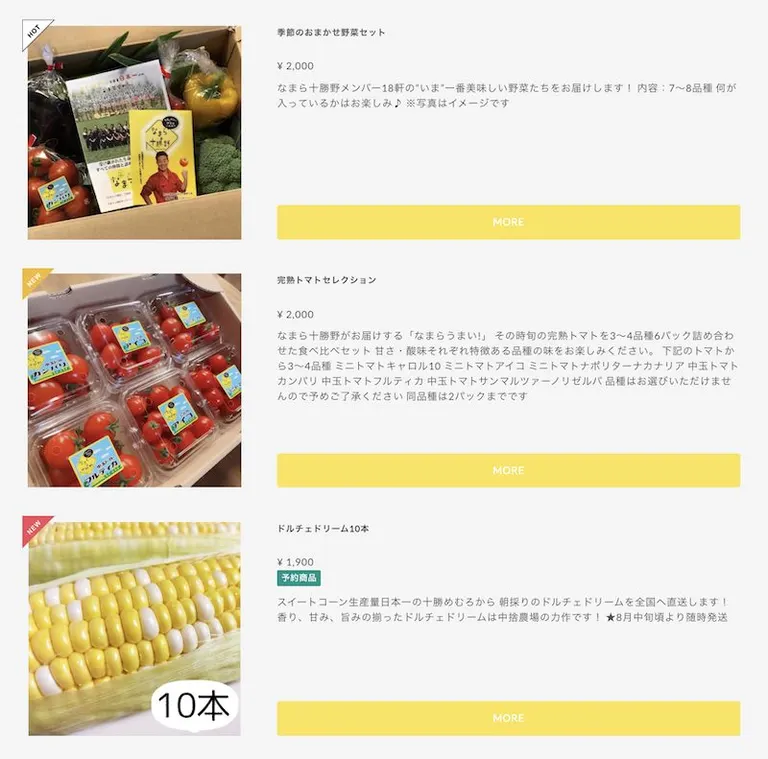
"Even with shortages that inevitably occur due to weather and other factors, because we work together as a team and our growing conditions differ, we can maintain a stable supply. By working as a company, we can ship in large lots, which helps build trust, and we've even been given our own 'Namara Tokachiya' shelves in supermarkets," says Mr. Takamichi.
Apparently, the Ito-Yokado Obihiro store and MaxValu have "Namara Tokachiya Corners," and their products are also available through grocery delivery services like Oisix.
They also have an initiative called "Memuro Yasai Nouveau," where seasonal vegetables from Memuro are delivered to restaurants in town according to the 24 solar terms, to be served to customers. Exceptionally delicious seasonal vegetables are prepared by culinary professionals. Memuro Town is a place where you can enjoy such a luxurious experience.
Creating Vegetables They Can Confidently Call "Insanely Delicious" Through Repeated Practice and Research
"We grow and sell our vegetables with the belief that 'Namara Tokachiya's vegetables are insanely delicious!'"
One of the prized vegetables of Takamichi Farm is the tomato. They grow medium-sized tomatoes with an excellent balance of sweetness and acidity, and a sweet, elongated variety called Aiko.
"Having grown tomatoes for so long, I have an ideal flavor in mind, 'This is it!' I'm always aiming for that flavor I once achieved, but sometimes I think, 'Ah, I didn't quite get there this year.' I research and grow them every year, wondering, 'Why is that? What can I do to get closer to that taste?'"
When he doesn't reach his ideal, he doesn't just settle for "good enough." He pursues deliciousness through repeated research and practice. The result of this tireless effort is the deliciousness of Namara Tokachiya's vegetables.
Takamichi Farm also grows some of Tokachi's four major field crops: wheat, potatoes, and beans like adzuki. In addition, they grow many other vegetables such as edamame, green beans, tomatoes, Japanese mountain yams, squash, garlic, cabbage, and sweet corn.
At the time of our interview (early July), it was garlic season. He harvested some "fresh garlic" for us, which is only available at this time of year, before it's dried, when it's still moist and highly aromatic.
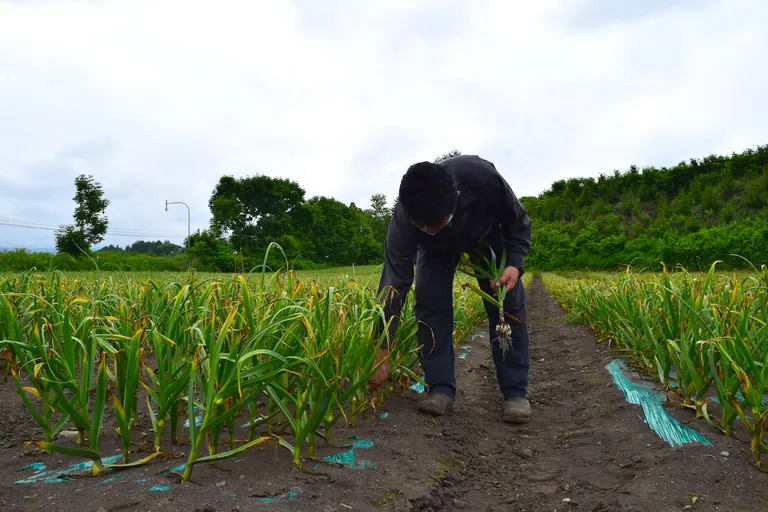
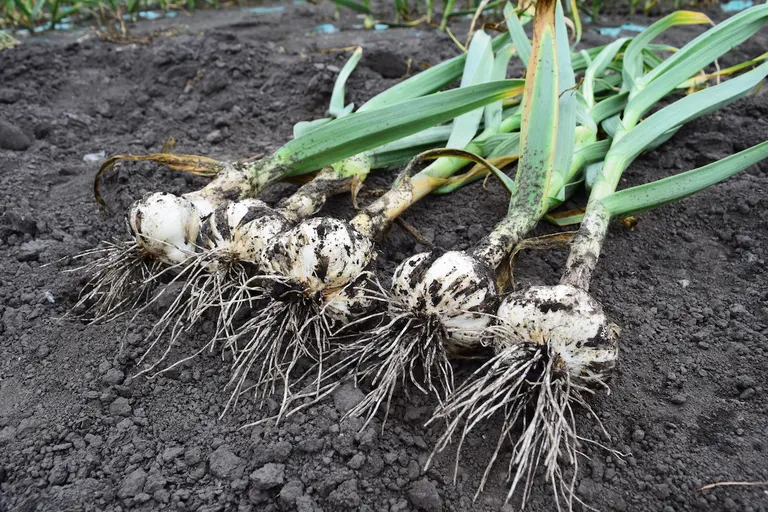
The garlic was just starting to be harvested on the day of our interview. So impressive!
Freshly harvested garlic is larger and more beautifully colored than what you usually see in supermarkets, with a very powerful aroma.When baked in foil or fried, it's fluffy and has a lighter, more refreshing taste than regular garlic. It was so delicious that it could be enjoyed as a vegetable on its own, not just for flavoring.
The vegetable Mr. Takamichi particularly recommends from Namara Tokachiya is the 'Choujuku Kita-akari.'
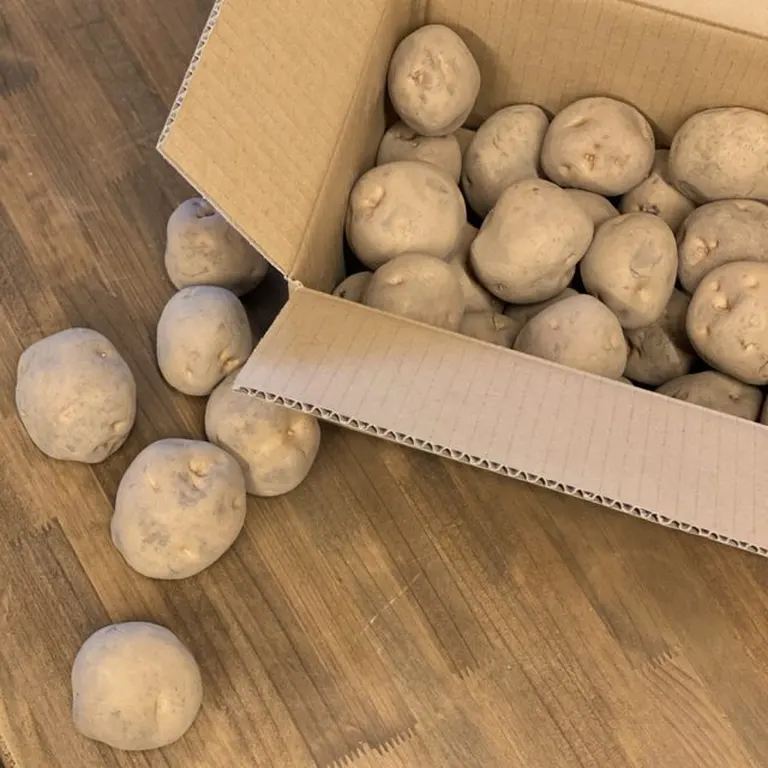
The Domingo editorial team ordered 10kg right after the interview and have been using them in all sorts of dishes like stews, baked potatoes, nikujaga, and miso soup. They are so sweet and moist, you'll wonder, "Is this really a potato?!" They also hold their shape well, making them perfect for simmered dishes.
We highly recommend you try them!
Namara Tokachiya Online Shop
Mr. Takamichi's Thoughts on His Job as a Farmer
"I'm a third-generation farmer, and since I was little, I naturally grew to love farming and wanted to do it. I enjoyed helping my old man, and I loved vehicles. My dad let me ride them from a young age. We used to have livestock, so at first, he'd let me use a shovel to scoop up straw for the cows, and when I got older, he let me ride the tractor!"
Helping with work as soon as he got home from school was his daily routine. As a car enthusiast, Mr. Takamichi found it incredibly fun to operate real vehicles instead of toy cars. But as much effort as he put into helping, there were other areas he neglected...
"I had so much fun helping that I did it all the time and really didn't study. One day, I came home from school, dropped my backpack, and immediately started following my dad around, but he got angry and said, 'Go study!' I remember being so surprised, thinking, 'Huh? I'm not supposed to help today?' (laughs)"
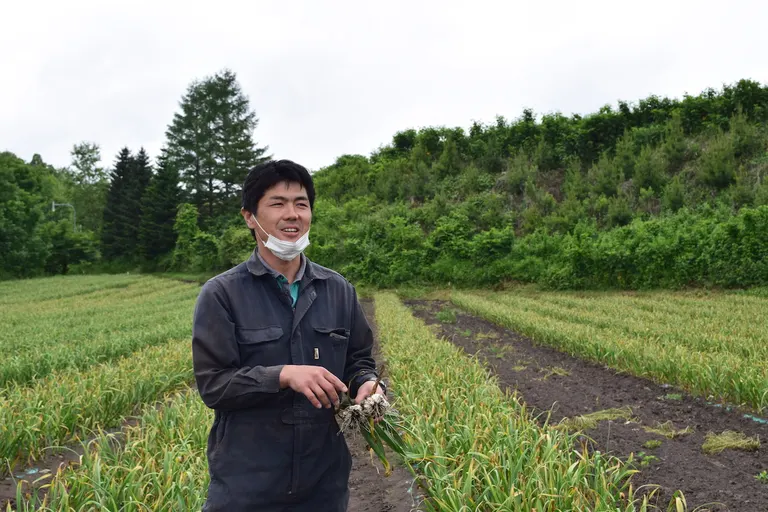
When starting something new and giving it shape, building heartfelt connections is more essential than being book-smart.
After listening to his story, we were left with the feeling of "I want to do something with Mr. Takamichi!" He has a passionate spirit and a wonderful smile.
Conclusion
What did you think?
We learned that the vegetables grown on the vast lands of Tokachi are filled with the passion to sustain the rich agriculture that has been passed down for generations, as well as the fruits of tireless research and practice.
After hearing their story, the Domingo editorial team's perspective on vegetables has changed. We now buy vegetables from Namara Tokachiya online and make a point to purchase Hokkaido-grown produce at the supermarket.
In our next article, we'll introduce someone who is working to "shorten the distance between producers and consumers" from a different angle!
Also next week, we'll be introducing a "new specialty product" from Memuro Town and holding a giveaway campaign!!
We'll be updating weekly, so don't forget to check back.