

ARTICLES
Why He Quit TV: The Adventures of Local & Media (Part 4)



An Adventure with Ryosuke Kawakami, a Community-Revitalization Cooperator in Teshikaga Town
"Local Friends" started as a TV program planned and produced by local people. An unexpected ally would soon join their ranks. A 24-year-old who quit his job as an announcer to dive into a local community. On Christmas Eve, he would make a miracle happen.
Hello, I'm Ryo Osumi, a director at NHK.
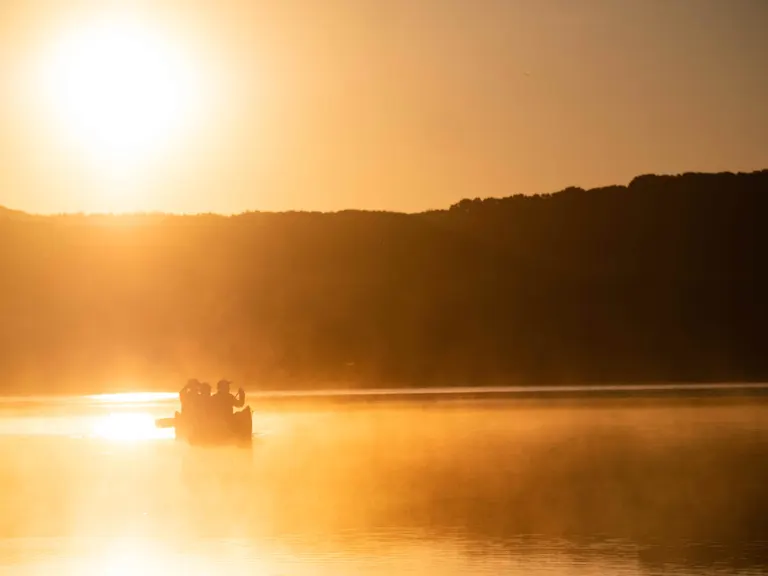
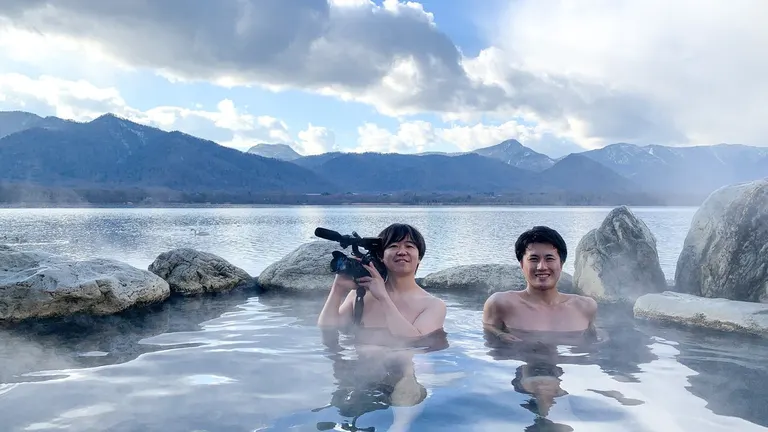
Have you ever bathed with swans? In the town of Teshikaga in eastern Hokkaido, you'll find Lake Kussharo, Japan's largest caldera lake. Hot water springs up from the shore, allowing you to soak in an onsen just a meter away from swans resting their wings on the lake.
Today, I'd like to introduce a young friend who taught me about the "resolve to live in a local community" while we bathed with swans.
This is a behind-the-scenes look at "Local Friends," a program broadcast on NHK Hokkaido.
1. The Decisive Red Tie
2. The Resonance of the Word "Friend"
3. A Locally Produced Variety Show
4. Heard Kawakami's Quitting His Announcer Job
5. What Are Your Plans After This?
6. I Have No Experience with Filming or Editing
7. Chopsticks in the Right Hand, Camera in the Left
8. Live Commentary of the Fireworks
9. Interview with Ryosuke Kawakami
10. Swans Need a Running Start
11. Can the Media Become a Partner for Local Communities?
12.\On Saturday, October 16, Ryosuke Kawakami will talk about the community and the program!/
The Decisive Red Tie
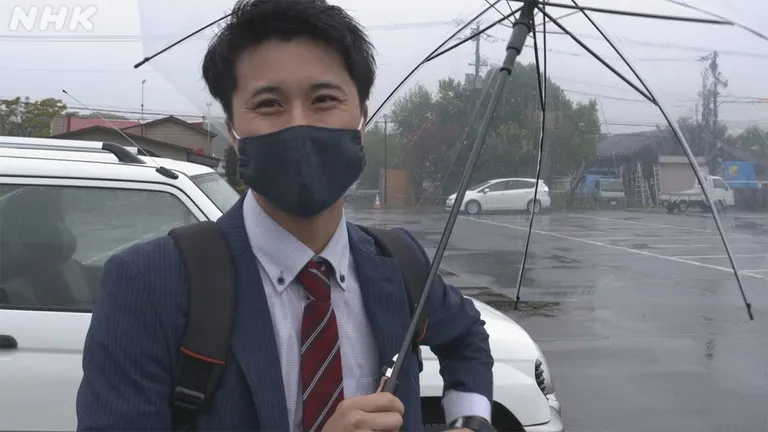
"Nice to meet you!"
He appeared dashingly, clad in a suit.
When I commented, "You're looking sharp," he pointed to his necktie.
"This red tie is the one I wore when I read the news on air for the first time. I thought I'd wear it to mark my second start with the same feeling."
Ryosuke Kawakami, 24 years old.
Until two weeks ago, he was an announcer for UHB Hokkaido Cultural Broadcasting (a Fuji TV affiliate), reading news scripts on set. From this day forward, he was about to walk a "different path in life."
It was 9:00 AM on October 1, 2020.
His destination was the Teshikaga town hall.
"As a member of the Community-Revitalization Cooperator team, I will be in charge of promoting this town for the next two and a half years. I look forward to working with you all."
The town hall staff looked at him as if he were a strange creature, craning their necks from neighboring departments to get a better view.
"He'll get bored of it soon." Such whispers could be heard.
It was understandable.
As far as my search of past newspaper articles went, there were no precedents of a working announcer switching careers to become a Community-Revitalization Cooperator.
I happened to be there right at the moment he began his "second life," and it was all thanks to Local Friends.
The Resonance of the Word "Friend"
After broadcasting the pilot, a late-night program called the "Eastern Hokkaido Edition," in March 2020, and then an "Online Edition" filmed entirely remotely as a measure against COVID-19, we aired the "Hakodate Edition" in July.
Around this time, I began to feel the strange power held by the word "friends."
To put it simply, it means "the relationship continues."
When someone says they are "friends" with another person, they don't set a time limit.
You might say, "Please be the store manager until next month," or "I'll be the director in charge for this fiscal year," but you would never say, "Be my friend until July."
A friendship might end, but you never decide on its end in advance.
Even though it was a TV show concept, this principle seemed to be at work somehow.
The Local Friends who produced the Eastern Hokkaido and Hakodate editions, as well as Kazuya Sano, who wrote the show's proposal, stayed loosely connected with us after the broadcast, exchanging information and attending our meetings.
It was a kind of continuous relationship that I had rarely experienced with a typical TV program.
Thanks to these connections, I ended up appearing on a program produced by a certain internet broadcasting station.
A Locally Produced Variety Show
In this town, believe it or not, local people stream their own "variety show" on platforms like YouTube.
It's called "Tsuberanai Hanashi," a community-building support variety show.
A live variety show where the next generation of business leaders in Tsubetsu, Hokkaido, support community building.
It's created by a "sextiary industry" team from the primary (Kawamoto), secondary (Yamagami), and tertiary (Enomoto) sectors.
First broadcast on July 3, 2016.
(From the program description)
By the fall of 2020, it had become a "long-running program," reaching its 50th episode. And the special guest for the 50th episode was Kazuya Sano.
Coincidentally, a compilation episode of Local Friends was scheduled to air that same month. We were looking for media outlets to help us promote the show, and one of the featured locations in the compilation was Eastern Hokkaido.
Seeing this as a perfect opportunity, I decided to appear on the "Tsuberanai Hanashi 50th Episode Special" as part of our promotional activities.
Heard Kawakami's Quitting His Announcer Job
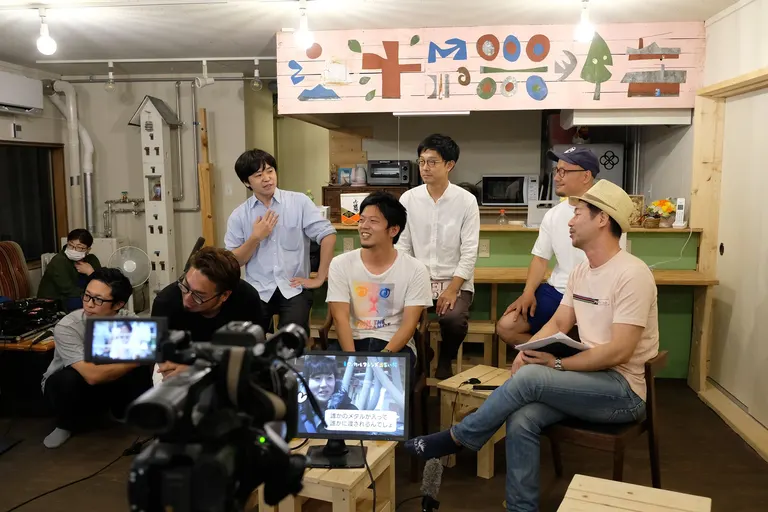
"Hey everyone~! The 50th episode of Tsuberanai Hanashi has begun~!"
"This program is supported by the Tsubetsu Town grant system for community and human resource development. Thank you, Tsubetsu Town!"
And so began the stream of this high-energy, high-minded content.
Then it was my turn.
"Why would a director from NHK come all the way to Tsubetsu?"
"Because Kazuya Sano invited me (laughs)," I answered, fumbling through my promotion of our program.
(By the way, I heard this broadcast was viewed over 3,000 times in two months. Amazing!)
While the stream was impressive, what came after was an even more incredible experience.
In addition to Kazuya Sano, Takuro Nakanishi, a Local Friend from the Eastern Hokkaido edition, was also there, and they introduced me to one local player after another.
A brewer rooted in the community, a person in finance.
A young photographer who moved to Eastern Hokkaido from Osaka.
That night, I was introduced to more than a dozen local people.
It was then that I heard a certain rumor.
"I hear a TV station announcer is quitting his job and moving to Teshikaga."
"Oh, really!"
"Apparently, he's starting as a Community-Revitalization Cooperator on the first of next month." Incredible.
This felt like a move that could make waves in both the media and local communities.
When I returned to Sapporo, I wrote a proposal for a news report.
And on September 19, 2020, the day Ryosuke Kawakami announced his career change on his blog, I called him, with the proposal already approved.
What Are Your Plans After This?
"City promotion. I'll be promoting the area through videos and other means." "How long is your term?"
"If I renew my contract, it will be a little less than two and a half years, until March 2023." "And what are your plans after that?"
"..." "..." "Well, I think there are many possibilities."
It didn't seem like Kawakami intended to stay in Teshikaga forever.
In fact, to my surprise, he said he had only been to Teshikaga once before.
I was amazed he had made the decision to quit his announcer job based on that.
A 24-year-old from Miyagi Prefecture.
He achieved his dream of becoming an announcer but left the job after just two and a half years.
Why on earth?
With this question in my mind, I headed to Teshikaga.
I Have No Experience with Filming or Editing
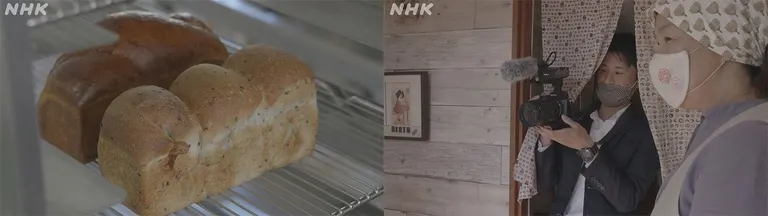
If Tsubetsu was a town of forests, Teshikaga is a town of lakes.
It's a place of dynamic landscapes, including Lake Kussharo and Lake Mashu.
I accompanied Kawakami on his activities as a new Community-Revitalization Cooperator.
"Why did you decide to open this shop?"
Kawakami was filming the interview himself with his own camera. He had been entrusted with managing the official Teshikaga Town YouTube channel and was trying to create a video for it.
However, he kept muttering, "It's difficult to ask questions while operating the camera." Apparently, he had never been in charge of filming during his time as an announcer.
Just then, a customer came in.
Townsperson: "Oh, are you from the town hall, Kawakami-san?"
Kawakami: "I'm a Community-Revitalization Cooperator. I was working in Sapporo as an announcer for UHB. I used to read the news, but now I thought I'd read the news of Teshikaga." Townsperson: "Wow, but you're so handsome. What a waste, isn't it?"
What a waste.
First, "He'll get bored of it soon" at the town hall, and now "What a waste" at the bakery.
From my perspective, Kawakami, who had jumped from mass media into a local community, seemed a little uncomfortable.
Furthermore.
"Wait, you're learning editing from scratch too?"
"That's right." He had no experience with editing, either, and would be learning it from now on.
It seemed like a tough road ahead.
Chopsticks in the Right Hand, Camera in the Left
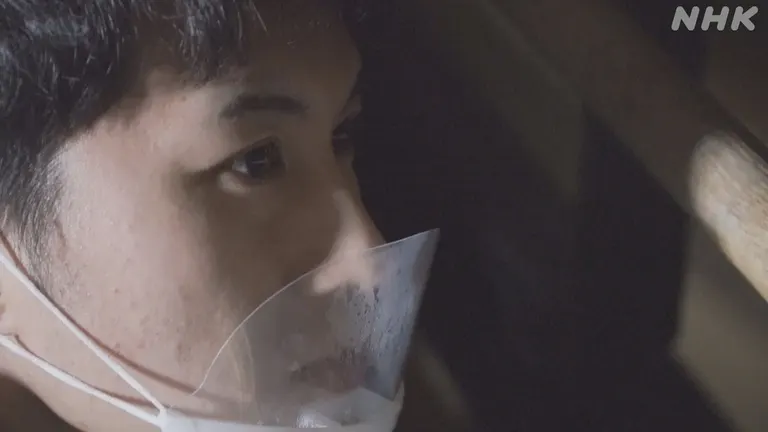
And as he grilled meat, he would occasionally take out a small camera and film.
"Wow, when did you decide to do a fireworks show?" *Sizzle*
"Who do you want this to reach?" *Sizzle*
He was quite skillful.
Kawakami had learned of plans to organize a fireworks festival in the town and was diligently covering the story.
In Teshikaga, most events had been canceled due to the COVID-19 pandemic.
This was the first fireworks festival in a long time, eagerly awaited by the townspeople.
In fact, supporting communities trying to recover from the pandemic was what Kawakami wanted to do most. That's why he had quit his job at the TV station.
Around this time, Kawakami told us this:
"While there were business owners and residents worried about how they'd get through the next day, as a TV reporter, my daily routine hadn't changed. I would just pick up on the events happening in front of me and report that we were in a crisis situation. And then it was over. When I asked myself if that was enough, the feeling that it wasn't grew stronger day by day."
He didn't want to report on community activities from a detached perspective; he wanted to be a partner, running alongside them.
It was with this resolve that Kawakami had changed jobs and moved.
Live Commentary of the Fireworks
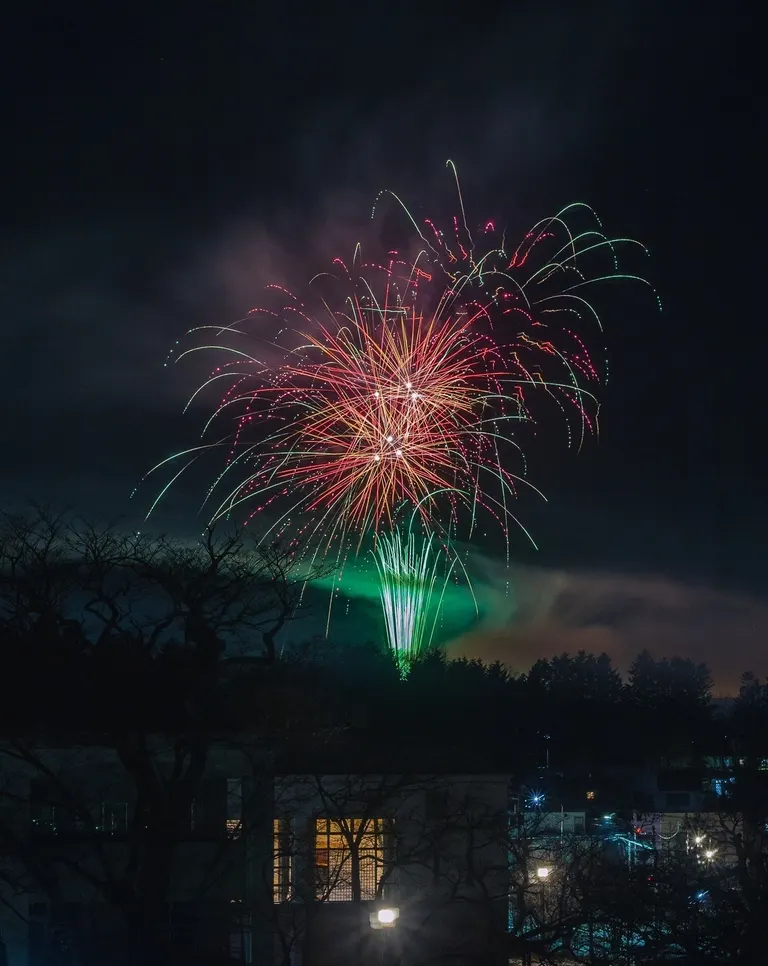
"Right now, fireworks are lighting up the sky over Teshikaga!"
On the night of December 24, 2020, Christmas Eve.
Kawakami live-streamed the town's fireworks festival on YouTube. During the stream, he also played a video report he had been working on for the past two months. It was a VTR that he had planned, reported, filmed, edited, and narrated all by himself.
On YouTube, 300 viewers were simultaneously watching the fireworks that Kawakami was broadcasting. Passionate messages poured in from townspeople who couldn't go out because of work and from former residents living far away.
I hope we can all watch together in the summer next year!
Banzai Teshikaga, go Teshikaga!
A miracle on Christmas Eve.
In just under three months since moving to the town, he had created a local media outlet.
How could a single media professional, jumping into a community, achieve so much?
Watching him, I couldn't hold back my tears.
"Wow, amazing. This must be the grand finale. Let's meet again in 2021. Goodbye! Great job, everyone. It was so beautiful. Thank you!"
After finishing the broadcast, Kawakami, also wiping away tears, said,
"Teshikaga is a wonderful town."
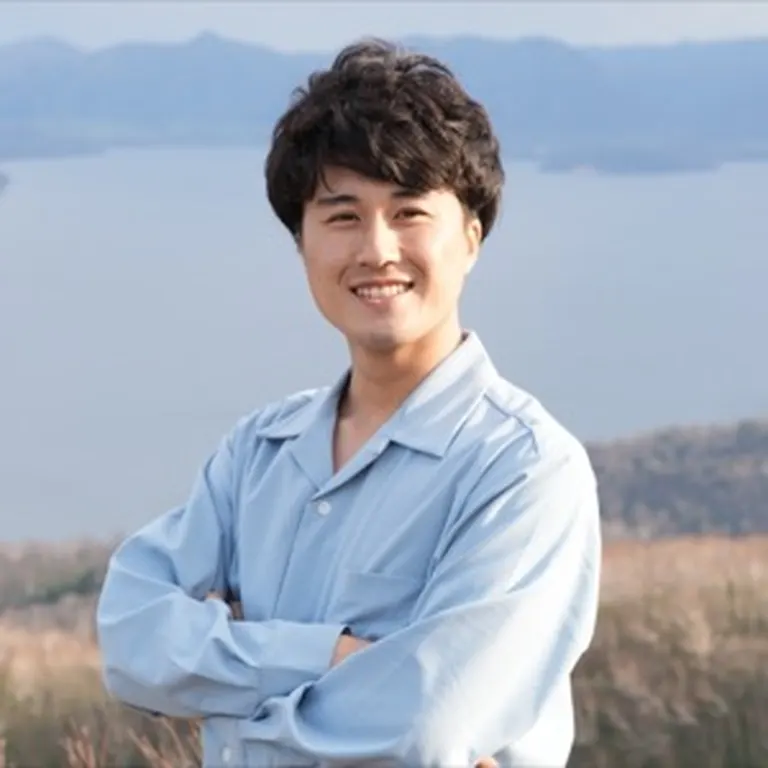
Profile
Born in 1995 in Miyagi Prefecture. Graduated from Yokohama National University. After working as an announcer for a commercial broadcaster, he became a Community-Revitalization Cooperator in Teshikaga, Eastern Hokkaido. He is also active throughout the Eastern Hokkaido region as an announcer for the internet media outlet Doto TV. He is a huge sauna enthusiast.
--What did you think when you got the call from NHK?
"I thought, 'Wow, that's incredible' (laughs). That NHK would be the first to pick up on the news of my career change and call me. I was also surprised that it was the production team of Local Friends, as I already knew about the program."
--So you knew about Local Friends.
"I learned about it through Dot Doto's social media and was paying attention to it as a potential future for TV stations."
--What do you mean by that?
"While working at a TV station, I felt that the key was how to involve the viewers. In that context, I thought Local Friends was amazing for its approach of entrusting production to the viewer side, or rather, getting them involved. I was like, 'Yes, this is it!' We're in an era where anyone can broadcast using social media. It's an age of total dissemination. It would be a waste not to get people involved. I genuinely thought this was something I'd want to do."
--At some point, it seemed you decided to stay in Teshikaga.
"I came here knowing nothing and was touched by the power Teshikaga holds. The encounters with the townspeople. Luck. Timing. All these things came together, and it just felt right. Right now, I have no intention of leaving Teshikaga."
Swans Need a Running Start
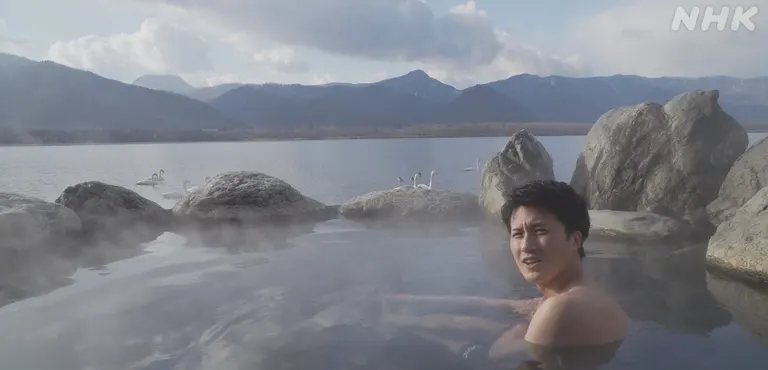
"Naked Director~!"
"Here!"
With my camera in hand, I headed to the lake where Kawakami and the swans were waiting.
"Hot, hot!"
"You have to bear with it, Osumi-san!"
"It's hot!"
The swans are calling.
"Osumi-san, swans have heavy bodies, so they need a running start. They run on the lake." "Wow, you know a lot about them." "An old man who lives here is friends with the swans and taught me. He feeds them and plays music for them. It's officially recognized by the town, by the way." "But still, this view is incredible, isn't it?" "It makes you wonder what makes a life rich..." "Huh?"
Can the Media Become a Partner for Local Communities?
After that, we went on to create two new content formats:
▼"Local Friends Stay," where a director stays in a community for a month and reports on its treasures live every week, and
▼"Friends News," where Local Friends continuously report on their communities.
And then, Ryosuke Kawakami applied to be a Local Friend himself, at long last.
With a passionate new member on board, the project moved to the next stage.
The adventure continues next time.
NoMaps Conference 2021
【“Building Communities Using TV”】
NHK Local Friends Stay <Domingo & NHK Hokkaido Session>
We're moving from an era of "watching" TV to "using" it. "Local Friends," broadcast by NHK Hokkaido since 2019, has adopted a co-creation approach where TV station directors let go of producing the program and entrust planning and reporting to local players. This has sometimes accelerated local action and sometimes created it from scratch, sparking a movement different from traditional mass media. How has co-creation, a keyword now drawing attention in various industries and fields, changed local communities and the media? We will explore this in three consecutive sessions.
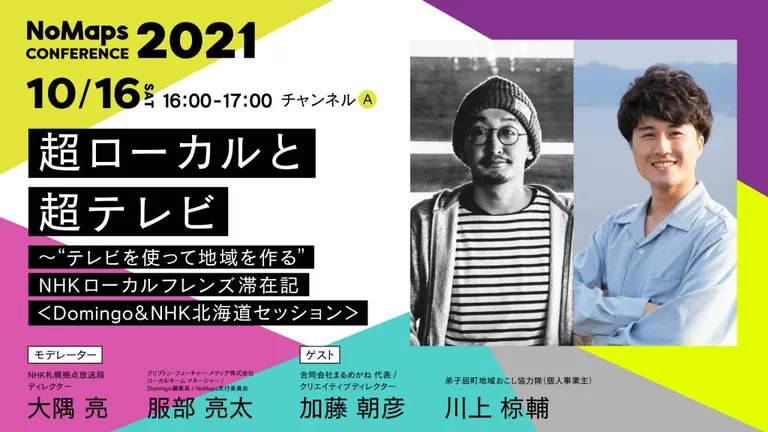
Using TV as a "runway" to launch new local businesses. Using TV to "accelerate" and explosively boost the broadcasting power of local media. Two players who have made full use of mass media will discuss the possibilities of new-era media.
Saturday, October 16, 2021 ・ NoMaps YouTube Channel ・ Free
16:00–17:00 Hyper-Local and Hyper-TV
https://no-maps.jp/2021/program/16a1600/
Speakers: Tomohiko Kato (CEO, Marumegane LLC / Creative Director), Ryosuke Kawakami (Community-Revitalization Cooperator, Teshikaga Town)
Author Profile
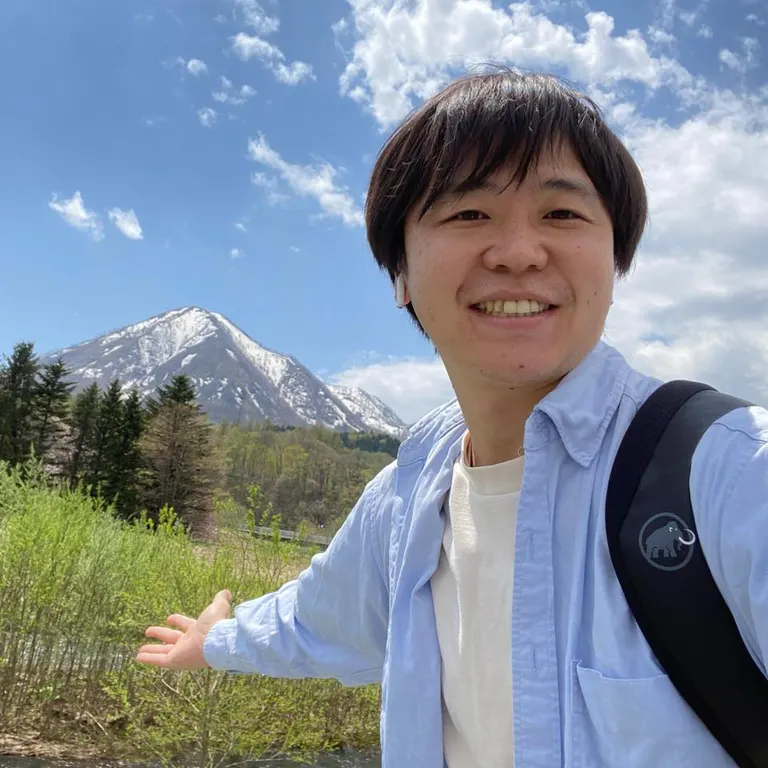 Director, NHK Sapporo Station
Ryo Osumi
Director, NHK Sapporo Station
Ryo Osumi
Born in 1984 in Mishima, Shizuoka. Joined NHK as a director in 2008. He specializes in launching new projects and has developed programs like "No-Narrator" and "Professional Children's University." Since 2019, he has planned "Local Friends," "Shiraberuka," and "Moya Cafe (Obihiro Station)" in Hokkaido. For Local Friends, he has been involved in productions in Eastern Hokkaido, Hakodate, Date, Nakashibetsu, Shiretoko, Kiyosato, Soya, Kimobetsu, and Teshikaga. Despite his youthful appearance, he is a father of two. He has been skiing for two years.
<Click here for past articles in this series>
"Adventures in Local & Media"
(1) Building Communities Using TV ~Introduction~
(2) A Single Project Proposal That Questioned NHK's Resolve
(3) "I Want to Give a Voice to the Unheard": An Application from a 37-Year-Old Office Worker