

ARTICLES
10 Must-Try Hokkaido Local Dishes Recommended by Locals!



Known as a treasure trove of culinary delights, Hokkaido is home to a wide variety of local dishes that reflect its unique climate and history. This time, we're introducing 10 must-try local dishes from Hokkaido, recommended by the locals themselves!
- Jingisukan: Hokkaido's Signature Dish
- Zangi: The Decisive Flavor of Marinated Soy Sauce
- Salmon Chan-Chan Yaki: A Hearty Fisherman's Meal
- Ishikari Nabe: A Warm Winter Classic
- Sanpei-jiru: A Simple, Old-Fashioned Flavor
- Teppo-jiru: A Rich and Flavorful Crab Broth
- Ikura no Shoyuzuke: You'll Want More and More Rice
- Butadon: Delicious Down to the Last Drop of Sauce
- Ika Meshi: Famous Nationwide as an Ekiben
- Ramen: Hokkaido's Ultimate Comfort Food
1. Jingisukan: Hokkaido's Signature Dish
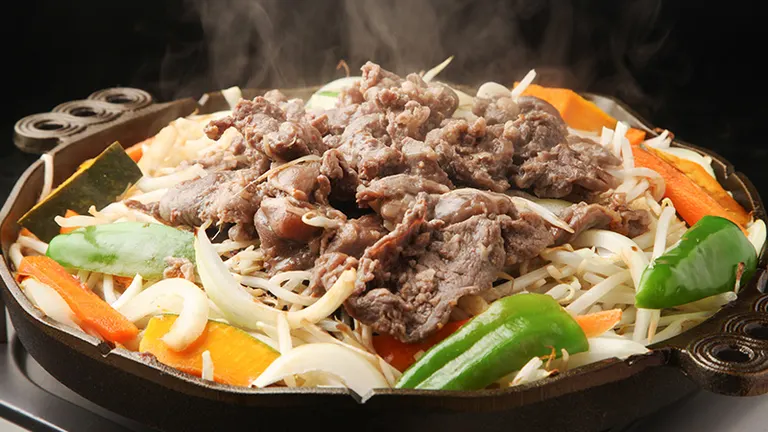
Jingisukan (Genghis Khan) is one of Hokkaido's most iconic dishes. It involves grilling lamb or mutton with vegetables on a special domed skillet. There are two main styles: one where you grill fresh meat and dip it in a sauce, and another where the meat is pre-marinated in a special sauce before grilling. Many households in Hokkaido own a Jingisukan grill, a testament to its long-standing love as a local dish.
2. Zangi: The Decisive Flavor of Marinated Soy Sauce
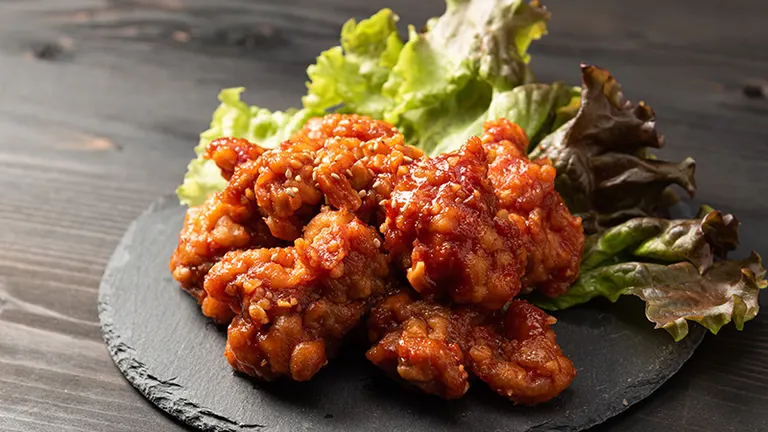
In Hokkaido, fried chicken is called Zangi. What sets it apart from typical karaage is that the chicken is marinated in a sweet and savory soy-based sauce before being fried, giving it a richer flavor. It is said to have originated in Kushiro City, and as it spread throughout Hokkaido, different shops and families developed their own unique marinade recipes, adding to its depth. It's an incredibly popular and versatile dish, perfect in izakayas, diners, or as part of a bento box.
3. Salmon Chan-Chan Yaki: A Hearty Fisherman's Meal
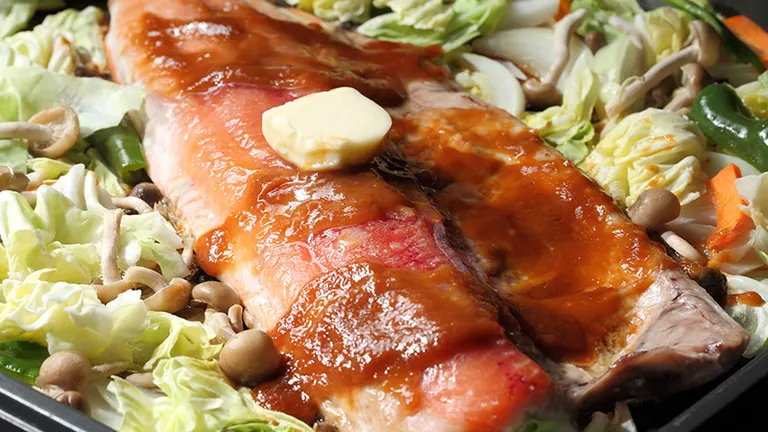
This dish features salmon steamed with seasonal vegetables, wild plants, and butter, all seasoned with miso. It is said to have originated in the fishing town of Ishikari. While traditionally cooked dynamically on a large iron griddle, it's often enjoyed at home using a hot plate or frying pan with foil. It's a beloved dish that is both hearty and easy to make, reflecting Hokkaido's long history with salmon.
4. Ishikari Nabe: A Warm Winter Classic
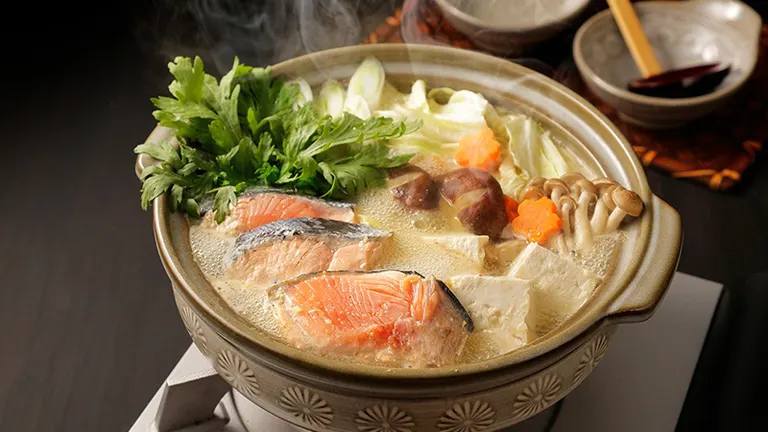
This is another fisherman's dish centered around salmon. It originally began as a hot pot that fishermen would eat during breaks, celebrating a bountiful salmon catch by tossing chunks of the fish into a miso soup pot. Today, it's a staple hot pot dish enjoyed in homes during the cold winter months. This miso-based hot pot, simmered with fresh salmon and its bones along with vegetables, will warm you up from the inside out.
5. Sanpei-jiru: A Simple, Old-Fashioned Flavor
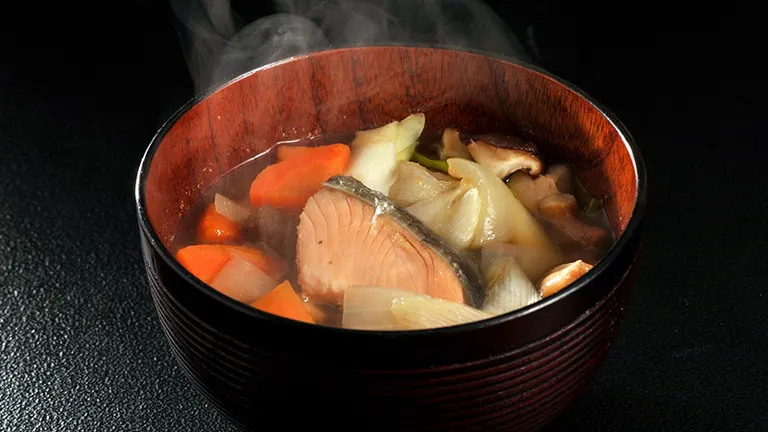
Sanpei-jiru is a soup made by simmering salt-cured fish like salmon or herring with vegetables such as carrots and daikon radish. The soup's flavor comes from the saltiness of the fish itself. While it resembles the miso-based Ishikari Nabe which uses fresh salmon, Sanpei-jiru is characterized by its use of salted fish. The type of fish and seasoning can vary by region. It's a traditional taste with records showing it has been eaten for over 200 years.
6. Teppo-jiru: A Rich and Flavorful Crab Broth
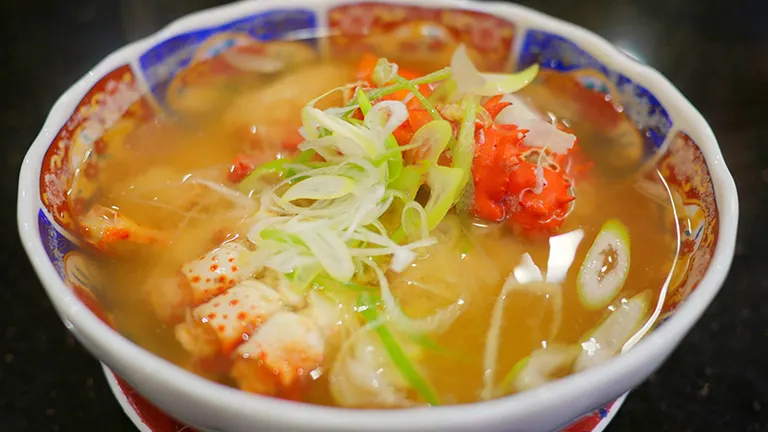
Miso soup with crab is called "Teppo-jiru" and has long been eaten as a fisherman's dish in the Nemuro region. While Hanasaki crab from Nemuro is typically used, horsehair crab or king crab can also be featured. The rich dashi from the crab pairs perfectly with the miso soup, warming a chilled body. The name is said to come from the motion of using chopsticks to poke the meat out of the crab legs, which resembles cleaning a gun (teppo).
7. Ikura no Shoyuzuke: You'll Want More and More Rice
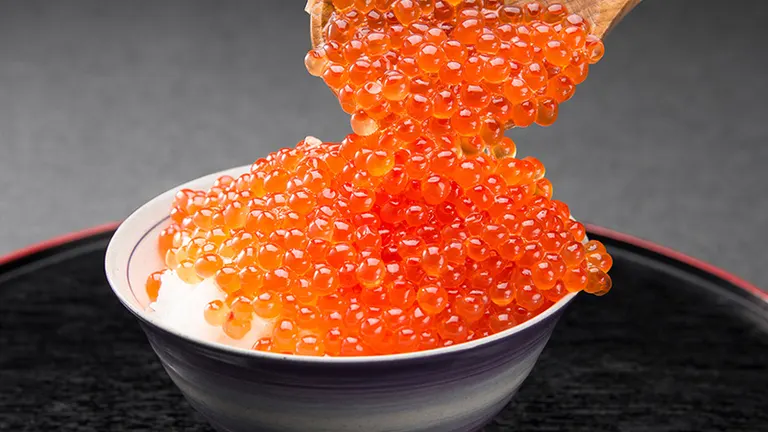
Around September, when the salmon fishing season is at its peak, suji-ko (salmon roe in the sac) appears in supermarkets, and many families prepare their own ikura no shoyuzuke (soy-marinated salmon roe). Often eaten in an Ikura-don (rice bowl) or as sushi, the popping texture is irresistible. The luxury of generously piling glistening ikura over a bowl of freshly cooked rice is a true Hokkaido experience. Adding salmon sashimi or grilled salmon to make an "oyako-don" (parent-child bowl) is also highly recommended.
8. Butadon: Delicious Down to the Last Drop of Sauce
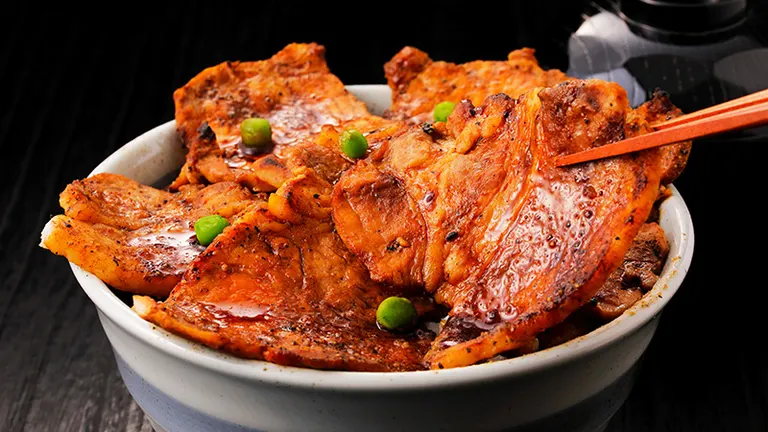
Pig farming has been practiced in the Tokachi region since the late Meiji era, making pork a familiar and accessible ingredient. The dish is said to have originated in the early Showa era in Obihiro, a city with a thriving pork industry. The goal was to create a stamina-boosting meal that was cheaper than eel. It started by grilling pork over charcoal and topping it on rice with a sweet and savory sauce similar to that used for unagi kabayaki. While many families make their own sauce at home, the city of Obihiro is home to many famous Butadon restaurants.
9. Ika Meshi: Famous Nationwide as an Ekiben
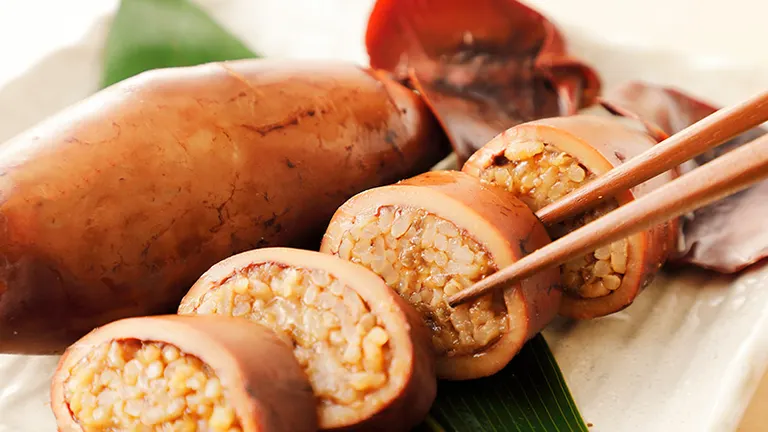
During the wartime rice shortages, this dish was invented as a way to conserve rice by using the abundant squid caught in the Southern Hokkaido region. It began as an ekiben (station bento box) sold at Mori Station on the Hakodate Main Line. The body of the squid is stuffed with glutinous rice and simmered in a soy-based broth, allowing the squid's flavor to infuse the rice, creating a dish that is enjoyable in both taste and texture. While popular as an ekiben, it can also be easily made at home.
10. Ramen: Hokkaido's Ultimate Comfort Food
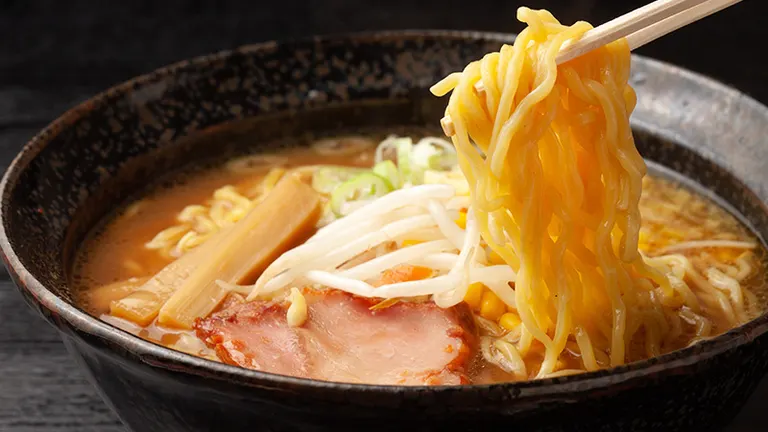
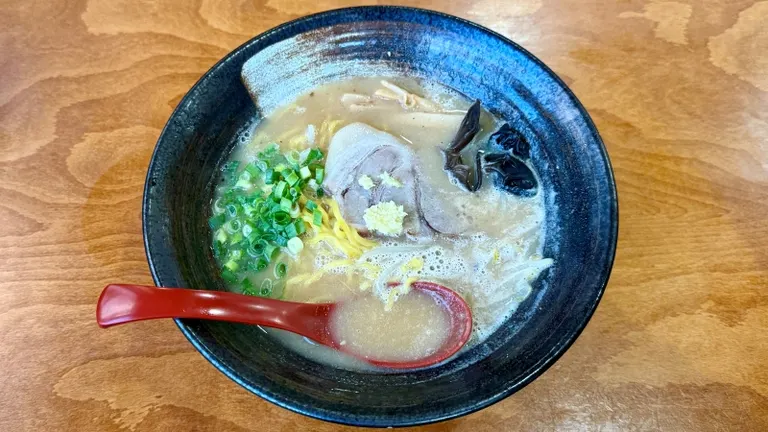
While ramen is now a national dish rather than just a local one, it rapidly became an integral part of the food culture in cold Hokkaido after the war. Different regions have their own distinct styles, such as Sapporo's "Miso Ramen," Asahikawa's "Shoyu Ramen," and Hakodate's "Shio Ramen." There are countless famous ramen shops across the prefecture that delight connoisseurs. As a registered "Hokkaido Heritage" item, ramen is an inseparable soul food for the people of Hokkaido.