

ARTICLES
Ushiyado: A Dairy Farmer's Guesthouse in Hokkaido's 'Cow Town' with Farm Tours and Butter-Making



Nakashibetsu, a town in Eastern Hokkaido, is known as one of Japan's foremost "dairy kingdoms." In its central district lies "ushiyado," a guesthouse opened by an active dairy farmer. With a kitchen designed to look like a barn, rooms named after cattle breeds, and popular activities like the "Morning Farm Walk" for feeding experiences and butter-making workshops, this guesthouse offers a chance to touch the life of a dairy farmer. We introduce this new hub of accommodation where you can immerse yourself in the town's culture of living alongside cows just by staying the night.
- Why would a dairy farmer run a guesthouse? The story behind it.
- Guest rooms and a lounge filled with creative touches that evoke a feeling of "cows."
- Experience a dairy farmer's day with the "Morning Farm Walk" and "Butter-Making Workshop."
- Partnering with local eateries: "We want you to use the guesthouse as a base to explore the town."
A guesthouse built in the "middle of town" by a dairy farmer
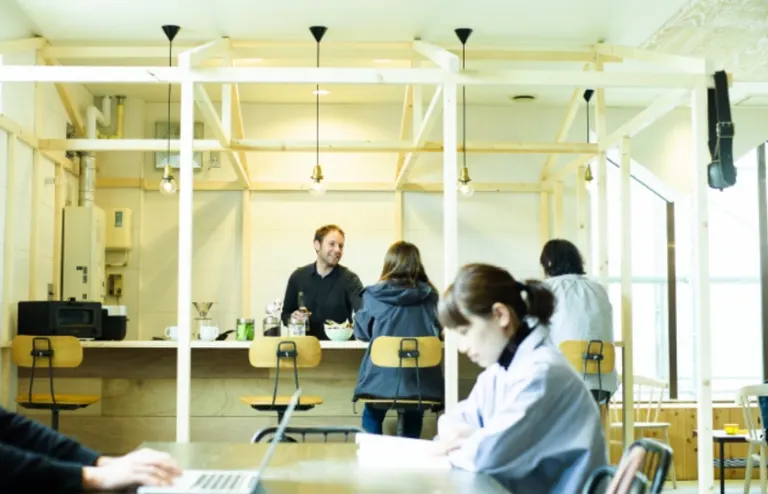
The "ushigoya" kitchen space, designed to resemble a house-shaped barn on a farm.
Located in the heart of Nakashibetsu, "ushiyado" is a guesthouse filled with creative touches related to "ushi" (cows), just as its name suggests. It is run by Kosuke Takeshita of Takeshita Farm in Nakashibetsu. Mr. Takeshita, who took over the farm's management from his father over 20 years ago, opened this facility in 2018.
The reason why a dairy farmer would open a guesthouse lies in the environment where Mr. Takeshita grew up. His father, the previous generation, had actively accepted trainees from his alma mater, Miyazaki University. Watching this, Mr. Takeshita naturally developed a desire to welcome people interested in farming.
However, Mr. Takeshita initially envisioned a "farm inn," a type of guesthouse run by farmers. The turning point came from an encounter with a certain guesthouse. At the time, his image of a guesthouse was a "cheap inn for backpackers," but upon discovering a guesthouse that was an open gathering place for people of all ages, not just guests, he felt it had "the potential to create a new era."
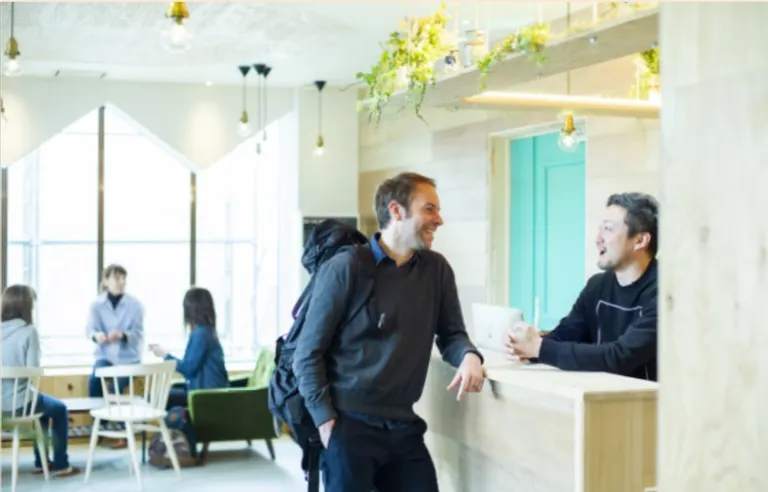
People visit "ushiyado" for various purposes, including tourism, business, and long-term stays.
As a dairy farmer rooted in the community, Mr. Takeshita was also interested in the development of Nakashibetsu. He wanted to "create an inn that could liven up the town," which later became the concept for "ushiyado"—a base from which to enjoy the town. He is often asked, "Isn't it located next to the farm?" but its location in the middle of town reflects his deep affection for the community.
Guest rooms and a lounge filled with creative touches that evoke a feeling of "cows"
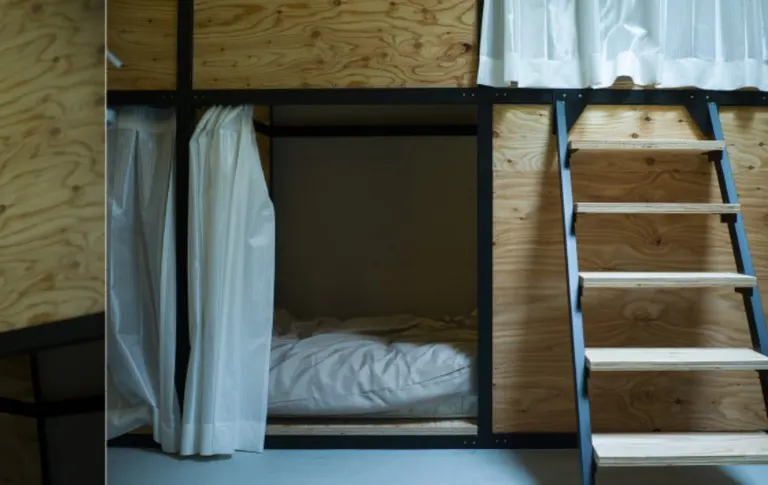
In Nakashibetsu, where dairy farming is the main industry, "ushiyado" is filled with a passion for the town, and even the room names are uniquely cow-themed. For example, the mixed and female-only dormitories, each accommodating six people, are named "Holstein" and "Brown Swiss," respectively. They feature custom-made steel beds designed to evoke the feeling of sleeping in a barn.
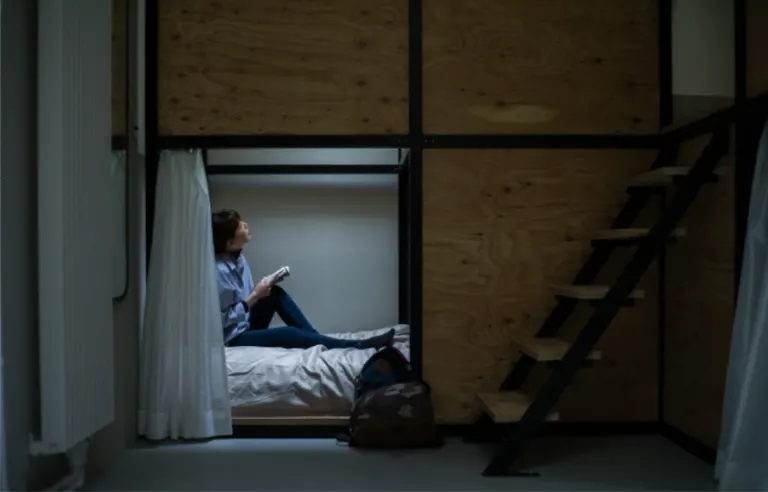
The mixed dormitory "Holstein." The space was designed to feel spacious even when sitting up.
The three private rooms are also named after cattle breeds: "Jersey," "Montbéliarde," and "Wagyu." All are double-occupancy rooms, but each has its own character. "Jersey" is a room with futons, "Montbéliarde" has two single beds, and "Wagyu" has a steel bunk bed and a sofa.
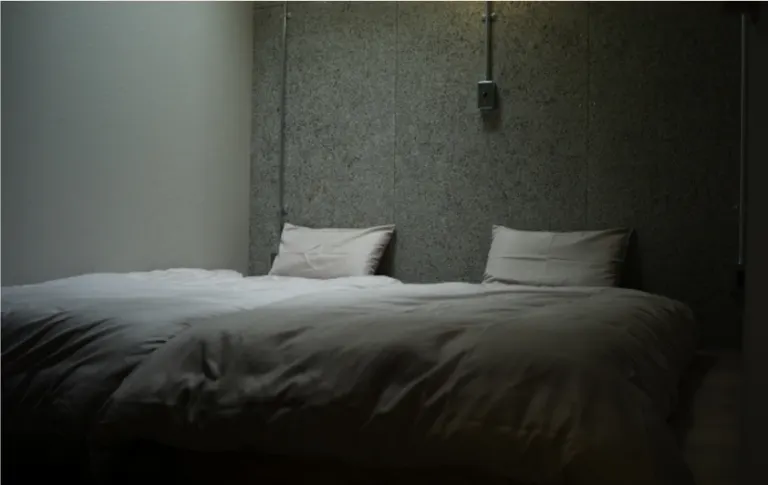
The private room "Jersey" with futons.
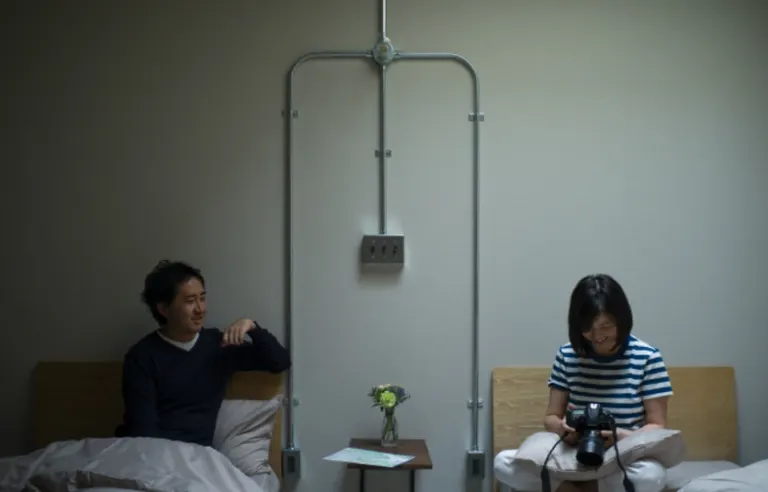
The private room "Montbéliarde" with two single beds.
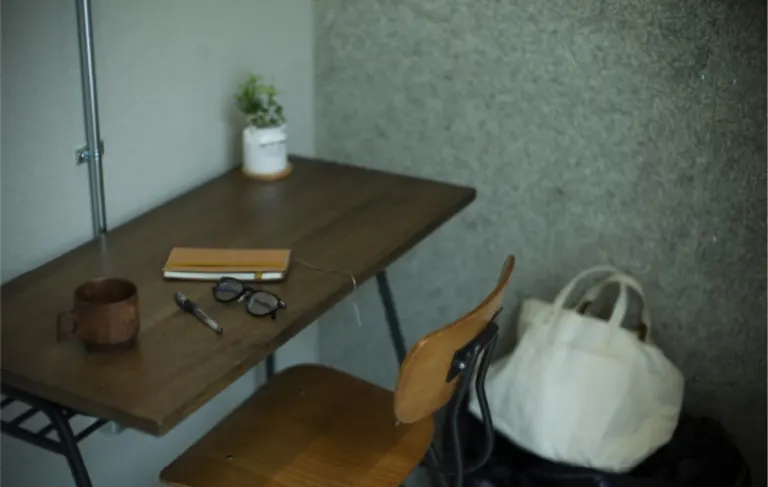
The work desk and chair in "Montbéliarde." This setup is standard in all private rooms.
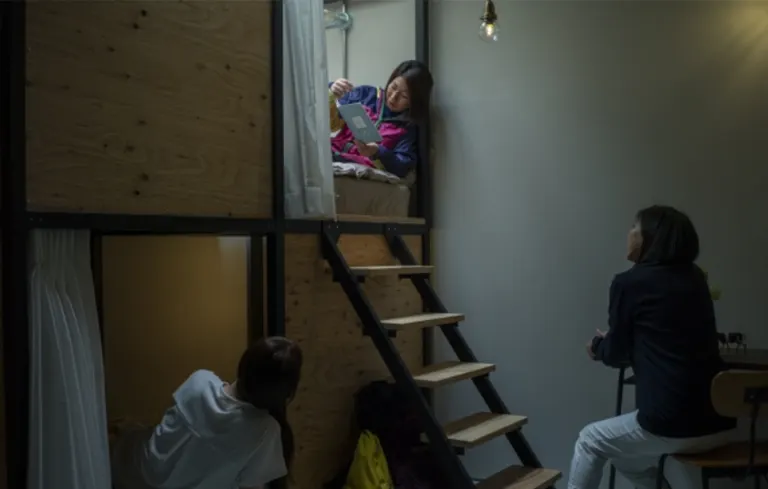
"Wagyu" with a steel bunk bed and a sofa.
The "Wagyu" room can accommodate up to three people by replacing the sofa with an extra bed (advance reservation required). For families with small children who might fall out of bed, the "Jersey" room is recommended. There are options to suit different numbers of guests and various needs.
Next, the common lounge is mainly divided into two areas: the "ushigoya" kitchen space, designed to look like a house-shaped barn, and the "Milk Parlor" dining space with two large tables. In the "Milk Parlor," guests can eat, work, and spend their time as they please in a comfortable space.
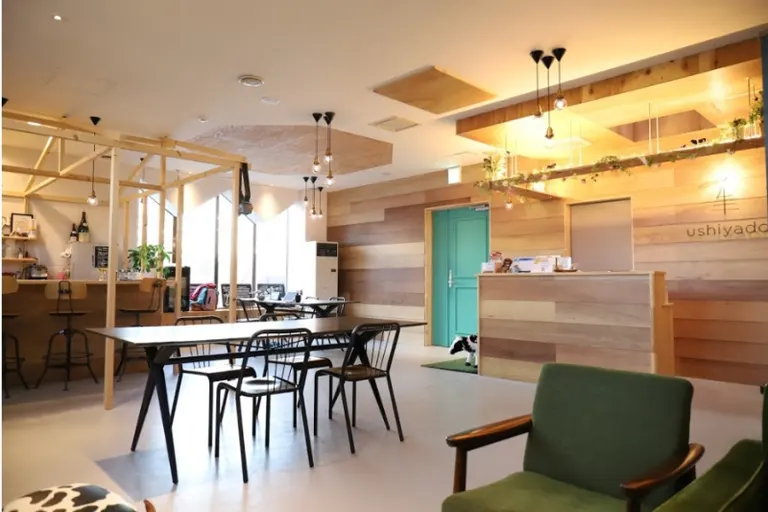
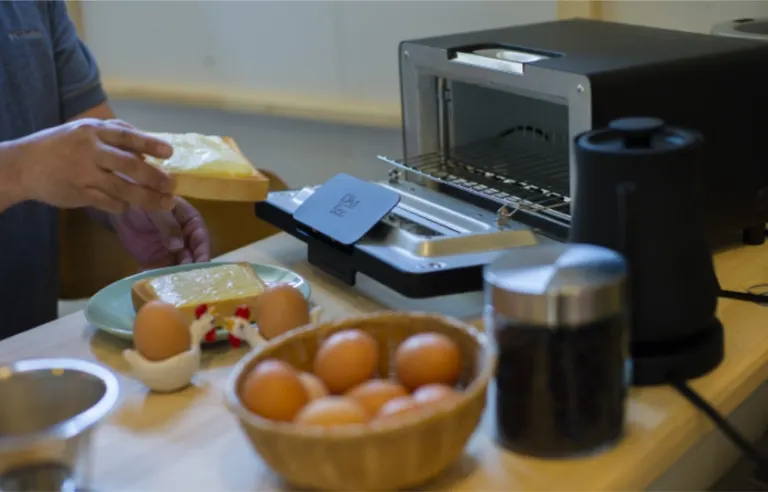
The "ushigoya" kitchen space.
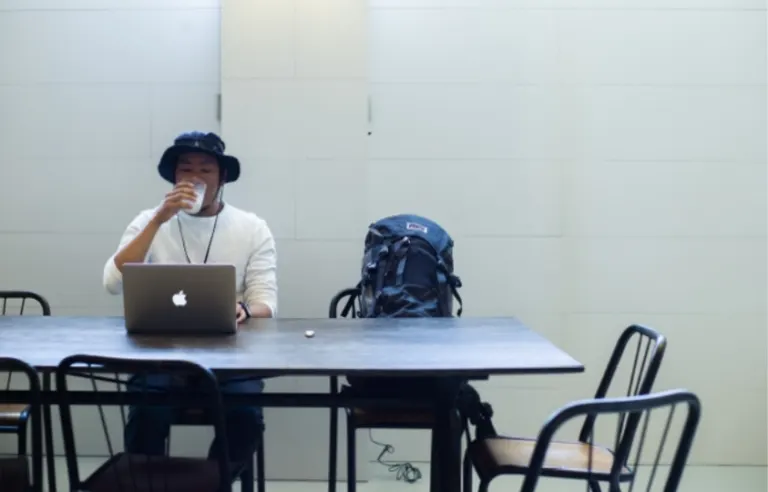
The "Milk Parlor" dining space.
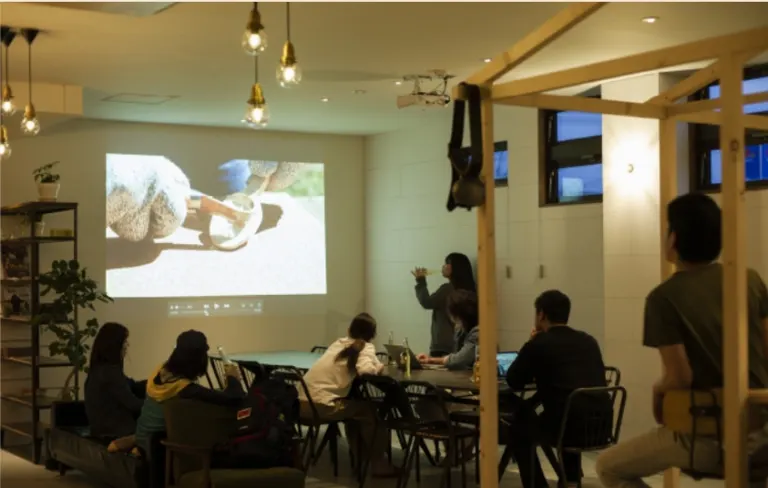
The lounge is also equipped with a projector that can display images on a white wall. For a fee, it can be used for workshops and events. It is sometimes used by local residents for events, serving as a "brackish water zone" where guests and locals can mingle.
Experience a dairy farmer's day with the "Morning Farm Walk" and "Butter-Making Workshop"
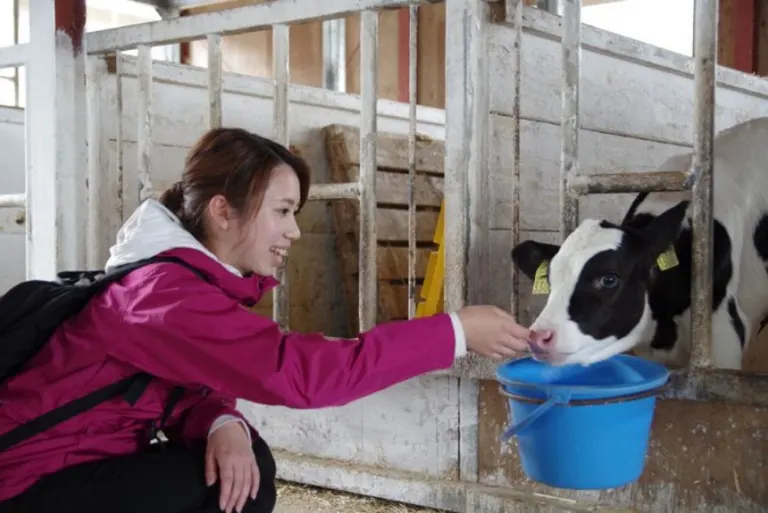
At 'ushiyado,' you can feel the presence of cows not just through the facility's design and room names. The "Morning Farm Walk" allows you to experience the daily life of a dairy farmer, including feeding and interacting with the cows. This is a precious activity held only when certain conditions are met, such as requiring a reservation at least one week in advance and being available only during specific seasons. If you're an early riser and can make your own way to the farm, located about 20 km by car from the town center, you should definitely give it a try.
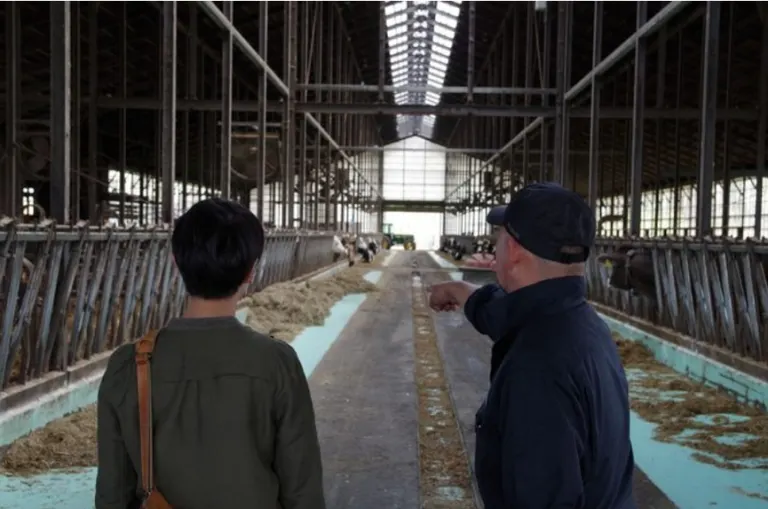
In addition to the "Morning Farm Walk," the "Butter-Making Workshop" is also recommended. Here, you can make butter using precious Nakashibetsu fresh cream, which is produced exclusively in the town. This also requires a reservation, so if you're interested, be sure to book at least two weeks in advance.
Partnering with local eateries: "We want you to use the guesthouse as a base to explore the town"
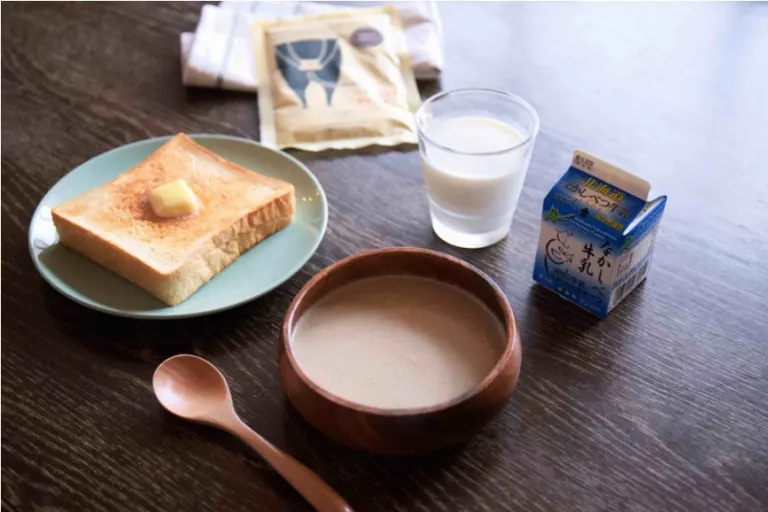
Mr. Takeshita says he kept the guesthouse's functions to a minimum "so that guests can enjoy the town of Nakashibetsu." While they offer a "Leisurely Breakfast" featuring freshly made butter from the workshop on toast, Nakashibetsu milk, and potage soup from takeshita farm, he generally encourages guests to eat at local restaurants or use supermarkets like "Tobu South Hills," which is popular among guests for its "unique selection of items."
According to Mr. Takeshita, his recommendation is to "visit the same restaurant two days in a row." As of 2026, Nakashibetsu is a relatively new town, not even 80 years old since its establishment, and its people are very kind to outsiders. "If you go for two consecutive days, most people at the local eateries will strike up a friendly conversation with you," says Mr. Takeshita. Nakashibetsu is also a commercially blessed town with many restaurants and day-trip hot springs, and new shops are constantly opening.
To feel closer to the town of Nakashibetsu and its main industry, dairy farming. Whether you're interested in cows or not, why not enjoy "playing in the town" with "ushiyado" as your base?
 ushiyado
■Address: 2F, Higashi 3-jo Kita 1-chome 4-2, Nakashibetsu-cho, Shibetsu-gun, Hokkaido
■Phone: 0153-77-9305 (Reservations only)
■Check-in time: Last check-in at 19:00
*Please be sure to contact us if you will be arriving after 19:00.
Click here for details and map information for "ushiyado"

■ushiyado's special offer: 10% OFF per night (applicable for any number of nights)
*Only for reservations made through the ushiyado website.
For more details on the "DOTO Youth Discount," please see this feature page.
Writer's Profile
Nonoka Sasaki
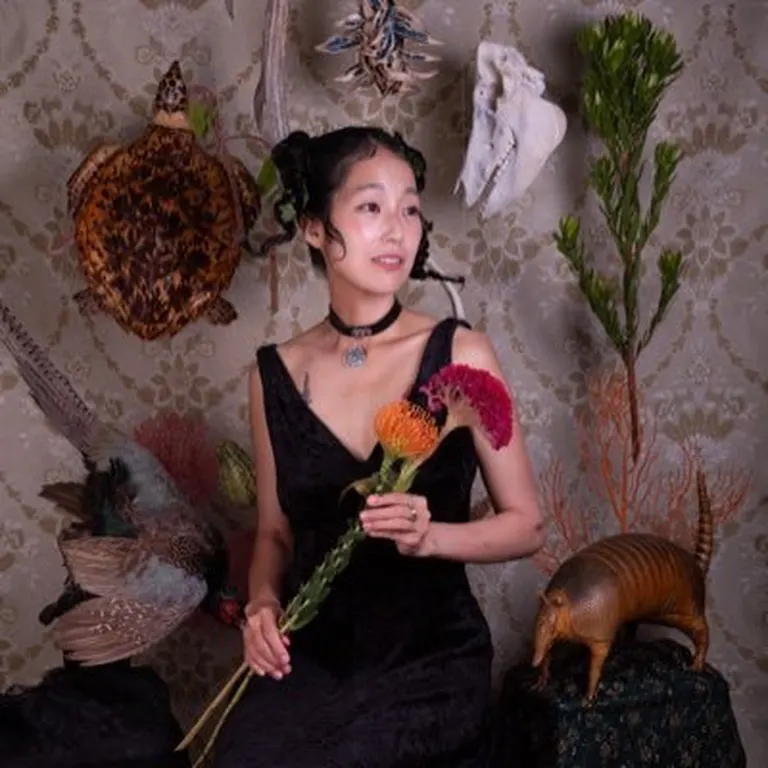
Born in Otofuke, Hokkaido in 1990. Moved to Tokyo for university and became a freelance writer in 2015. Returned to Hokkaido in 2021 and now lives in her hometown of Tokachi with a horse, two cats, and a child, while also hunting deer in the winter. Her books include "In Search of Love and Family" and "On Loving Yourself (or About Happiness)" (both from Aki Shobo).