

![A Symphony of Flavor: The Umami and Sweetness of Takashima Farm's 'Denen Kokyogaku' Rice [Kitahiroshima City x Domingo]|Domingo](https://p1-634a4370.imageflux.jp/w=768,f=webp:auto,q=78/https%3A%2F%2Fdomingo.ne.jp%2Fwp%2Fwp-content%2Fuploads%2F2021%2F11%2F09b011a86179988ea7f7a476bd7c94ee.jpeg)
ARTICLES
A Symphony of Flavor: The Umami and Sweetness of Takashima Farm's 'Denen Kokyogaku' Rice [Kitahiroshima City x Domingo]



We spoke with Ryohei Takashima, the 6th generation head of Takashima Farm, about the meticulous cultivation and storage methods for his original brand "Denen Kokyogaku," as well as his current challenges and endeavors.
1. About Takashima Farm
2. So Good, It Needs No Side Dish! Takashima Farm's 'Denen Kokyogaku' Rice
3. Where to Buy Takashima Farm's Original Brand 'Denen Kokyogaku'?
4. Excitement for Sake Brewing with 'Yutaka Mai' Rice
5. Giveaway Campaign Underway!
1. About Takashima Farm
The history of Takashima Farm dates back to 1897, an incredible 120 years ago. The family first moved from Fukui Prefecture to Naganuma Town to start dry-field and rice farming. They relocated to their current location in the early Showa period.
They created their original brand "Denen Kokyogaku" and also operate a direct sales shop.
Image courtesy of Takashima Farm
The Origin of the Name 'Denen Kokyogaku' (Pastoral Symphony)
When I pondered how to grow delicious rice, the answer that came to me was 'Denen Kokyogaku.'
It refers to the harmony between the 'blessings of nature'—things beyond human control like sunshine, rain, wind, fertile soil, and the rivers that nourish it—and 'humanity,' a tiny existence that applies ingenuity and wisdom. I realized that truly delicious rice is born from this harmony between nature and people, as if playing a symphony.
Takashima Farm Website
Here at Takashima Farm, the 6th generation of rice farming is led by Ryohei Takashima.
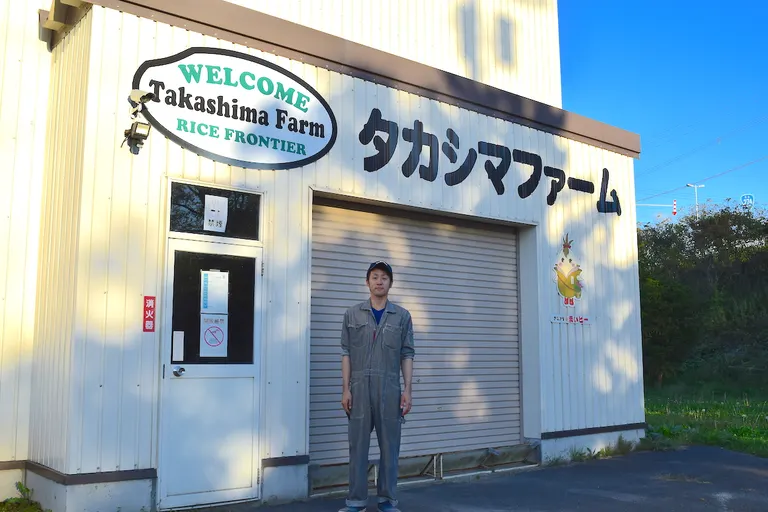
The farm spans 20 hectares of rice paddies (about 4 times the size of the Tokyo Dome), where they cultivate various types of rice, including 'Yumepirika,' 'Nanatsuboshi,' and their ancestor, 'Akage' rice. In addition, they grow a small amount of pesticide-free vegetables.
Takashima Farm
Website: https://www.agri-symphony.jp/index.html
Online Shop: https://agri-symphony.shop-pro.jp/
Facebook: https://www.facebook.com/agrisymphony/
Instagram: https://www.instagram.com/takashimafarm_furari/?hl=ja
So Good, It Needs No Side Dish! Takashima Farm's 'Denen Kokyogaku' Rice
The first thing that will impress you about Takashima Farm's original brand, 'Denen Kokyogaku,' is how it looks when cooked. The moment you open the rice cooker, a delicious aroma of freshly cooked rice fills the air. Each grain is incredibly glossy.
I've never had rice that could make me feel this happy before even taking a bite.
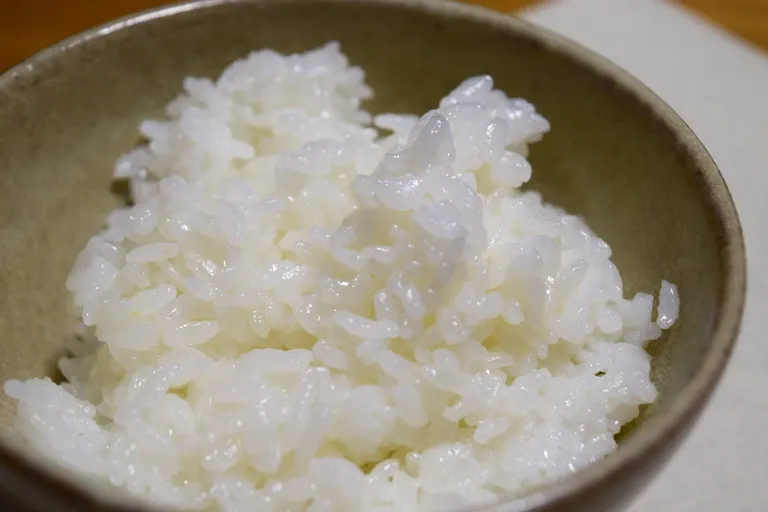
The taste brings even more surprise and delight. They say that the more you chew rice, the sweeter it gets, but with Takashima Farm's rice, you can feel the sweetness from the moment it enters your mouth. After about five chews, the umami flavor intensifies. Even after you finish eating, a refreshing sweetness and umami linger, extending the happiness in your mouth.
It was the first time I thought, "I don't need any side dishes! I just want to eat the rice by itself!"
We asked Ryohei Takashima, the 6th generation head of Takashima Farm, about the dedication behind the unforgettable original brand 'Denen Kokyogaku.'
While there are countless passionate details that go into the delicious 'Denen Kokyogaku,' he places particular emphasis on using a high ratio of organic matter in his fertilizers and minimizing the use of pesticides.
'Chemical Fertilizers': Made from inorganic materials like nitrogen from the air and minerals. Difficult to produce domestically. They are fast-acting but have low sustainability. Can be mass-produced in factories, but overuse degrades soil quality.
'Organic Fertilizers': Made from plant or animal-based organic matter. Can be produced domestically. They are slow-acting but have high sustainability. Production takes time due to processes like fermentation, but their use improves the soil.
Reference: Mynavi Agriculture (https://agri.mynavi.jp/2018_05_30_28293/)
He uses organic fertilizers from domestic manufacturers and actively incorporates compost made from a unique blend of resources from within Kitahiroshima City.
This compost uses cow manure from Miyakita Farm, which raises and fattens cattle on 100% domestic feed in Kitahiroshima, and chicken manure from a local egg company.
He mixes these ingredients in his own specified ratio and lets them mature for about three years to create the compost.
"If not managed properly, cow and chicken manure are basically like industrial waste. It's not good if concentrating them in one place for human efficiency leads to river pollution. But if you compost them correctly, they can be used effectively. That's why I make sure to ferment it properly to create good compost."
Takashima Farm practices circular agriculture within the community, supplying rice husks and hay grown with this compost to Miyakita Farm, and in return, receiving cow manure from them.
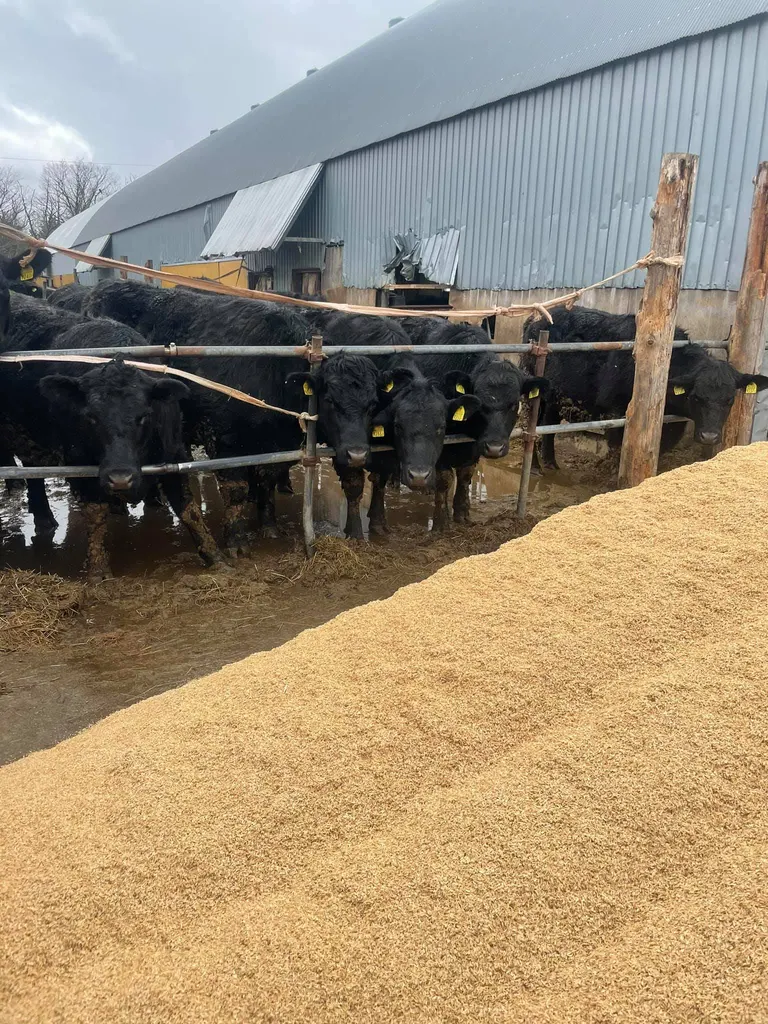
Image courtesy of Takashima Farm
By continuously using organic fertilizers, the soil becomes richer and improves, leading to stable rice yields. This method has made their rice farming more resilient to the effects of climate change, which have become more pronounced in recent years.
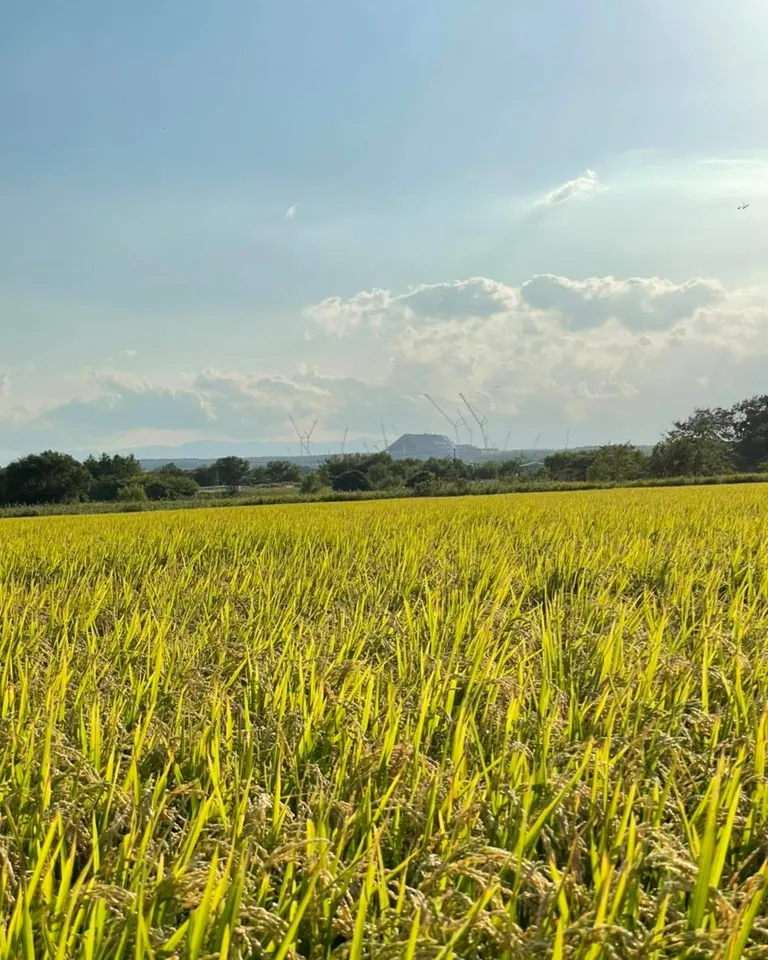
Image courtesy of Takashima Farm
Furthermore, Takashima Farm only uses herbicides once before and once after planting the rice. By increasing the proportion of organic fertilizer, the crops themselves become stronger, allowing them to secure stable yields without using any insecticides or fungicides. Their pesticide use is about one-fifth of that in conventional farming, and they even see fireflies in their fields around July!
"What I'm realizing now is that cultivation methods using organic matter can produce good yields and, on top of that, delicious rice. The rice from paddies with plenty of organic fertilizer is amazing, you know, the umami. It's like the umami just keeps coming out with every chew."
Knowing that the感動 I felt when eating the rice is a result of Takashima Farm's years of accumulated experience and their relentless pursuit and experimentation for deliciousness, I am filled with gratitude.
3. Where to Buy Takashima Farm's Original Brand 'Denen Kokyogaku'?
After hearing about Takashima Farm's dedicated cultivation methods, many of you are probably eager to try 'Denen Kokyogaku.'
There are three ways to purchase 'Denen Kokyogaku.'
① Takashima Farm's Online Shop
Right now, you can purchase the new harvest of Yumepirika, Nanatsuboshi, Oborozuki, Yukihikari, and glutinous rice. It's also great that they sell not only white rice but also brown rice.
② Takashima Farm's Direct Sales Shop 'Furari'
*This year's operations ended on November 3rd.
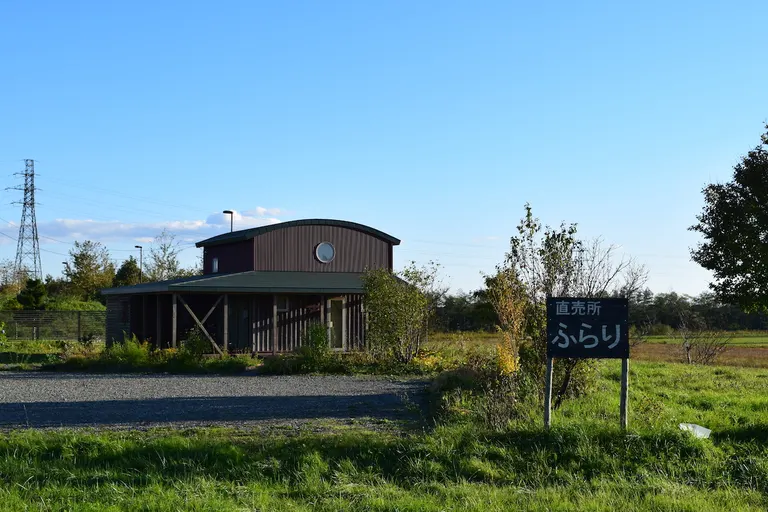
This direct sales shop is open on weekends and holidays from early June to early November (please check the website for business days).
Here, you can find not only various types of 'Denen Kokyogaku' rice but also pesticide-free vegetables grown at Takashima Farm, as well as rice husks and compost.
It's a great spot for home gardeners too.
They also have a rich lineup of processed goods created in collaboration with local restaurants.
In collaboration with 'Okashi no Anjuma,' they sell roll cakes made with Akage rice flour and okowa (steamed glutinous rice) made with glutinous rice and seasonal vegetables.
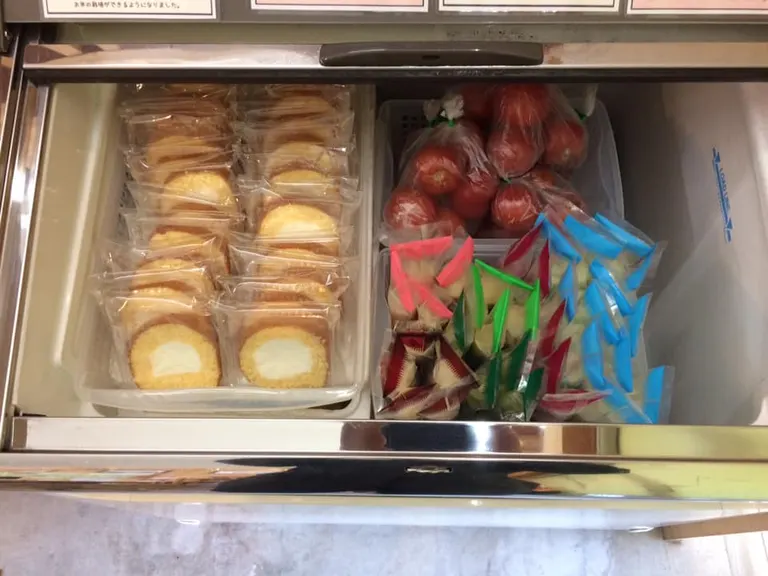
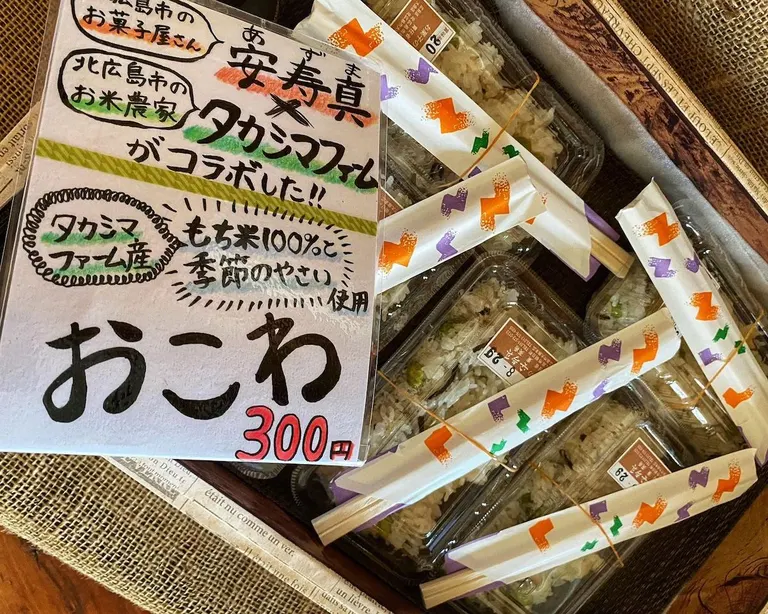
Image courtesy of Takashima Farm
There are also other products created in collaboration with local restaurants.
③ Kitahiroshima City Furusato Nozei (Hometown Tax Donation)
Through the Furusato Nozei program for Kitahiroshima City, you can choose 'Denen Kokyogaku' rice in a special Ballpark package, as both the Ballpark and rice farming in Kitahiroshima share the common keyword of "challenge."
Please consider making a hometown tax donation to Kitahiroshima City and try the Denen Kokyogaku Yumepirika!
4. Excitement for Sake Brewing with 'Yutaka Mai' Rice
We asked Mr. Takashima about his future prospects.
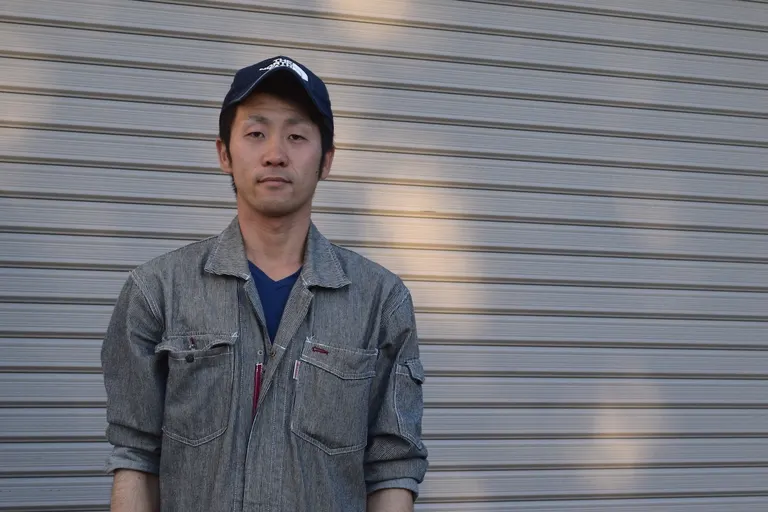
Ryohei Takashima
"I want to be a farmer and a farm that is rooted in and loved by the local community, collaborating with local people. In the near future, I'm most excited about the challenge of brewing sake in collaboration with a liquor store."
Starting this year, Takashima Farm has embarked on a new challenge: 'Yutaka Mai' rice, co-cultivated in collaboration with 'Meishu no Yutaka,' a renowned sake shop with over 100 years of history. They spread sake lees (kasu) on the rice paddies and grow the rice without any pesticides, with Mr. Takashima and the staff of Meishu no Yutaka carefully weeding by hand.
Starting next fiscal year, they plan to begin a new circular agriculture initiative: making sake from the harvested rice and then spreading the resulting sake lees back onto the paddies. This is a development you won't want to miss!
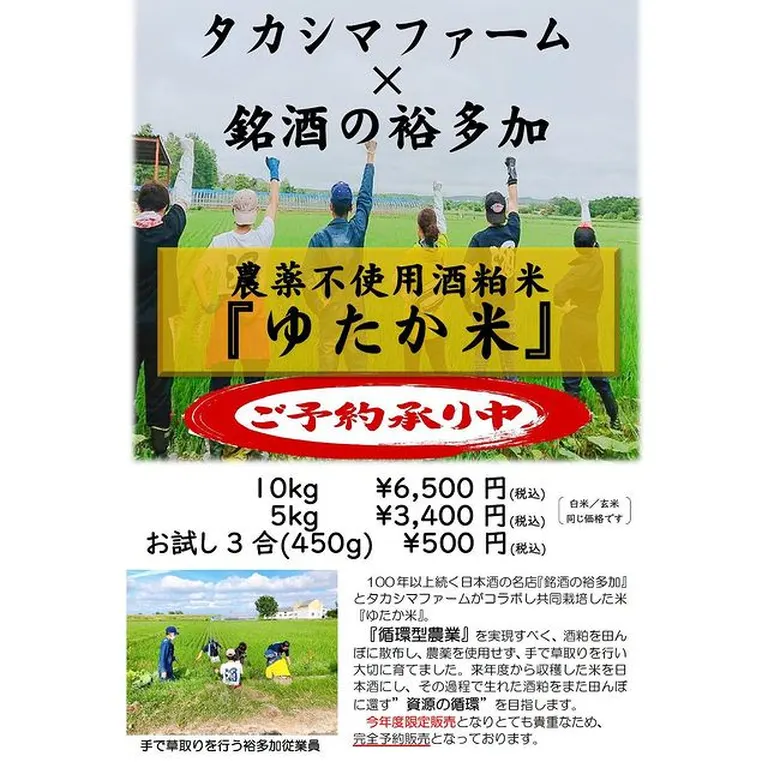
Image courtesy of Takashima Farm
The idea of cultivating 'Yutaka Mai' rice using sake lees as fertilizer came up in mid-March of this year...! Putting the idea into immediate action, they gathered all the sake lees they could and painstakingly cultivated the Yutaka Mai. The result was delicious rice with excellent yield and flavor.
'Yutaka Mai' is available in extremely limited quantities.
*As of November 8th, it is in stock.
*It is not sold in the online shop, so you must order directly by phone or email.
Please check the contact information here.
https://www.agri-symphony.jp/
"It's no fun if you don't challenge yourself, right? It's easy to keep doing the same thing, but I think that just leads to decline. When I calculate how many more times I can farm in my life, I figure I have about 30 more years on the front lines. Since you can only grow rice once a year, that's 30 more times. There's no point in putting things off thinking, 'I can do this next year.'"
Every year, amidst different conditions of temperature and precipitation, Mr. Takashima continues to light the flame of his passionate dedication to making delicious rice through constant trial and error.
We are sure that you too will be moved by the deliciousness of 'Denen Kokyogaku' once you try it. Be sure to enter the campaign, or purchase it from the online shop or through the hometown tax donation program to taste it for yourself.